

How Do We Navigate the Complicated Legacy of Tupac's 'All Eyez On Me' Album?
Three decades on, Tupac's fourth LP—a double-disc classic—remains both celebrated and debated. Its influence on hip-hop is undeniable: but so are the arguments about misogyny, industry power and who really controls the culture's image. Has hip-hop closed that gap, or just found a way to cash in on it?
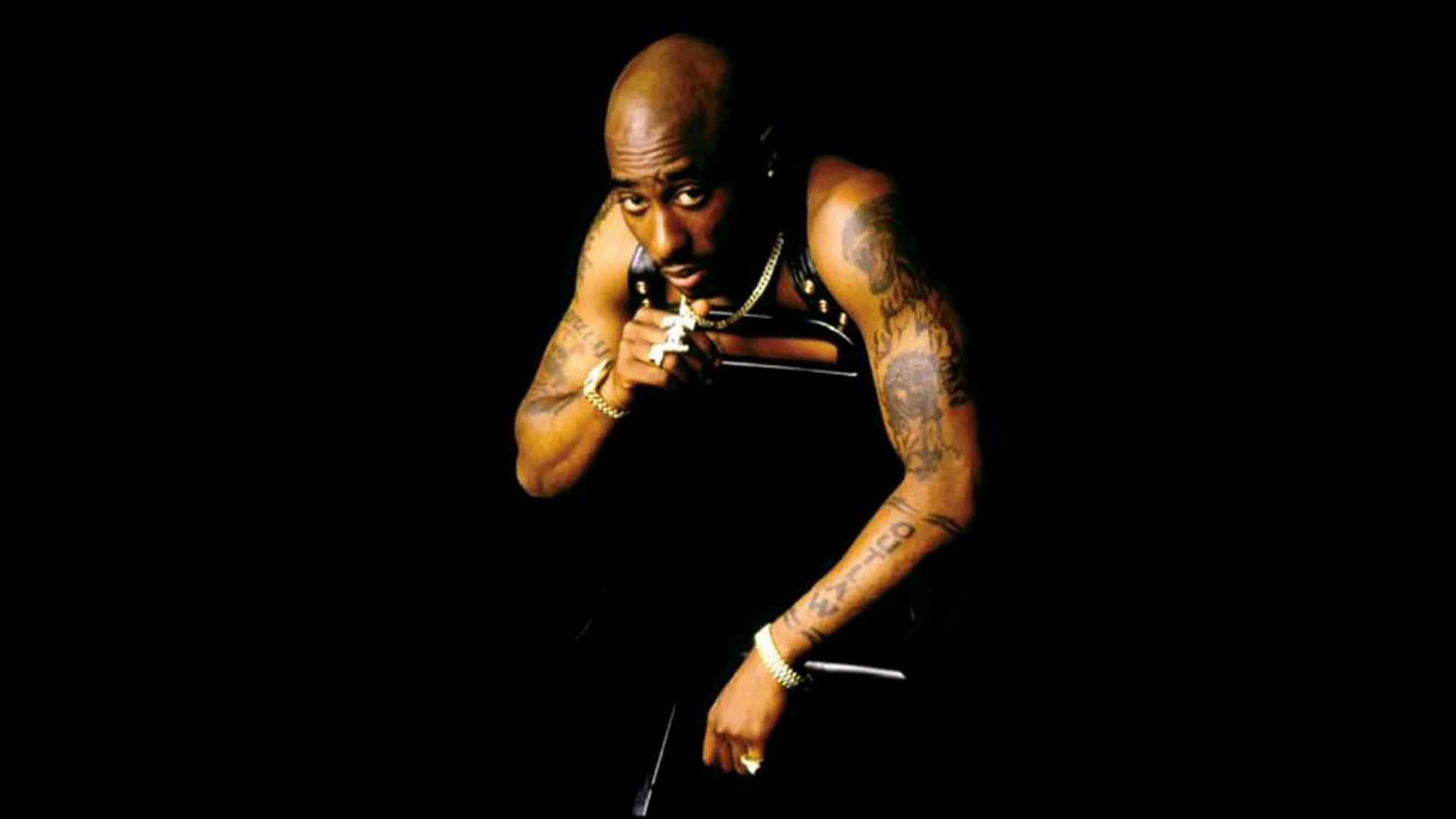
Tupac Shakur in late 1995 during the All Eyez On Me album cover shoot. Image property of Ken Nahoum.
February 2026 marks a pensive milieu for hip-hop culture: it's the 30th birthday of Tupac Shakur's fourth LP All Eyez On Me—the last project before his death just seven months later. The cultural eruption carved an indelible mark both musically and politically. Although his vengeful cadence proved polemic within the forums of Capitol Hill, it justified a moralistic tirade on the sonic pestilence of gangsta rap.
On the 13th February 1996, All Eyez On Me was released to the public. The two-disc album marked Tupac's highly anticipated comeback to rap after 11 months in prison. The album sold over 566,000 copies in its first week of release—peaking at #1 on the Billboard 200, #6 on the Swedish and, ironically, #6 on the UK R&B Album Chart.
Daz Dillinger, a producer on the album, recounted his experiences on the ALL THE SMOKE podcast, sharing that Tupac started recording music just a few hours after being released from jail, starting with the opening track "Ambitionz Az A Ridah", which set the tone. Compton rapper, Kurupt, also reminisced on how "Pac wasn't in the studio for more than 45 minutes and had his first verse laid. All he wanted to do is get on the mic."
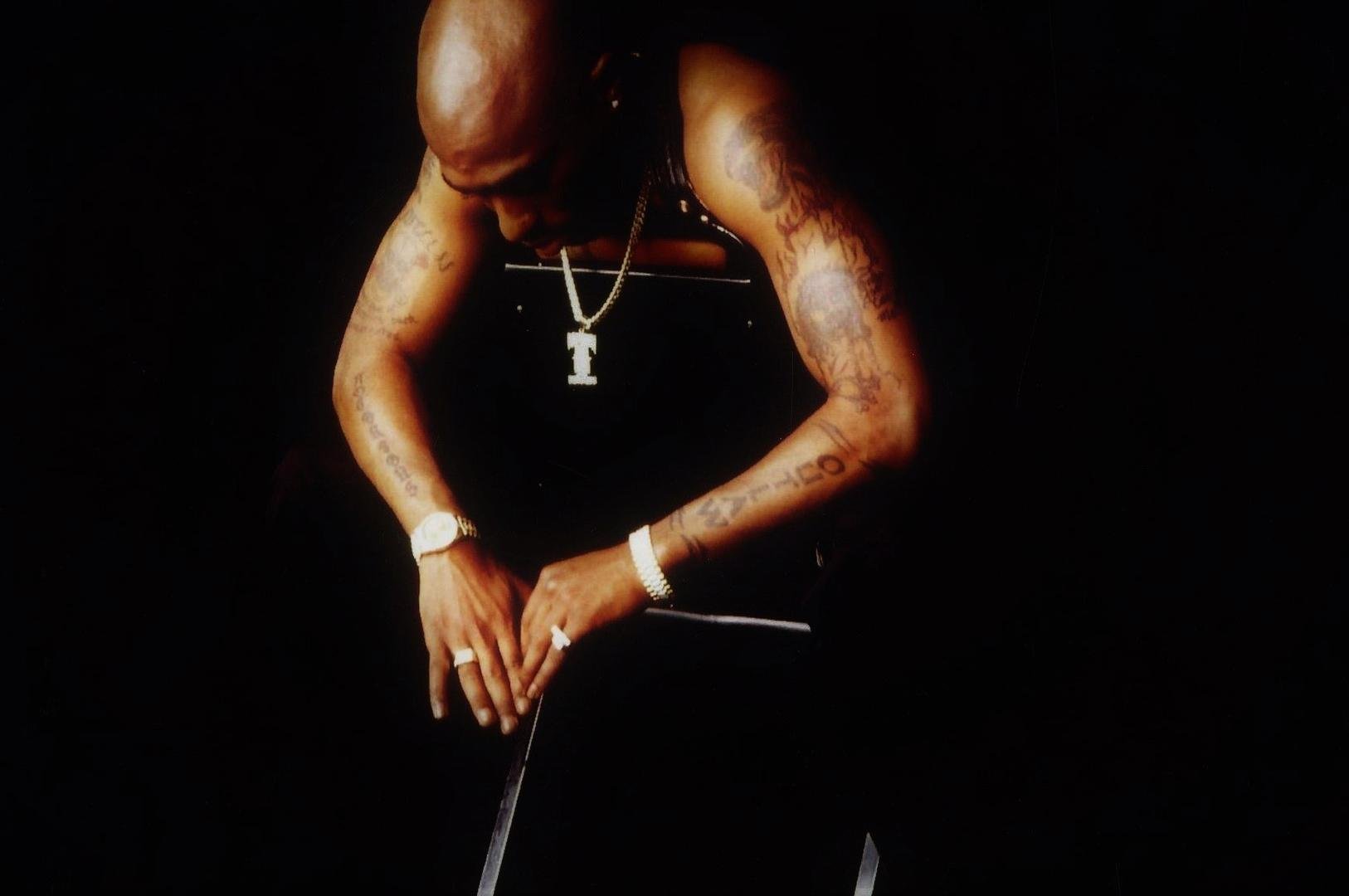
Tupac's determined and focused nature was illuminated during the making of the album. LA rapper and All Eyez On Me collaborator, Big Syke, elaborated on how strict the rapper was with time. Shakur would make the impassioned statement, "If you do not have lyrics by the time I finish, your ass is not on the song." The lyrics needed to be up to scratch, otherwise "your ass ain't cutting it." These are the relic studio tales that fostered his first studio album with Death Row Records, and fourth with Interscope.
A myriad of critics referred to All Eyez On Me as vengeful and volatile, bearing the morbid and despondent themes of his previous album, 1995's pensive single-disc epic, Me Against The World. The New York Times noted that Tupac "speaks to a tone more spiteful than his prior works," and NME highlighted Tupac's antagonistic prose, stating that he was taking a "bloodier twisted turn," with his gangster-infused persona.
Shakur's misogynistic and obnoxious rhymes were also met with the discontent of C. Delores Tucker, a politician and former civil rights activist, who was appalled by the depiction of women in hip-hop. Ms. Tucker then launched a strident criticism against the institution of hip-hop, igniting an important conversation and shining a light into the dark corners of the genre.
During the 1990s, popular culture was undergoing a major shift, and gangsta rap was making waves on every coast. C. Delores Tucker set out to quell what seemed to be a malevolent wave drowning children with its misogynistic, violent current. Tucker's tirade against gangsta rap began in a press conference in 1993, held among other women—including activist Betty Shabazz, Malcolm X's widow.
She deplored and admonished the naming of women as "bitches, whores and sluts" which, as she recalled, contributed to the "psychological and physical genocide of girls." She would describe Tupac's future label-mate Snoop Dogg's iconography for his 1993 album Doggystyle—where a female dog was bent in a sex position as the male dog (Snoop Dogg) juts his hand over the doghouse to reach for her tail—as "degrading". Tucker thought this to be immoral and an assault on the depiction of women and girls within the entertainment industry.
Moreover, Tucker's ongoing discontentment and discouragement with gangsta rap did not only reside with the rappers—she vehemently scolded corporations for their complicity in the destruction of Black youths, criticising their willingness to popularise such music. In 1997, a year after Tupac's death, she advocated for government intervention, imploring labels to be vet explicit releases. Obviously, that never materialised. During her campaigns, Tucker provoked the wrath of infamous Death Row CEO, Suge Knight and his contemporaries; they hammered her with criticisms on behalf of the institute of gangsta rap.
On the All Eyez On Me track, "Wonda Why They Call U Bitch", Tupac clapped back with a lyric stating that calling women hoes and bitches was "strictly business, strictly business." A month later, it was revealed that Tucker had filed a motion to the government calling for the boycott of sales of gangsta rap music altogether. Suge Knight recoiled, sarcastically naming her a "moral guardian." It was alleged that he hired a private investigator to eventually discredit Tucker to make her seem like a grifter.
The accusations thrown at Tucker included that she was an antisemite, a slumlord, and a non-graduate (though she claimed to have finished school)—all in effort to belittle and disparage her status as a former government official. Although it didn't seem to faze her, her reputation within the hip-hop community decayed further. It became tradition to diss her on records—even post-Tupac, Jay-Z, Eminem, Lil' Kim and Lil Wayne all contributed to taking jabs at the former politician.
bell hooks'—feminist, cultural critic and academic—work has always been centred around Black women's experiences and the systemic issues that affect them. One of those elements is how Black women are represented through mainstream media. Hooks' Art of Mind acknowledges how America's White supremacist culture perpetuates the desired subordination and subjugation of Black bodies controlled by White people.
Similarly, Delores Tucker's condemnation of the insurgence of "volatile rap" suggested that White executives were at the helm of distributing content on both national and international scales. For instance, White music executives have historically shown either acquiescence or tolerance towards the violent prose of rappers. Young Buck, a Louisiana Rapper and ex-member of G-Unit, was forced to remove a brutal lyric directed at police because former Interscope executive Jimmy Iovine claimed that "he was fearful that it might bring violence on police officers."
In Black Looks: Race and Representation, bell hooks argues that Black viewers must approach dominant images of Blackness with critical suspicion, refusing to accept them at face value and instead interrogating how they are shaped by racist power structures. In light of this, we must look upon major music labels with a critical eye.
“In ‘Black Looks: Race and Representation’, bell hooks argues that Black viewers must approach dominant images of Blackness with critical suspicion, refusing to accept them at face value and instead interrogating how they are shaped by racist power structures. In light of this, we must look upon major music labels with a critical eye.”
Dominant record labels like Sony, Warner and Universal will continue to monopolise the industry. Two-thirds of labels are shareholders in Spotify; they probably manipulate pop playlists. Most artists on the Billboard 100 are signed to one of the major labels—and commercial radio predominantly plays signed artists.
The images that we must adamantly distrust are almost always going to be introduced to us against our will. C. Delores Tucker criticised this practice as it felt like the industry's autocratic power to commercialise sounds and words contributes to the degradation of Black children.
So, to return to Tupac, the cultural impact of All Eyez On Me is undeniable—it is carved into hip-hop's headstone and might just be his magnum opus. But we do have to question the content of the lyrics. In response to this iconic release, reasonably impassioned critics outrightly condemned the content and the institution of gangsta rap.
Tupac's fifth studio album, the posthumous The Don Killuminati: 7 Day Theory (released under his Makaveli alias), is darker in tone, yet it carries the last embers of his full creative input, including moments of reflection. On "White Man'z World", he laments: "Sisters, sorry for the pain I caused your heart / I know I'll change if you help me."
All Eyez On Me certainly has a complicated and turbulent legacy, but you can't deny its chasmic impact on rap as an art form. For me, listening to tracks like "Skandalous"—a funk-laden, misogynistic tangent—and others from the album creates a cognitive dissonance that complicates my relationship with the album today.
Still, looking for clean-cut, linear answers within Tupac's work can net diminishing returns. Instead, we should leave the stiff, hypermasculine posturing as a teaching moment and concentrate on the aspects of his work that are culturally enriching.
Stream All Eyez On Me below: