

'Samurai Champloo': When Hip-Hop Meets Samurai
Hip-hop and samurai culture might seem worlds apart—one born from turntables and the other from katanas—but both share a devotion to rhythm, discipline and flow. Here, we sharpen our focus on the impact of Shinichirō Watanabe's 2004 anime series, Samurai Champloo, a seminal piece that influenced the world of lo-fi hip-hop and beyond.
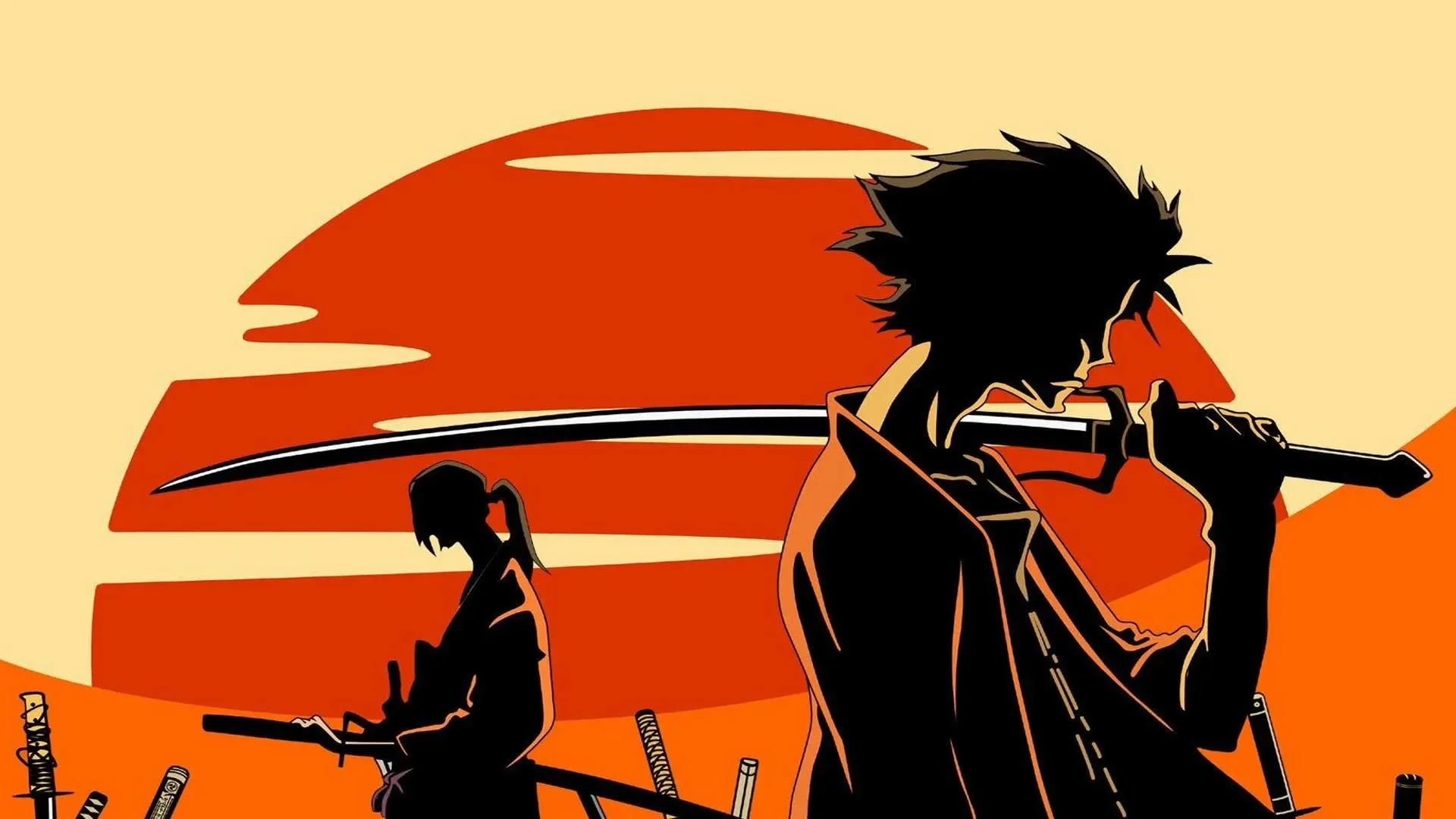
Samurai Champloo artwork. Image property of Manglobe.
Players who've picked up this year's rendition of action-adventure game Ghost of Yōtei, the highly anticipated follow-up to 2020's Ghost of Tsushima, are in for a hidden treat. Building on the original's Kurosawa Mode—a black-and-white filter layered with film grain and analogue hiss in tribute to legendary filmmaker Akira Kurosawa—Yōtei introduces something both nostalgic and newly relevant: Watanabe Mode.
Inspired by Cowboy Bebop creator Shinichirō Watanabe, Watanabe Mode swaps Kurosawa's grayscale solemnity for rhythm, flow and musical timing. "I wanted players to feel rhythm even when standing still," Watanabe said—and you do. Every slash of the katana lands like a drum hit; the silence between hums with tempo. It's a reminder that hip-hop and samurai culture have long been intertwined—a shared philosophy of mastery, motion and balance, with Watanabe's 2004 anime Samurai Champloo standing as the perfect example.
The fusion of hip-hop and samurai culture has deep roots. In the 1990s, the Wu-Tang Clan, led by RZA, wove martial arts imagery and samurai philosophy into their music, turning the streets of New York into a modern dojo. That sensibility carried into film in 1999 with Ghost Dog: The Way of the Samurai, where a hitman's actions carried a quiet, hypnotic rhythm. As composer RZA noted, "The film's score blends hip-hop with traditional Japanese music, highlighting the fusion of cultures."
By 2004, Shinichirō Watanabe expanded on this fusion in Samurai Champloo, creating an Edo-period Japan pulsing with lo-fi beats, freestyling energy, and raw rhythm. Samurai Champloo ran for a single season from 2004 to 2005, directed by Shinichirō Watanabe and written by Dai Satō. It brought hip-hop culture directly into the animation. Main character Mugen's combat style blends breakdancing with swordplay, giving the action sequences a kinetic, contemporary energy.
Episodes like "Artistic Anarchy" feature graffiti prominently, highlighting Edo-period Japan through the lens of urban street art, while others explore themes of literacy and artistic expression. These moments, combined with the soundtrack, underscore Champloo's commitment to merging traditional Japanese culture with modern hip-hop aesthetics, reinforcing the series' innovative, cross-cultural vision.
The series combined traditional Edo-period animation with modern sensibilities, most notably through its groundbreaking soundtrack. Tsutchie, Fat Jon, FORCE OF NATURE and Nujabes produced and curated the music. While Nujabes, a Japanese producer, brought a reflective, soulful quality with mellow beats and layered samples, Fat Jon, an American producer rooted in underground hip-hop, contributed dynamic tracks that amplified action and intensity.
Watanabe selected them to capture Champloo's duality—the elegance and discipline of Edo Japan and hip-hop's improvisational energy. Their music didn't merely accompany the visuals; it propelled them, shaping tone, pacing, and atmosphere while helping define the series' signature fusion of eras, styles, and rhythm.
One of the series' most striking examples of this fusion appears in the episode "Gamblers and Gallows." Here, Jin—a stoic and disciplined ronin trained in traditional swordsmanship—faces a high-stakes duel in a crowded marketplace. The percussion-driven soundtrack underscores every movement, heightening tension while reflecting Jin's precise, measured fighting style. Each strike lands with rhythmic weight and the pauses between attacks are as charged as the blows themselves, echoing the syncopation found in hip-hop.
“The concept of hip-hop influenced me rather than the music itself. For example, it’s sampling. This art form turns past music into new and edgy.”
The music transforms what could have been a conventional duel into a dynamic, almost lyrical sequence, where timing, flow, and improvisation are as vital as technique. In this scene, the soundtrack doesn't just accompany the visuals—it drives them, amplifying suspense, character, and atmosphere while showcasing Samurai Champloo's signature blend of historical setting and modern rhythm.
Over time, Samurai Champloo has grown beyond cult anime status: its aesthetic and music have inspired creative shifts. Afro Samurai followed its martial-musical blueprint; Carole & Tuesday embraces Watanabe's belief that music can carry plot; even The Boondocks tapped into that same energy—hip-hop as both soundtrack and social lens.
The soundtrack remains pivotal: the opening track "Battlecry" all but defines Champloo's identity. And as Movieweb observes, it helped "catalyze the lo-fi hip-hop genre—those chilled, sample-based beats that now soundtrack students, writers, and internet nights".
Samurai Champloo's influence continues today, with Flying Lotus providing the soundtrack for Netflix's Yasuke anime, a series based on the historical African samurai and a modern echo of the same rhythmic, cross-cultural energy Champloo pioneered. Decades on, Champloo's legacy endures not as a nostalgic relic, but as a creative frequency—one that still pulses in music, animation and aesthetic expression.
Watch Samurai Champloo on Crunchyroll here.