

Quantum Psalms: Mapping Out London's Faith Rap Movement
Through Obi Psalms' latest EP, we explore London's faith rap network—a tight-knit corner of the underground reshaping youth culture with optimism and purpose.

Obi Psalms in 2025. Image property of George Mortimer.
London's creative scene is finding its purpose, and new public figures are leading it towards the light. Obi Psalms—a rapper, poet and filmmaker—is a key player in this movement, championing joy, optimism and sincerity within a community of nihilist youth who feel dejected and apathetic about their world.
His fiery six-track manifesto, Kodesh, is his latest offering of hope: it champions humanity's enlightenment in an age of technological takeover and social decline. The production is an intriguing variation of Grime that adorns rumbling 808s with syncopated jazz breaks and warbled vocal chops; it represents a self-expression that allows us to thrive, innovate, and grow.
Kodesh is completely different from the mainstream techno-feudalist Babylon, where there is no monoculture shaping the music industry's innovation. Anarchic social media algorithms favour gimmicky soundbites instead, and the prevailing sound comprises repetitive loops and simplistic melodies conjoined in Frankenstein-like imprecision. That style represents universal senselessness, whereas the bold expressiveness of Obi's production represents universal assuredness instead.
Psalms has been developing his style for a while. The Deepest Shalom, his debut EP, prioritises soulful, waning cries in its sample selections, exploding its tight, boom bap grooves with dynamic human expression. His second project, Feast of Lights, encodes the ancestral rhythms of London's global diasporas into electronic dance patchworks, unlocking vivacious ecstasy from gridlocked loops. This emphasis on diverse and emotive humanity insists that there is something sacred and valuable in each of us.
The music nurtures and celebrates this, prompting us to see ourselves as valuable too. It's a message that poses a revolutionary disruption to the general helplessness that dictates our current global mood. It reminds people that they have autonomy over their circumstances. The ecstatic and idiosyncratic youth of London's creative circles seem to resonate with this message, and have been fervently following Obi's radio freestyles, festival performances and cypher appearances to experience more of it.
Obi's faith is the genesis of this message, and that faith has transformed into a love of community. Recently, I sat down with the lyricist to better understand his philosophy and its relevance to Kodesh.
He explained that a church is formed whenever humanity is united, harkening back to a biblical assurance from Jesus: "Where two or three gather in My Name, there I am with them," (Matthew 18:20). Hence, he hopes that audiences will become aware of their ability to band together and make the world a positive place to live in; they have the power to break away from unhelpful norms.
The name of the EP hints at this, too: Kodesh means 'sacred' or 'set apart'. It's the ethos behind his community outlet, Crystal Hearts, which gathers righteous mavericks from all walks of life to interact joyfully with one another and discover the light that we can all unearth as one. "God is in everything", Obi proclaims.
However, he notes that the direction of culture isn't always receptive to this message. "They want to hear gun fingers, they want to hear 'badman'," he laments. People aren't always keen to engage with lyrics that aren't easily digestible; they prefer hedonistic reverie.
This doesn't dissuade him, though. On this EP, you can hear the relentlessness with which he is trying to progress culture. He's like John David Washington in the film Tenet, trying to keep the world moving in one direction whilst malevolent forces try to push it back. "Set apart, don't go following trends", the community activist proclaims, a mantra that reminds him to stay focused on the mission.
This determination is a result of real life. Having grown up in South London's Brandon Estate, which has been described as one of London's most dangerous areas, he's seen horrors that have shaken him to his core (some of which he narrated on his debut single, "Faith", a metaphysical road rap odyssey). The positivity of his music allows him to heal from these traumas and encourages others to heal, too.
The violence and hedonism that his generation celebrates are the antithesis of this conscientious ethos. So he sharpens his pen and bounces prolifically between studio sessions with producers like Osquello, SamTheMan and LocalJoe to ensure that he can rise above the noise and appeal to fertile minds across the world. He's succeeded in that this year, having appeared on stages at Recessland, Jumbi Peckham, NT Lofts, and so many more.
During his day job, teaching kids with special needs, the South London rhymer is reminded why this is an urgent matter: young people need a popular culture that uplifts them and teaches them to uplift one another. Stating that "we can no longer be lukewarm", in part, he does this for them.
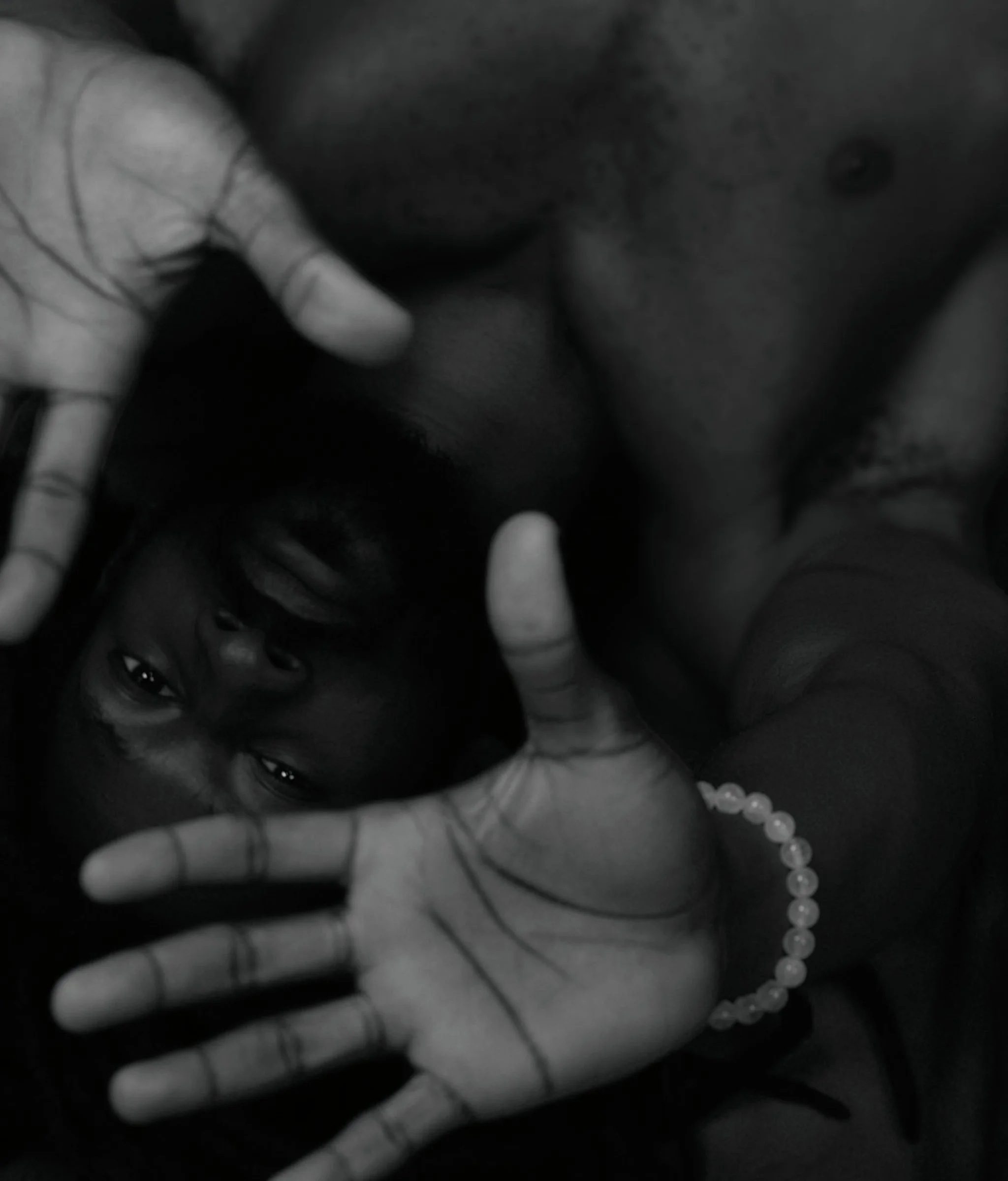

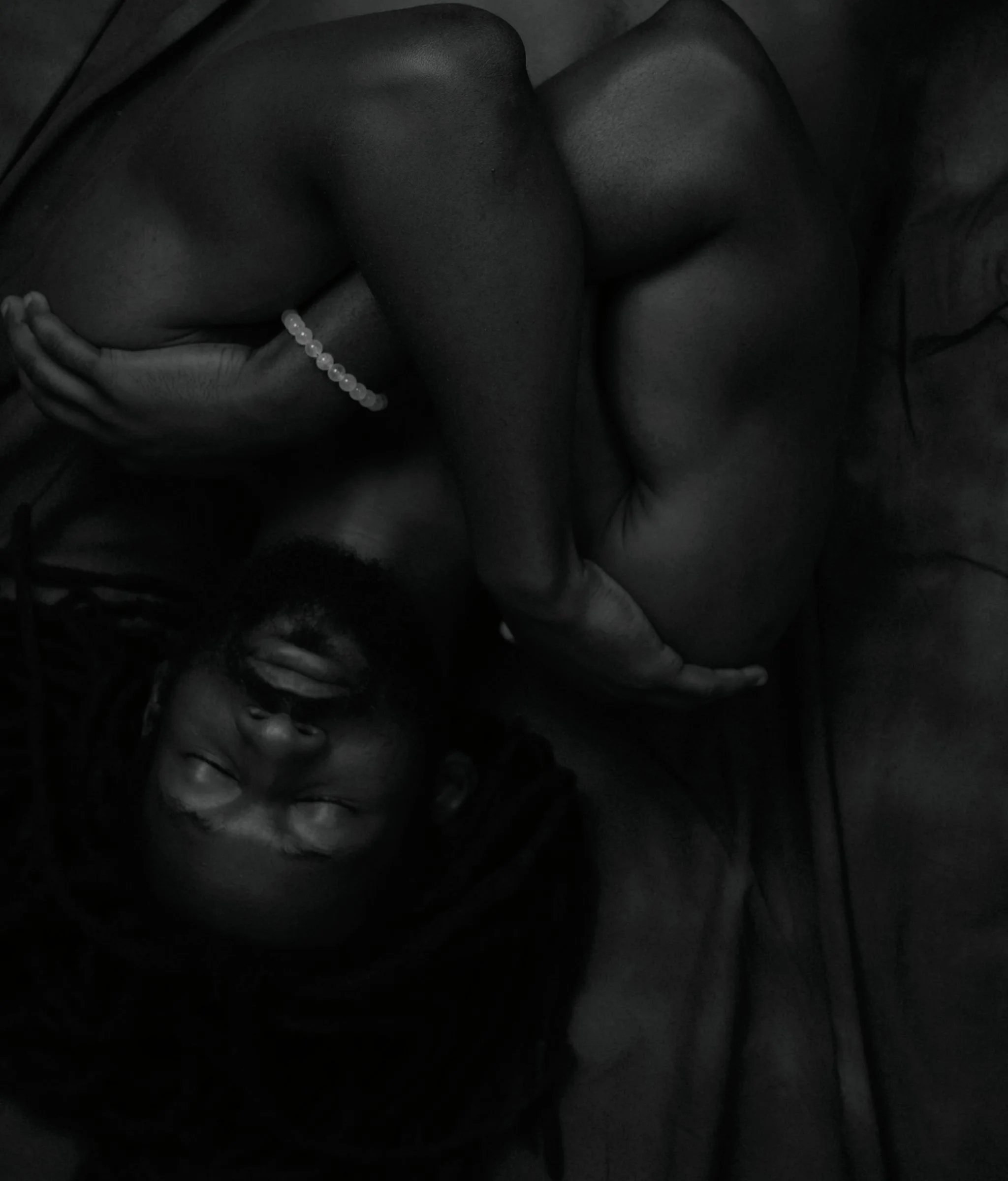
The almost unanimous disaffection in the rest of the UK underground genre is revealed in its production choices and visual identity: attempts to re-create and parody the past override efforts to generate the future. Terminally stuck somewhere between 2006 and 2013, they find themselves treadmilling from the tail end of Y2K aspirationalism to early austerity and back.
This was the last stretch of time in which our country's prevailing political messages were driven by hope—where the state supported the early careers of creative talents; where the relevance of popular music was upheld by its critical reception and monocultural appeal. To venture too far into the present is to re-experience the implosion of these cultural comforts, so the UK underground traps itself in the false hedonism of anachronism, which finds pleasure in the past because it can't find pleasure in the present.
It's a bit like Elizabeth R, a famous patient of Sigmund Freud, the father of psychoanalysis. She found pleasure in being paralysed purely because it helped her to suppress complex desires that she would never be able to act upon.
Much of the UK's underground rap scene—born in New Labour's optimistic era only to be forcefully bludgeoned into austerity-fuelled depression soon after—also suppresses a deep desire: they want to return to the more stable, cohesive and hopeful world that they were born into. Incapable of envisioning an equally promising future, they erect prisms in which time no longer progresses and rave on within them forevermore. Freud describes this type of suppression as hysteria.
On "FYA", Kodesh's buoyant fourth track, the rapper offers the simple prayer: "ignite my heart when it stops again", espousing a determination to keep venturing on into the future. He's set apart from the hysterical artistry of his peers because he rejects the stagnant cycles that keep humanity culturally dead within its own anxieties.
“Much of the UK’s underground rap scene—born in New Labour’s optimistic era only to be forcefully bludgeoned into austerity-fuelled depression soon after—also suppresses a deep desire: they want to return to the more stable, cohesive and hopeful world that they were born into. Incapable of envisioning an equally promising future, they erect prisms in which time no longer progresses and rave on within them forevermore. Freud describes this type of suppression as hysteria.”
Repetitively depicting his determination as a "fire", he burns away at nihilism and illuminates the pain of the present instead of suppressing it. This lucid hopefulness is indicative of an Afrosurrealist slant, which uses a critical engagement with the present to perceive the unimaginable.
In the same way that the famous jazz surrealist, Sun Ra, invoked space and fantasy to address the racial and class traumas of his time, Obi uses quantum physics and the authority of angels to depict his ideal world on the R&B-sampling, mellow-grime treatise, "T8ME". The world that he depicts feels so divorced from our present, but he devotes himself fervently to platforming it.
This is all part of the process of finding the inner child, he explains; not the inner child of popular culture, but a pure inner child that trusts in things they cannot see, and believes in the future's infinite capacity for good: Jesus said that heaven was made for children such as these. Kodesh combines pure, child-like wonder with a sagacious social awareness to offer a guidebook for getting there.
Afrosurrealist faith rap is a bodacious addition to a rap landscape in need of hope. It does not end with Obi Psalms, even if he is one of its pioneers. Stalwart of the Brighter Days Family, Dochi, is the Trunks to Obi's Gohan. He appears twice on Kodesh to muse about the metaphysics of time and universal salvation through Christ.
Dochi's razor-sharp, double-time flow always complements Obi's capacious, pulpit passion, inspiring listeners to simultaneously erupt into fervent excitement and simmer in quiet contemplation. Their unique sound is characterised by Freudian slips into Broken Beat (the UK's most underrated dance genre). Dochi's recent single with Marvin Jupiter, "In House", is a masterful result of that, which laments the oppressiveness of Babylon's concrete jungle whilst celebrating heavenward discipline.
These boys have a fraternal bond with grime golden child, Novelist, who became a born-again Christian some time in the last decade and often praises God in music and interviews. They're also affiliated with rising producer and rapper, KIZ!, who reminds Obi of the foundations of his faith, teaching him to move forward one step at a time. In practice, this looks like a patient devotion to the biblical scriptures that these emcees derive their truth from and an active engagement with the turbulent world they live in.
Grime artists, namesbliss and Deeriginal, follow this practice too. They're frequently championed by TravsPresents, Red Bull and DaMetalMessiah, showcasing their Christian faith with oddball, off-the-wall flair. They represent the lucid bliss that one can discover by devoting oneself to a higher power. Their surrealism lies in their fantastical and humorous explorations of the mundane.
The exuberant outpourings from this cohort may represent new and innovative disruptions to convention. Still, they're also parallels to other faith-facing approaches invoked by artists like Svn4vr, Melvillous and Ceebo, whose lyrics are a hyperrealist examination of the struggle to remain faithful to Christian values amidst a chaotic world. These different styles are all successes in a longstanding Black British tradition of faith music. Notably, artists like Guvna B and Faith Child forged strong foundations through anthems like "Kingdom Skank" and "Bibles, Bibles".
The renaissance of Faith music represents a refusal to sleepwalk into calamity. There are problems all around the world that make us feel afraid, angry and hopeless. Faith music indicates an eternal path of individual and social betterment—a way out.
The happy hysteria that characterises the rest of the scene is one means to (not) engage with the cacophonies of our deprived world; the imaginative discipline of its Christian emcees and artists is another. The unique, intriguing styles they're cultivating hint at a burgeoning revival; one in which we're all able to engage with the world truthfully, optimistically and righteously.