

Our Life, Our Music: Celebrating Little Brother's 'The Minstrel Show' At 20
20 years after its airing, we tune into Little Brother's iconic second album—worth every re-run.
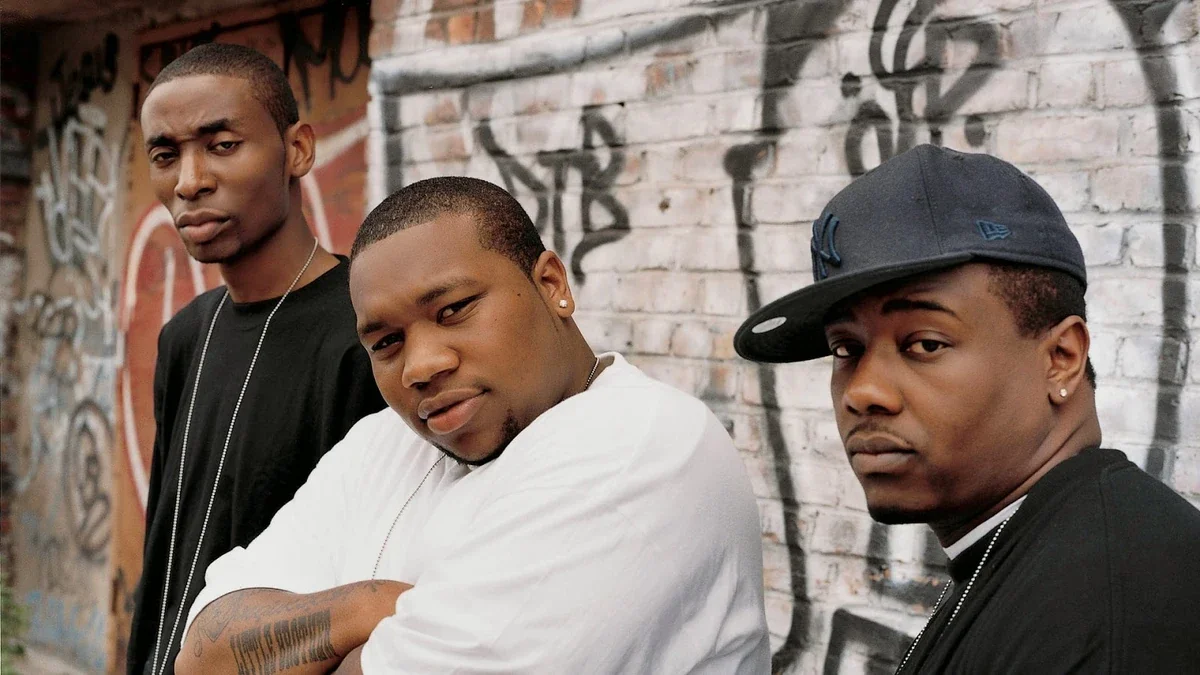
9th Wonder (left), Big Pooh (centre) and Phonte (right).
The early noughties were a Renaissance period for modern hip-hop: the quality well and truly matched the variety. In 2001, Jay-Z delivered smoke clouds of soul on The Blueprint while Nas fired back with Stillmatic, cementing one of rap's most defining rivalries. A year later, Missy Elliott dusted off the chart-topping Under Construction, balancing pop polish with rap reverence.
Then came 50 Cent's Get Rich or Die Tryin' in '03, swiftly followed by Kanye West's back-to-back classics, The College Dropout and Late Registration in '04 and '05. But even with all those household CDs in the stereo, no conversation about mid-2000s hip-hop feels complete without mentioning Little Brother.
The Minstrel Show is a razor-sharp concept album, both a catalogue of timeless hip-hop and a mirror for the entertainment industry. The project takes us on a journey—cleverly cosplaying as "the biggest coloured show on earth!"—portraying a "new hit sitcom" aired weekly on the imaginary "UBN" network.
Whilst ringtone rap dominated the airwaves, this razor-sharp concept album challenged the status quo. 20 years later, play it back and you'll see that it's worth every re-run like any cult classic or blockbuster hit.
The songs are episodes, the interwoven skits and jingles are commercial breaks, and the overriding concept is a satirical expression of how US media treats Black culture for profit. Turning the lens back on the industry it came from, this album is a reclamation; as stated in the opening track, "This is our life, this is our music, it's our Minstrel Show!".
I was introduced to the album in my teens. At the age of 13, I made a reputation for myself as the hip-hop nerd at school. I knew all the legends and tapped into lesser-known artists, more likely to have A Tribe Called Quest playing through my headphones when everybody around me was enjoying whatever new songs Drake, 67 or J Hus put out at the time.
When I first explored New York trio De La Soul's catalogue, I made an interesting discovery. BET refused to play the music video for their recent single, "Shopping Bags (She Got from You)", claiming that the group was "no longer relevant to the audience".
One year later, BET would pull an even more egregious move, but this time against a different set of victims: the network refused to play "Lovin' It", the lead single from North Carolina group Little Brother's sophomore album, The Minstrel Show. Allegedly, the song was "too intelligent for the audience".
After discovering this, I listened to the track for the first time and was immediately blown away. The song sounded somewhat familiar—as a Curren$y fan, I knew the G-Series mixtape with fellow Young Money member Mack Maine, who had freestyled over that "Lovin' It" beat. And of course, we can't forget Lil Wayne's very own "This What I Call Her", also sampling that same beat.
Falling across "Lovin' It", alongside my knowledge of producer 9th Wonder—through Young Roddy's "Blow", and his contributions to Lecrae's Church Clothes mixtape, which resonated with my Christian upbringing—facilitated my introduction to Little Brother. Delving into their work as a 13-year-old changed me. I was intrigued by their beat selection, the grown man rhymes, 9th's intricate ear for samples, and the chosen featured artists who would entwine perfectly with the rap leads.
So who is Little Brother? The hip-hop group was formed in 2001, comprised of rappers Phonte Coleman and Thomas "Rapper Big Pooh" Jones, as well as producer Patrick "9th Wonder" Douthit. All three members were alumni of North Carolina Central University. Phonte and 9th Wonder were NC-born-and-raised, and Big Pooh came straight outta Virginia.
Their debut album, The Listening, was released in February 2003 via ABB Records and became an instant classic, primarily through the avid social media platform, Okayplayer, an early blog rap feat not celebrated nearly enough.
They were the proverbial 'little brothers' of hip-hop, taking the classic, boom bap sound and injecting it with 21st-century wit and shine. Arguably just as great and beloved as The Minstrel Show, look no further than Phonte's dynamic rhymeless rhymes on "Whatever You Say" or the glossy production on "So Fabulous".
The group's collaboration process was already evolving during the collaborative sessions leading up to The Minstrel Show. The group's Chittlin Circuit mixtapes that preceded the album showcased this shift, featuring multiple producers, including their go-to, Khrysis and Oddisee. This allowed Phonte and Pooh to express their skills on various tracks.
On September 13, 2005, The Minstrel Show—brazenly christened Nigga Music before switching to a slightly more palatable title—dropped. Its build-up reflected the active year that Little Brother and their hip-hop collective, Justus League, had experienced around in The Chittlin Circuit working with the likes of a young Kanye West and wrangling with their aforementioned revolving door of soundscapes.
Unlike the mixtapes, though, The Minstrel Show is still heavily influenced by 9th Wonder, even though he wasn't present in the studio for this project. Much like their previous album, The Listening, this one also includes an external beat that fits seamlessly into the album's context (in this case, it's Khrysis' exceptional track "Watch Me").
Everybody in The League had a project out by 2005, from Rapper Big Pooh to Cesar Comanche. Phonte reached across the world to form another group, The Foreign Exchange (with Dutch producer Nicolay) and they released their R&B and soul-swept debut, Connected a year earlier. And 9th Wonder was hard at work producing an entire album for Buckshot and lending beats to Destiny's Child, Sean Price, Masta Ace and Jay-Z. Notably, Little Brother inked a major deal with Atlantic, signifying serious moves for the group.
Despite the previous BET controversy, The Minstrel Show made waves. It is a beautifully executed, sharply satirical concept album, and a tongue-in-cheek nod to the racism, stereotypes and discrimination inherent within American culture and its entertainment industry. Through this body of work, Little Brother re-purposes the landscape upon which their art was built.
They juxtapose the cultural climate with the historical elements that predate it, through the sonic lens and playful skits of prime time TV show, The Minstrel Show, aired on UBN (an acronym for the standing for the fictional U Black Niggas network).
After a funky opening theme handled by the sweet-sounding YahZarah, "Beautiful Morning" and "The Becoming" exude different senses of optimism and confidence; whether it's both Phonte and Pooh reflecting on their hardships while still doing what they love, or Phonte having his own space to flex about the great buzz their last album had.
"Not Enough" addresses the group's hard work and dedication, primarily radio play, while confronting industry conflicts. "Say It Again", despite its celebratory spirit, houses a sobering and memorable lyric from Phonte: "I love hip-hop, I just hate the niggas in it".
“Through this body of work, Little Brother re-purposes the landscape upon which their art was built. They juxtapose the cultural climate with the historical elements that predate it... a tongue-in-cheek nod to the racism, stereotypes and discrimination inherent within American culture and its entertainment industry.”
A standout track, "All for You", appears later in the sequence as the most heartfelt moment of the album, exploring the group's complex relationships with their respective fathers and navigating their emotions through song. Phonte's verse is the most poignant, addressing his dad alongside his own personal experience as a father, amidst a strained relationship with his ex-partner.
For every serious performance they pull off, there is witty humour in between, making for the perfect balance. "Cheatin'" is a proper introduction to the fictional character of Percy Miracles (courtesy of Phonte), parodying the Isley Brothers and R. Kelly collaborations that were popular at the time.
"Diary of a Mad Black Daddy" is a nod to the breakthrough Tyler Perry play-turned-film that was out seven months before the album. And "5th and Fashion" utilises a funky jingle composition around a fictional clothing store.
The Minstrel Show develops the synergy of Phonte and Pooh, showcasing their position as a dynamic duo, even beyond 9th Wonder's soundscapes. In the 2023 documentary, May the Lord Watch: The Little Brother Story, Phonte and Pooh detail the process of the album's making, noting that most of the album was recorded without the producer being present in the studio.
With 9th rising further in his success and being more occupied with artists beyond the Justus League, it made sense that he would not be with 'Te and Pooh forever. Although his sonic presence is felt across the album, several other producers, from Khrysis to Piano Reeves, also lent their hand.
The other guest stars amplify The Minstrel Show even further. The collaboration process of the previous album, The Listening, was mainly kept in-house with only one rap feature and a few additional contributions. The Minstrel Show is similar in its careful curation but feels vaster. The soulful Darien Brockington adorns the choruses of "Not Enough", "Slow It Down", and "All for You". Lyrical veteran Elzhi pops up for a back-and-forth masterclass with Phonte on "Hiding Place".
Hall of Justus alumni, Joe Scudda, performs in "blackface" for the group's definitive hit song "Lovin' It" and Chaundon implements a very cocky delivery for the final song of the night "We Got Now". And lest we forget the late J Dilla, who would have featured on The Minstrel Show, but this was prevented by his illness—he then tragically passed away months after the album's release.
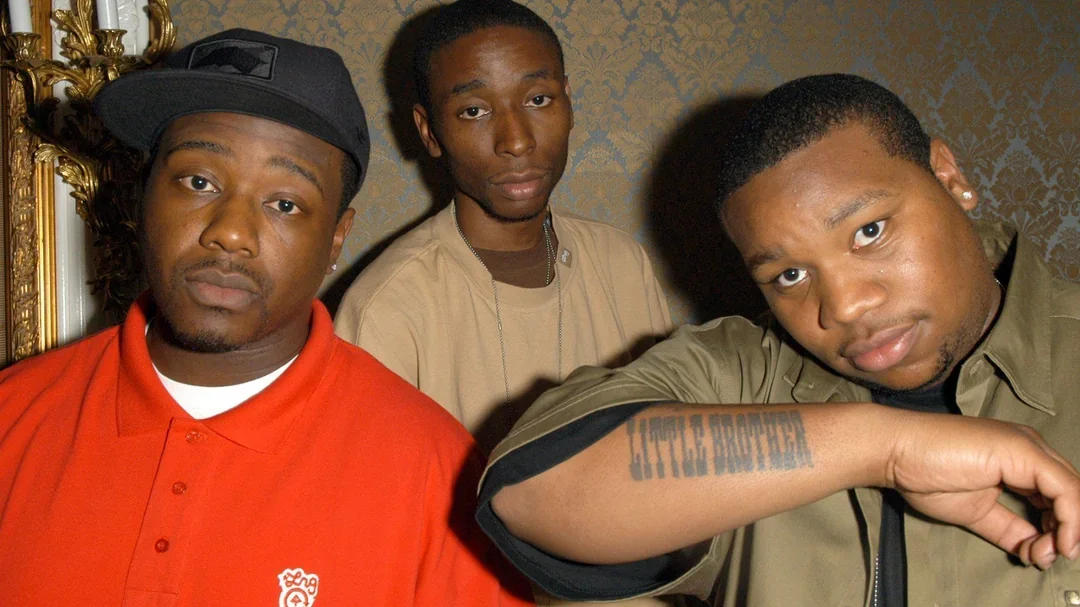
Phonte, 9th Wonder and Big Pooh in 2005. Image Property of Ray Tamara/Getty Images via Rolling Stone.
Over the last 20 years, a lot has changed. 9th Wonder would part ways with Phonte and Pooh twice, officially making Little Brother a duo. After a huge return with their fifth studio album, May The Lord Watch in 2019, Little Brother's world tour was postponed due to the pandemic.
Atlantic Records would eventually let the group go, and their relationship with former record label ABB Records would turn sour in 2021, when they took to social media to call out unpaid royalty cheques for The Listening and The Minstrel Show. And now, after many tumultuous experiences with the live music industry, Little Brother is embarking on its final tour, which may or may not mean an official curtain call for the group.
But when the final scene fades to black, Phonte, Pooh and 9th Wonder will have fulfilled their vision of leaving a deep-rooted mark on the industry and fellow rappers from past and present. The Minstrel Show plays a lead role in solidifying Little Brother's name in hip-hop's headstone.
Through the controversy, sales and creative freedom, this genre staple stands out as one of their most definitive works and a symbol of their legacy. Like the TV classic it portrayed, The Minstrel Show is a masterpiece that is impossible to turn off—one of my favourite albums and an unforgettable episode in the long-running series of hip-hop history.
Stream The Minstrel Show below: