

'Love & Basketball': One Quarter Later
25 years since its creation, Gina Prince-Bythewood's cult classic continues to live on…
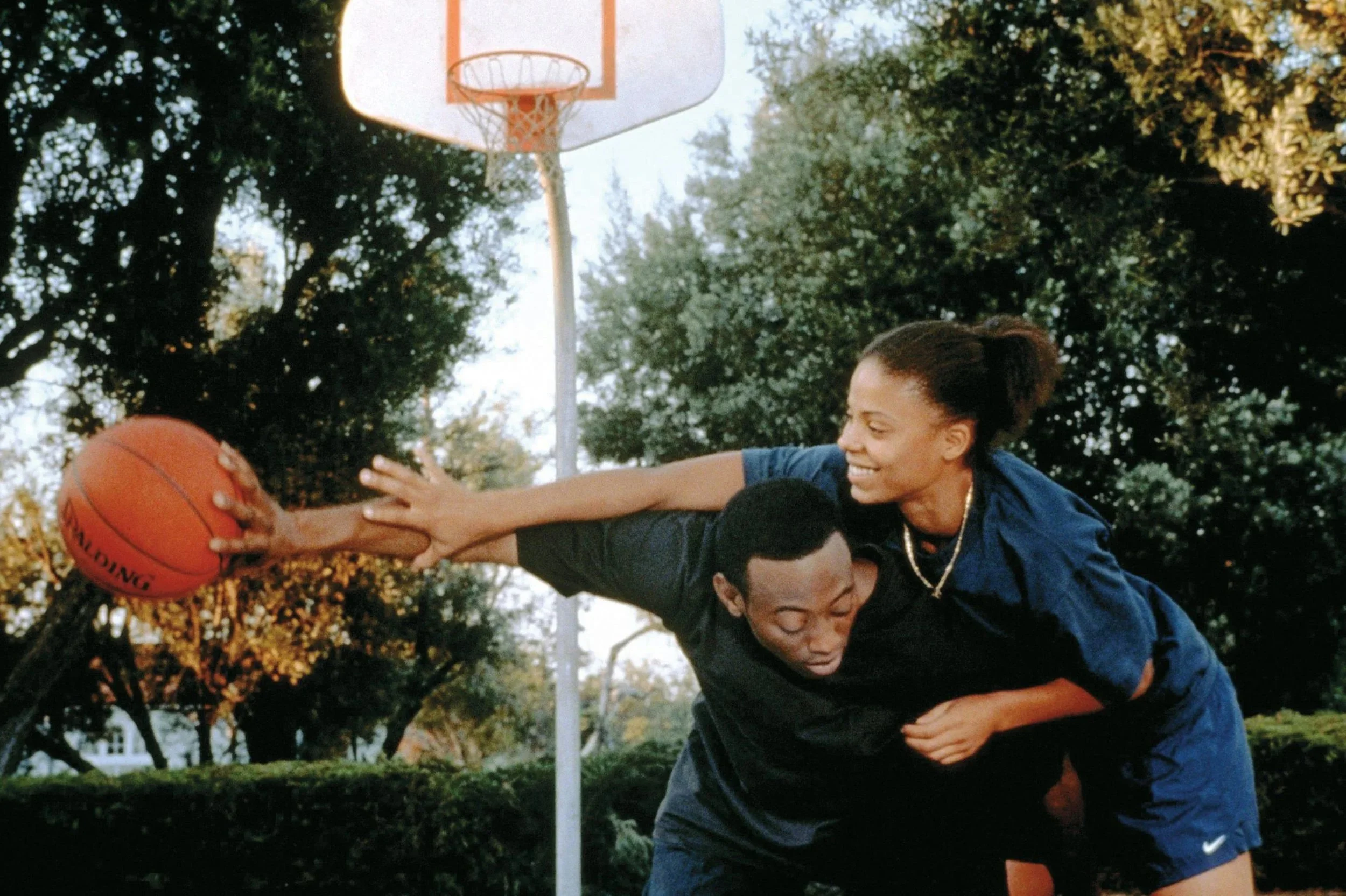
Quincy (Omar Epps) and Monica (Sanaa Lathan). Image property of New Line Cinema.
"You can fake a jumpshot but you can't fake a closeup." This was the realisation that young California-native, Gina Prince-Bythewood, came to when casting her first feature film, and one of the most iconic Black love stories on-screen, Love & Basketball. This semi-autobiographical cult classic is a love letter to basketball and Crenshaw, capturing young Black essence against the backdrop of the court. It tells the tale of two ball-obsessed teens from LA, Quincy and Monica, whose passion for the sport and each other prevails.
Despite its resounding and lasting success, this beloved motion picture faced some resistance before it came to fruition. After quitting her job as a TV writer to work on curating Love & Basketball over the course of a year, Prince-Bythewood faced multiple studio rejections because her script was "too soft". However, reading that same script at the Sundance Institute's directing and writing lab caught the attention of Sam Kitt, then head of Spike Lee's production company, 40 Acres and a Mule Filmworks.
From directing Denzel Washington in the 1998 film He Got Game to creating the definitive Black mural representing late '80s New York with Do the Right Thing and Nike's Mars Blackmon ads, Spike Lee is arguably just as much a fan of the Knicks as film itself. As executive producer of Love & Basketball, his dedication to the game only enriches the current of love that drives this film.
With Lee's support, Prince-Bythewood brought the project to Mike De Luca, then President of New Line Cinema; he took a chance on her and greenlit the script that would soon become a beloved classic. De Luca's only request was this: a young Omar Epps should play the role of Quincy "Q" McCall.
We're introduced to Quincy as a decisive yet insecure ball player, who is constantly reminded of his identity as a young Black man in Crenshaw. As Quincy tries to keep his eyes and heart on the court, his physical and emotional trials pull his head away from the game. The director depicts different iterations of heartbreak through the lens of this character, as Quincy navigates his father's betrayal and his body's limits being tested, eventually pushing him to part with basketball.
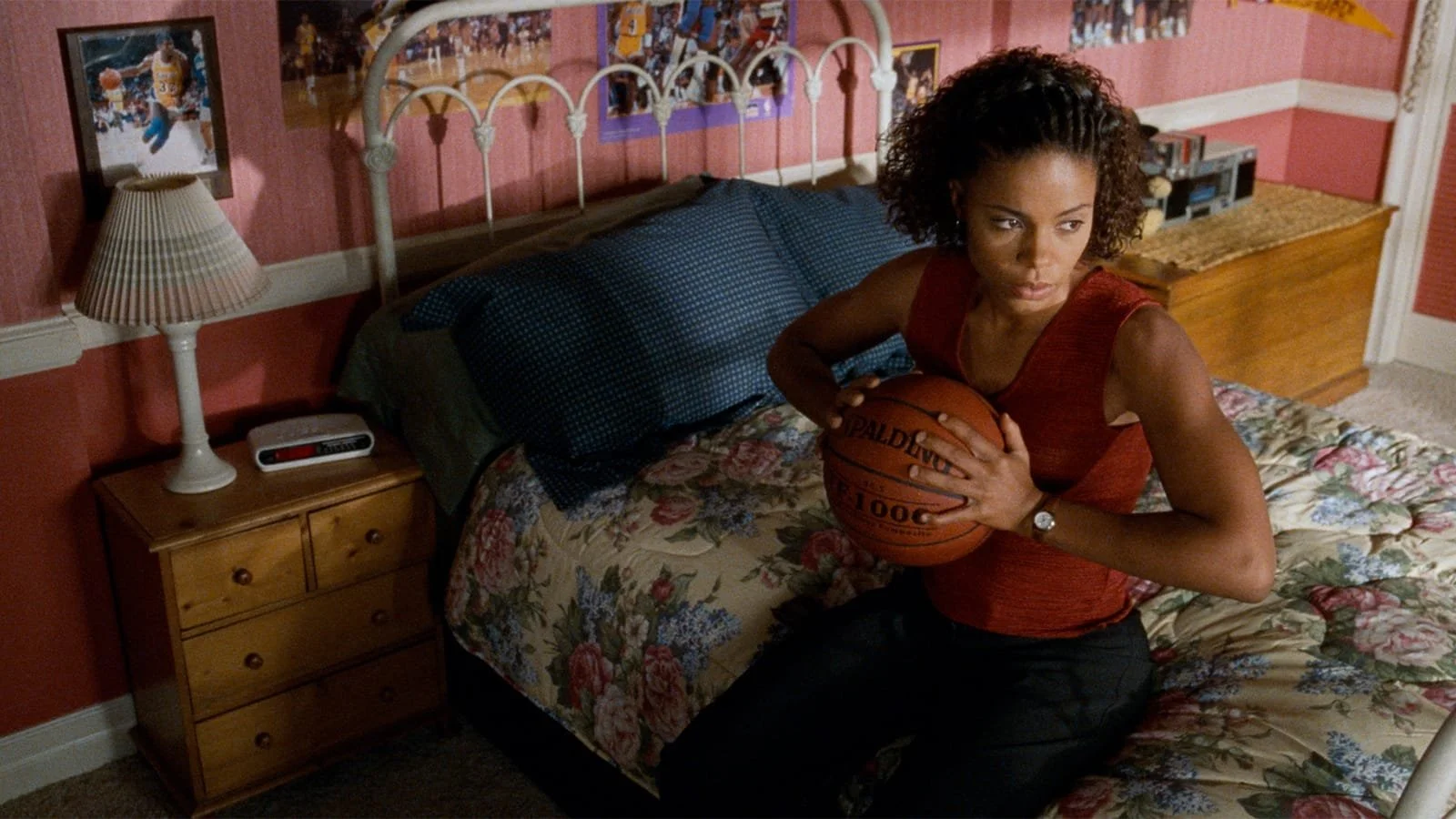
In the film's first quarter, the highly desirable Quincy is predicted to be drafted by the NBA, but the fourth quarter (filmed during a real WNBA game) sees him sitting in the bleachers. Prince-Bythewood gently yet firmly uses the character of Quincy McCall to tell us that when dreams don't come true, it's okay. She depicts the rise and fall of a young, promising Black male athlete, boldly subverting sporting ideals in a way that was unseen in the late 90s and early 2000s.
While it took one call to cast Omar Epps in Quincy's pivotal role, casting Sanaa Lathan as the leading lady wasn't straightforward. The director was searching for a female athlete who could simultaneously convince an audience in the acting department; as a basketball player, she wanted to do the sport justice on-screen. But after a fresh-faced Sanaa Lathan, who had never touched a ball, auditioned for the role of Monica Wright, Prince-Bythewood was stopped in her tracks. Lathan herself demanded that if the auditioning ball players had acting coaches, then she, as an actress, needed a basketball coach.
Assistant coach of the LA Sparks team, Colleen Matsuhara, stepped in, and Lathan underwent a gruelling four months of training to fight for her shot amongst fellow potential Monicas, including young basketball player Neisha Butler. It took a lot of deliberation, but Prince-Bythewood eventually realised that Love & Basketball was a love story, set inside the basketball world, and no one could convince an audience of that better than Sanaa Lathan. Ultimately, Lathan brought the swagger, the height, the demeanour and most importantly, the fierce emotion required for her dream main character. Just like that, the perfect Monica Wright had been found.
"You jump in some guy's face, you talk smack, and you get a pat on your ass. But because I'm a female, I get told to calm down and act like a lady," Monica says in one of her most famous lines from the film, "I'm a ball player." In her pursuit of making it, the film follows Monica's difficulties in reconciling her competitive and aggressive style of play with her off-court female identity.
When Prince-Bythewood first wrote Love & Basketball's script, the Women's National Basketball Association (WNBA) did not exist. In light of the Association's birth and success, she wrote a new ending to her screenplay to show that "a woman could, and should, have it all." To Prince-Bythewood, it was essential to share the story of a young Black woman thriving in love, sports, and career. In the film's closing scenes, Quincy's position in the stands—supporting his wife and her talent despite his athletic dreams not coming to fruition—paints a powerful picture.
After the final buzzer, Donell Jones' 'I'll Go' swells, reminding us that Love & Basketball lives as much in its soundtrack as it does on the court. From classics like Al Green's "Love and Happiness" and Rufus & Chaka Khan's "Sweet Thing" to neo-soul gems from Lucy Pearl, Angie Stone and Bilal, the music mirrors the film's emotional arc, echoing the highs and lows of love, ambition and liberation.
The true three-pointer of Love & Basketball is the incredible career of its director. Following Love & Basketball, Prince-Bythewood continued to craft compelling narratives, directing 2008's The Secret Life of Bees and 2014's Beyond the Lights. In 2020, she made history as the first Black woman to direct a major comic-book film with The Old Guard, starring Charlize Theron. Her 2022 Viola Davis-led epic The Woman King further solidified her reputation, earning critical acclaim and multiple award nominations. That's how you ball.
Once dismissed as "too soft", Prince-Bythewood's vision widened the lens for Black love on screen, following in the path of Love Jones three years earlier and offering a kaleidoscope of experiences (romantic, complicated, and honest) that continue to inspire audiences today. A quarter of a century on, Love & Basketball reminds us how vast and enduring contemporary Black cinema truly is.
Purchase the Criterion Collection edition of Love & Basketball here.