

R&G and Me: Finding Home Between Grime and R&B
Exploring grime's softer side…
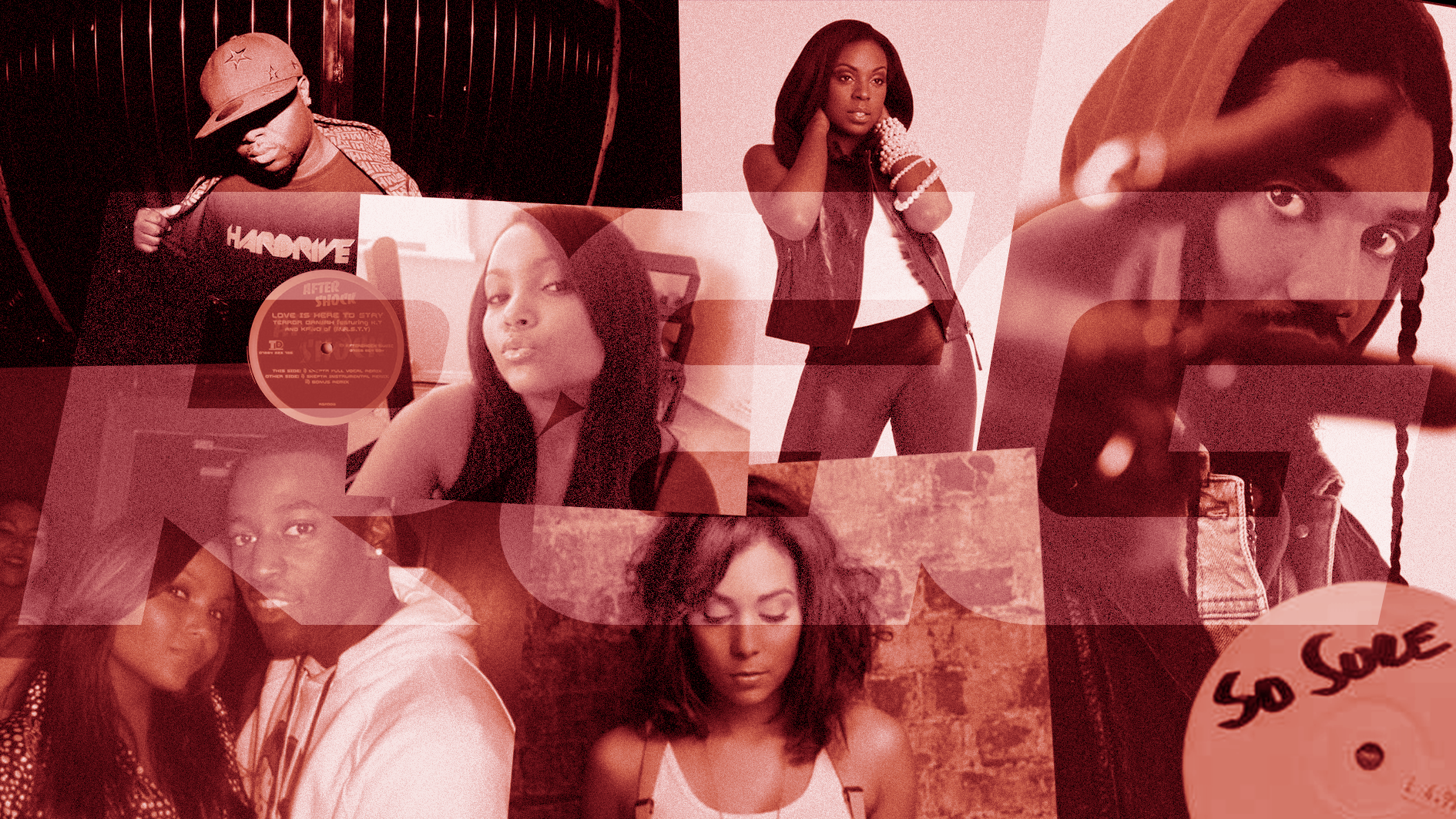
A collage of some—R&B loving—grime greats. Image property of The Culture Crypt.
R&G—rhythm and grime—is a term I only discovered recently. Before I ever understood it as a genre, I recognised it as a feeling. It perfectly describes the fusion of sounds that I grew up with; the quiet meeting point between melody and grit, where the silky, emotional core of R&B meets the cold shudders of grime, a genre born from UK garage and jungle.
R&B was never new to me. Growing up, car journeys with my mum became their own archive, a syllabus of heartbreak, joy and groove curated track by track. Kut Klose melted into Jodeci then into Craig David, who bridged R&B with garage in a way that felt proudly British.
David's opus, Born to Do It, in 2000, is what pushed dance-led UK R&B into the commercial space without abandoning its roots. Songs like "Fill Me In" and "7 Days" sat on crisp garage production while still holding the emotional core of R&B.
Before critics began retroactively mapping the sound, R&G was already quietly circulating through pirate radio, white labels and half-finished studio sessions across East London. Producers like DaVinChe, Terror Danjah, Scratcha DVA—and Wiley at the earliest edges of his garage-to-grime transition—recognised that grime's skeletal 140 BPM rhythms could hold more than bars and bravado. In fact, even before grime fully solidified, proto-R&G ideas were already emerging in tracks like Wiley and Danny Weed's 2000 garage single "Nicole's Groove", released under the Phaze One moniker.
Threading R&B melodies through those icy drums created a tension that felt distinctly British: tenderness layered over urgency, softness navigating the same estates and stairwells that birthed grime itself. Think Kelela's track "Enemy", Ny and Purple's single "Fire" or Dizzee Rascal's softened remix of "I Luv U".
One of the earliest and most quietly influential moments of that shift arrived through singer Katie Pearl. Around 2004, she recorded Make It Official, a DaVinChe-produced project that would remain shelved for over a decade. Circulating in fragments and industry whispers, the album captured something that R&G would later be credited with formalising: lush R&B vocals moving effortlessly across grime's colder instrumental palette.
“To me, grime feels like home. It’s where I really found my voice as an artist. At the time, the industry didn’t know what to do with me. At the time, R&B in the UK was looked at funny by all the majors. The grime scene was alive, wild and open: it gave me a platform.”
At its centre sat a collaboration with Kano that many close to the scene now point to as a quiet ground zero for the sound. Listening back now, that moment feels almost prophetic. Long before artists like Kelela would later explore similar territory—placing emotionally rich vocals over experimental, grime-adjacent production—the blueprint was already being sketched in East London bedrooms and local studios.
If R&G eventually became shorthand for grime's soulful edges, records like Make It Official suggest the idea had been forming long before the term itself began circulating. But my personal relationship with music runs deeper than history books or shelved projects.
One summer day, my dad took me to a friend's house where I played with his daughters. Outside, an ice cream van pulled up and a man bought us all 99p Flakes. I didn't know it then, but that man was Wiley. In my mind, he was just some older guy making sure no child went without ice cream in the sun.
Wiley and my dad came from the same corners of East London, where everyone's paths overlapped by default. Dad tells me that Wiley's father bought him instruments to keep him occupied—keyboards, drum machines, odd bits of kit that slowly turned his bedroom into an accidental hub for the neighbourhood.
That little space started pulling people in—kids, teenagers, anyone curious about sound or just looking for somewhere to be. My dad was one of the people who found himself there often, drifting in and out of Wiley's house as that makeshift studio became a space where ideas bounced, friendships formed and community built itself without effort.
What began as a way to keep Wiley busy ended up becoming one of the early breeding grounds for experimentation, the kind of room where you learned by watching, copying, trying, messing up and trying again.
My dad talks now about his glory days, bookings across Europe and clubs packed to the walls. At the time, I didn't grasp the gravity of grime. Being a child of it was like being asked to describe air; it was just there, surrounding me.
It was the era when Channel U still echoed through living rooms, when BBM broadcasts went out every hour, when people debated whether Tinie Tempah's "Pass Out" had changed everything or whether Tinchy Stryder's chart run was the real turning point. Kids wore G-Shock watches and Superdry jackets, everyone wanted a BlackBerry Curve and grime was slipping in and out of mainstream visibility.
Most of the music happened at home, my dad's bedroom pressed with weed smoke, thick with conversation. Years later, I began finding my dad's traces in places I never expected. He worked closely with Wiley on early projects, shaping sounds that would eventually ripple through grime's foundations. His name appears quietly in the credits of tracks like "Letter 2 Dizzee" on the 2007 album Playtime Is Over.
Then there was Dizzee's 2012 track "Boom Blast", the commercial smash that proved he could dominate radio without diluting what made him who he was, followed by a string of remixes that carried that same restless energy. Seeing those credits made me realise how intertwined my family history was with the music that raised a whole generation.
Recently, I asked my dad to describe grime at the time. "It was mixed reactions because obviously the people of garage did not like the crowd. When we had garage, it was about going out smart, dressed up, Armani, Moschino, garmed up, you get what I'm saying? And then when grime came, grime was not smart. It was all about low-batty trousers, loud shit."
He continued, "In garage, people would go out to dance, bop, have a drink, some people would take drugs and do their likkle one-two. But in grime, that was like people going out for trouble. People were going out to the raves to have beef. And it was messing up the scene."
My mum gave me R&B's softness, its ache and joy. My dad gave me grime's edge, its hunger and defiance. Long before the 2000s, singers like Omar cracked open the possibility that soul music was not only American but could be homegrown—ours.
The more I grew into this love, the more I started noticing the producers and artists who were already stitching those influences together. The deeper I looked into the music that raised me, the clearer it became that these worlds had already begun merging long before anyone gave it a name.
“Recording my album was a really free and creative experience. DaVinChe was a huge influence on my sound development. He and the label [Paperchase] were amazing. I was too unserious and young at the time. Sadly, it never came out when it was supposed to. We took a break and never came back properly. My album is so important because no full R&G album exists, except for mine.”
Producers like DaVinChe, Terror Danjah and Sticky were quietly reshaping the DNA of British music. DaVinChe's melodic sensibility sat right at the intersection of R&B and grime, crafting hooks and chord progressions that softened the edges without ever smoothing them out.
Terror Danjah brought a kind of glossy darkness, with synths that shimmered and beats that snapped, building entire worlds out of tension and sweetness. Sticky, rooted in garage and dancehall, pushed those rhythms into spaces where R&B vocals suddenly made perfect sense. Tracks like 2005's "Rider" and "Story" captured that duality exactly.
In an era where grime built its identity on hardness, grit and defiance—softness was often treated with suspicion. Vulnerability was something you protected, not performed. So when producers began sneaking chords, harmonies, and tenderness into a space defined by aggression and urgency, it was more than quiet resistance.
It was a refusal to let Black British masculinity be flattened into one thing. A reminder that even in the roughest sounds, there was always room for feeling. That kind of experimentation carried weight because it pushed against the expectations of the scene while still honouring its core.
I also began rediscovering singers like Sadie Ama, whose voice made that resistance visible. Her collaboration with Kano and Terror Danjah on the 2004 white label classic "So Sure" showed how effortlessly R&B vocals could sit inside grime's framework, floating above the production without losing any warmth and sentimentality.
Even Ama's other tracks—like "Fallin'" or "Be the One" with Wiley—carried that same glacial, yet soulful mix, weaving vulnerability with lyrical vim. She represented the overlooked bridge between R&B singers and grime emcees, proving that softness had always been part of the scene, even if history didn't always highlight it.
On the R&B side, producers like Naughty Boy, P2J and early Labrinth were pushing in the opposite direction, taking the grit of UK underground music and folding it into richer, more polished arrangements. Naughty Boy brought cinematic density, P2J injected warmth and bounce rooted in Black British identity, and Labrinth experimented with unexpected textures that blurred genre lines entirely.
Together, they made me realise that R&G was never an accident or a failed experiment of the 2000s. Looking back now, I think R&G truly embodies the boundless creativity of my dad's generation and, by extension, the Black British music scene as a whole.
All of it pulled me in different directions, yet somehow led me to the same conclusion: these sounds belonged together. Listening to rhythm and grime in 2026 is like stepping back into another life—the blend of melody and muscle, basslines that leave room for experimentation and almost genreless expression, Bow estate stairwells colliding with R&B car rides.
My mum's piercings caught the glow of a streetlight as strings bled from the speakers. My dad leaned over his worn, tattered laptop, forcing me to follow every chord that felt like it was giving him life while quietly breaking him at the same time. At that moment, I finally understood why rhythm and grime feel like home.
Stream Make It Official below: