

Inside 'Made in the Manor': A Track-By-Track Look at Kano's 2016 Masterpiece
A thorough exploration of Kano's fifth album—a powerful return shaped by the intensity of the 2010s grime revival—10 years later.
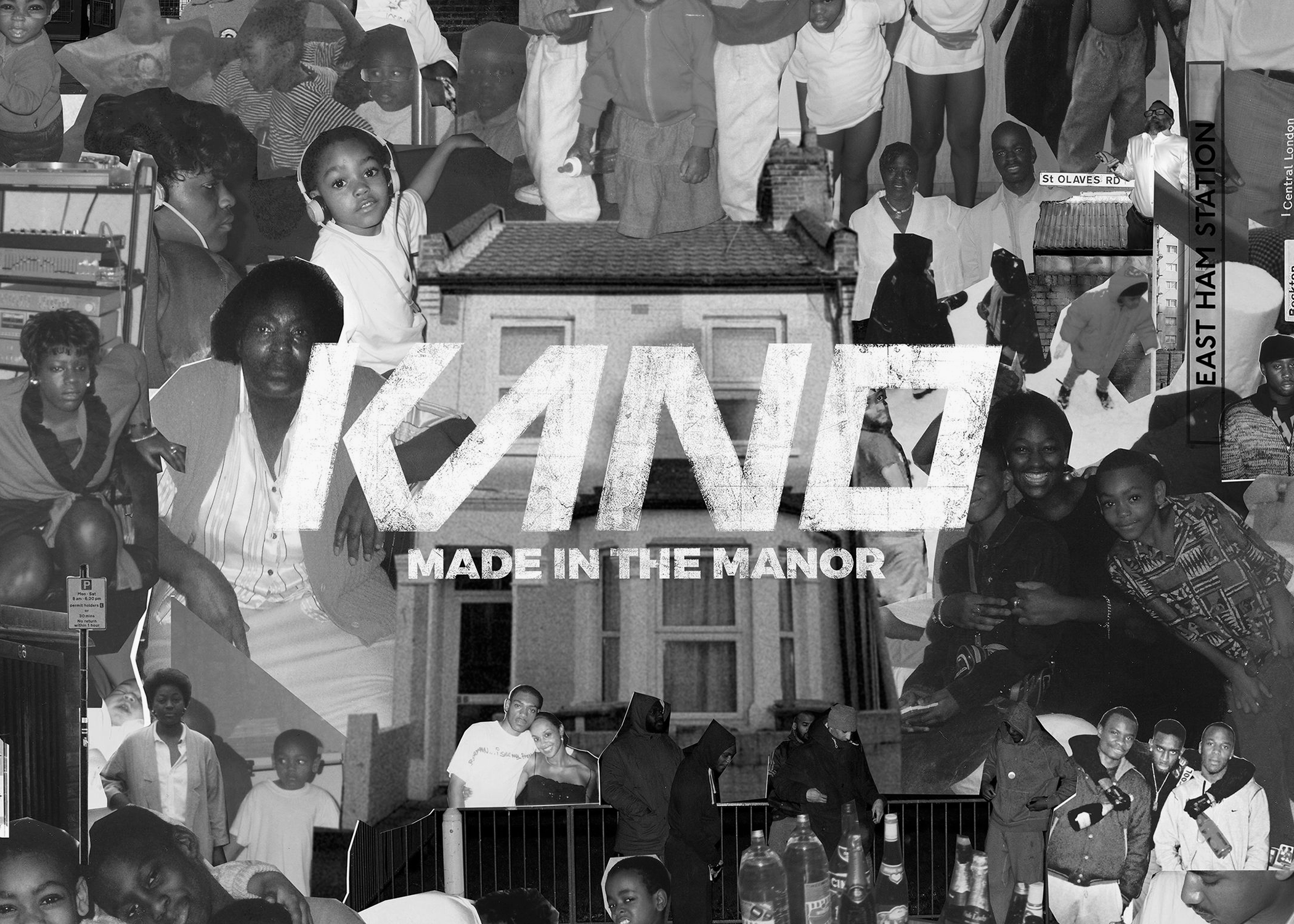
Artwork for Made in the Manor. Image property of Parlophone and Bigger Picture Music.
Kane "Kano" Robinson's Made in the Manor Documentary was released a month or so before the album of the same name. It opens up on 69 Manor Road: an end terraced house with a handful of bedrooms and one bathroom in the East End of London.
From the very first frame, even before its release, Made in the Manor announced its intent—to tell the story of one person's particular history with one particular place. In this case, Kano's history with East London began at his childhood home: 69 Manor Road. That opening line was the first line Kano wrote for the album, and, as he recalls in the documentary, "when that first line came out… it took me so far back and put a smile on my face."
The year was 2016. Here was a Black British rhymer, 30 years old, refusing abstraction. This was the era of aspirational rap—"Panda", "Bad and Boujee", The Life of Pablo—records preoccupied with scale, wealth and spectacle. Made in the Manor moved in the opposite direction. Kano was making an album about Dorothy, about Newham Leisure Centre, about getting a screwball from the ice-cream van and about his mate Dean. An album about the little sister he met once and never saw again.
At the same time, grime was in the midst of a commercial resurgence. Skepta was ascending on the back of "That's Not Me" and "Shutdown", with Konnichiwa on the horizon. Wiley had scored a #1 single just a few years earlier. Jme's Integrity> had nearly broken the Top 10. Chip was clashing with half the scene. Kanye West had brought out a near who's-who of grime at the previous year's BRIT Awards—and Drake had signed to Boy Better Know. The spotlight was back on grime. But for all the glitz and renewed visibility, Kano was after something else entirely. While the genre was looking outward, he was turning inward.
Origins
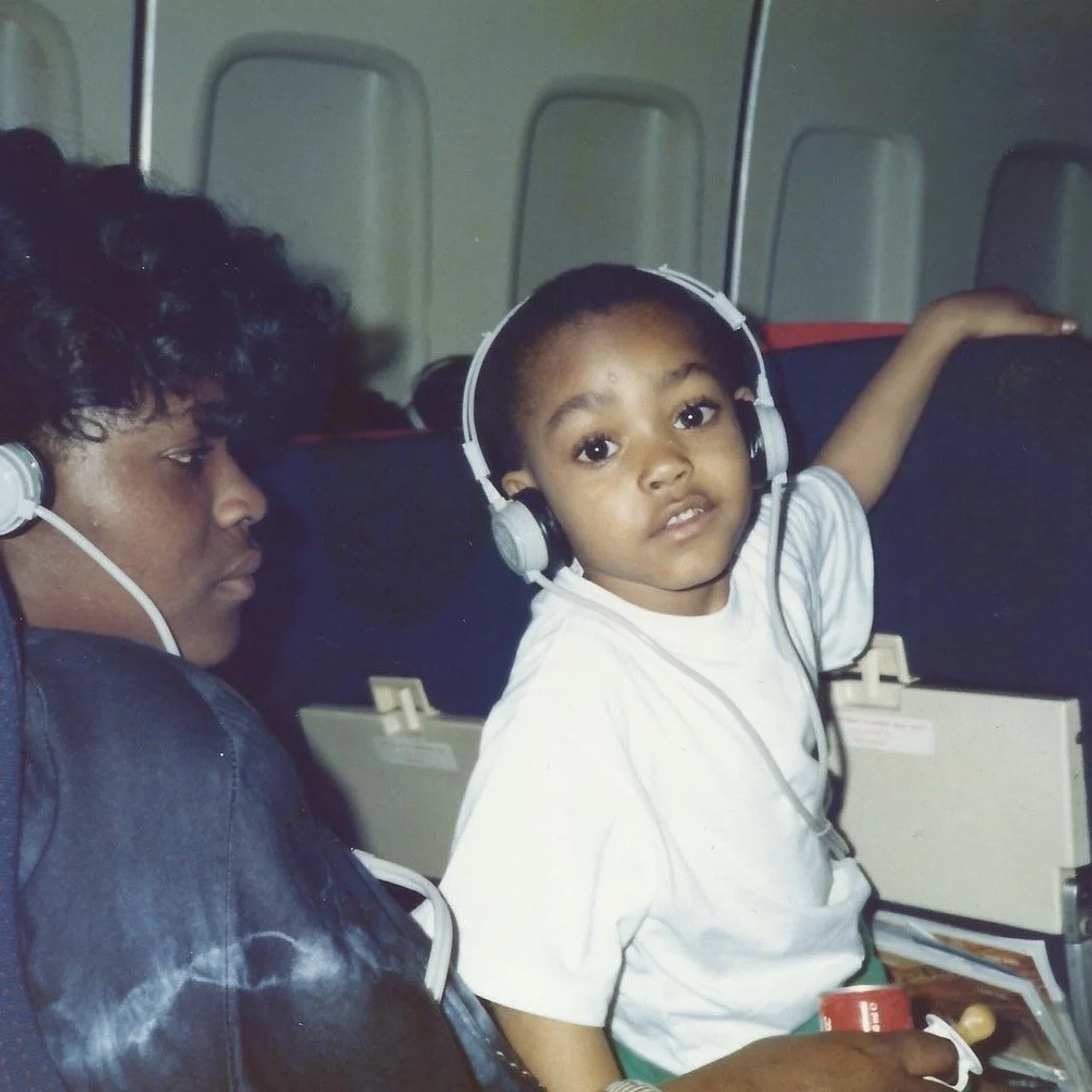
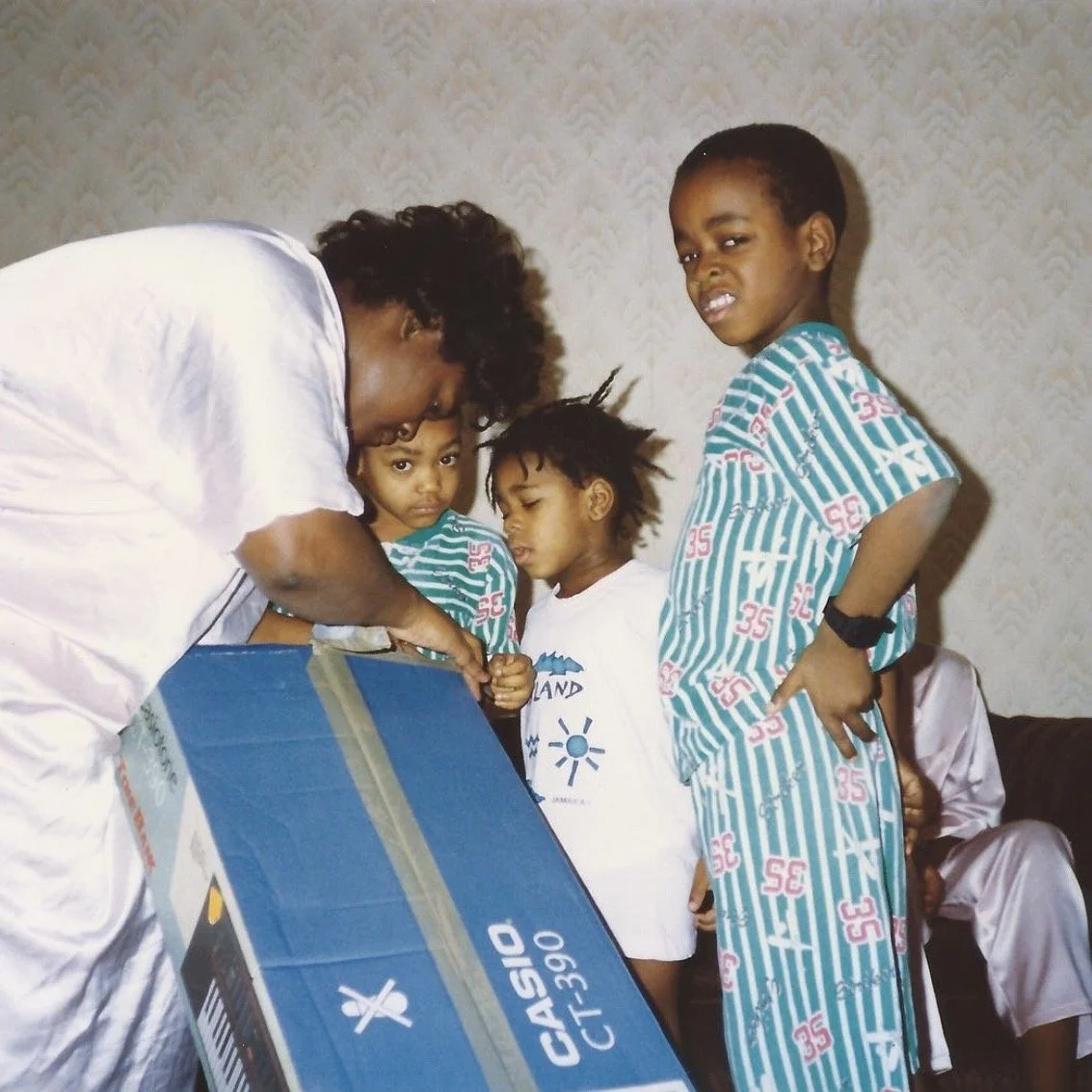
Kane Brett Robinson, better known as Kano, grew up on Manor Road, East London, before moving to St. Olave's Road in East Ham midway through his childhood. His mother was a PE teacher at a local school, and by his early teens, Kano was already playing football at a high level, turning out for youth sides at Chelsea, West Ham and Norwich City. But by the age of 14, his focus had shifted. Music, specifically emceeing, had taken hold.
In 2004, on his nineteenth birthday, Kano signed a deal with 679 Recordings, a British-focused imprint of Warner Music Group. A few months later, in November, he released "Ps & Qs", the lead single from his debut album Home Sweet Home. "Ps and Qs" quickly became a frostbitten underground classic, its music video now sitting at more than 14 million views on YouTube. Amid the album's rollout, Kano parted ways with Nasty Crew, stepping fully into a solo career.
When Home Sweet Home arrived in 2005, it debuted at #36 on the UK Albums Chart. Despite its relatively modest peak, it remains his highest-selling album, eventually reaching Gold status in the UK. Years later, speaking to the Social Writers blog, he admitted: "I didn't really know what I was doing on that album. It's about progression with every album."
The Road to the Manor
That progression, however, was not always straightforward. Kano's 2007 follow-up LP, London Town, drew criticism for leaning too heavily toward a mainstream pop crossover. Writing in The Guardian, one critic described him as sounding "deflated and tired," his talent seemingly "extinguished." A year later, he responded with 140 Grime St., a stripped-back return to grime that was widely praised by critics but struggled commercially. In 2010, he released Method to the Maadness, his most experimental record up to that point. Around its release, Kano explained that he wanted the album to "[make] sense as an album. I didn't want it to be single-driven. I really wanted it to have substance."
Critically, the response was largely positive. The Guardian's Will Dean described it as "a record that deserves at least a modicum of Rascalesque success," while Clash's Matt Oliver suggested it put Kano "well back on track to reclaiming grime's all-rounder crown." Other reviews ranged from muted approval to quiet enthusiasm.
Yet commercially, the album underperformed, failing to break the UK Top 40 despite a substantial marketing push. Writing for the Evening Standard, David Smyth captured the situation succinctly: Kane Robinson, he noted, had emerged not long after Dizzee Rascal and even collaborated with Gorillaz, "but though the east Londoner has respect, he hasn't yet reached household-name status." Safe to say, much has changed since.
In the years between Method to the Maadness and Made in the Manor, Kano released music only sparingly. Much of his energy went into acting, most notably co-leading the original run of Top Boy alongside Ashley Walters (formerly Asher D). At the same time, life itself was unfolding. He was getting older, watching friends go to prison, losing touch with mates, arguing with his partner, and thinking about his estranged sister. Slowly, almost imperceptibly, he was becoming the person capable of writing Made in the Manor. As he explains in the album's documentary:
“I couldn’t have made this album as a teenager. It took a certain amount of growth to be comfortable speaking about certain things. I think I’ve got to a place where I’ve been honest enough, said everything I’ve wanted to say, and told every true story.”
At the same time, he was watching grime change. In 2015, Kanye West brought out a roll call of artists at the forefront of the genre during his performance at the 2015 BRIT Awards, though Kano was notably absent. From the outside, he seemed to exist slightly on the fringes of grime's mainstream resurgence, watching carefully as the genre he helped shape moved back into the spotlight. When he returned, it was with characteristic wit: the video for "Hail", the opening track of Made in the Manor, was reportedly shot for just £35, quietly one-upping Skepta's famously frugal production.
Made in the Manor
Made in the Manor was a rare album for its time—a British rap record that knew exactly what it wanted to be. Kano set out to document a time and a place: his time, stretching from childhood into early adulthood, and his place, East London. His lyrical strategy is one of radical specificity. He namechecks roads, neighbourhoods, friends, cocktails and now-shuttered pubs...
The result is a record that moves seamlessly between the political and the personal. Kano invokes real people and places—Dorothy, Pam, Claridge's—while also offering sharp observations about housing, race, class, aspiration and Britishness. These are personal observations that give the record enormous reach. The album is intensely local, but its emotional reach is universal.
Kano has never been exclusively a grime artist, but Made in the Manor is perhaps the most carefully curated sonic palette of his career. The record moves fluidly between grime, garage, dancehall and more introspective and restrained sounds. Its contributors include Mikey J, Fraser T. Smith, Blue May, Damon Albarn, Jodi Milliner, Kwes, Mele, Rustie, Sam Beste, Swifta, and Zeph Ellis (rest in peace).
Across the album, sharp, swinging synths sit beside deep, vibrating basslines. The stripped-back minimalism of "New Banger", whose video was famously shot in a single day, sits alongside the eerie, spacious atmosphere Damon Albarn brings to "Deep Blues", while "GarageSkankFreestyle" nods directly to the pirate-radio lineage Kano emerged from. Crucially, though, the record never becomes a producer showcase. The production serves Kano's storytelling. It sounds alive and lived-in, because it is.
Kano also made a deliberate decision to keep the music videos cheap, collaborative, and close to home, often filming them himself or alongside longtime collaborators such as Jus D and Risky Roadz. Speaking to The Guardian, he explained the thinking:
“In the ‘90s, Puffy and Busta Rhymes were doing these sick Hype Williams videos, and we were always trying to be like that, but looking like a cheaper version. It was frustrating. But this album has the best videos I’ve done. I took it into my own hands and filmed them myself, and people resonate with the realness.”
The "Hail" video cost £35. It was shot by Risky Roadz and filmed around East London, opening on St. Olave's Road, where Kano spent the latter part of his childhood. "New Banger" had a budget of £500, which Kano joked was spent almost entirely on food, drink and throwing a "shubs". The video begins with him waking up on the floor the morning after the party and follows him preparing for it: ironing his shirt, visiting the butcher and setting up the space.
"T-Shirt Weather in the Manor" takes us even further back, opening at 69 Manor Road, the house where Kano spent most of his childhood, before unfolding into a jubilant all-white party with friends and family, complete with a bouncy castle and all. Meanwhile, "This Is England" expands the album's geography beyond East London entirely. In the video, Kano travels across the country—through Montacute, Land's End, Bourton-on-the-Water, Cheddar Gorge, Liverpool, Blackpool, Newcastle and Hadrian's Wall—inviting fans to meet him along the journey.
Track-By-Track
"Hail" opens the album with a statement of intent. "Welcome to the jungle," Kano declares—a provocation as much as an introduction. The track is proud and argumentative, concerned with grime, Britishness, and the recognition long denied to the scene that produced him. "They say grime's not popping like it was back then / Rap's not honest like it was back then," he notes, even as grime was in the midst of a renewed commercial moment. The line hints at a tension that runs through the album: nostalgia colliding with the present. Kano also confronts the globalisation of the sound—"We both gain from a little influence / But how come nobody credits us Brits?"—before rejecting any dilution of its roots: "This ain't no RP cup of tea music / It's real East End theme music."
"T-Shirt Weather in the Manor" opens the album's memory. The first song Kano wrote for the project, it set the tone for everything that followed. "69 Manor Road, Sunday morning," he begins, naming Dorothy, Lee, Newham Leisure Centre, Heartless Crew and the ice-cream van. Kano evokes the era—Breezer and Alizé, Nike TNs, Tina Moore, MJ Cole—alongside "that one elder that wants to be young / Dancing on the floor to hype funk." But nostalgia curdles: "Success has a price and it's pretty… Then you try change your postcode to W10." The song ends with a line that distils the album's tension: "'05 changed my life forever, it's bittersweet," the year Home Sweet Home arrived, propelling Kano forward while pulling him away from the world that made him.
"New Banger" is the album's most joyful moment. The video plays like a home movie, its modest budget spent entirely on a house party. Kano introduces himself by geography and family—"86 St Olaves Rd / Next door to Theresa / Across the road from Pam / Melrose's son / It's K-A!"—announcing who he is and where he comes from. He recalls raving "on the top of the Princess Alice," the now-shuttered Forest Gate pub, before doubling down on his roots: "No, not China and not Taiwan / Kano was made in the bloodclart manor."
He tells fragments of family history, including the racism his mother endured growing up in Canning Town, where she was nicknamed "Cassius" for fighting back. Kano compresses generations of struggle and progress into a handful of lines—"First Blacks in the Canning Town flats / Walking to school was an everyday scrap / They called our mothers coons, now mummy's in my coupe riding shotgun / Of course that fucker's all black"—while acknowledging the everyday cultural exchange that defined East London life: "They showed us what bangers and mash is / We showed them what dumpling and yam is." The track closes by situating grime's lineage, crowning Wiley and Dizzee Rascal as the genre's equivalent of Quincy Jones and Michael Jackson.
"3 Wheel-Ups", the album's most successful single, captures grime at a moment of consolidation. Featuring Wiley, one of the genre's architects, and Giggs, the defining voice of road rap, the track sits as a statement of lineage and alliance. Wiley reminds listeners of the risks he took for the scene - "I nearly died for the game," while Kano nods to their infamous clash on Lord of the Mics: "Me and Wiley had a clash, that's a real emcee." Its video, shot on Roman Road near the home of legendary grime record shop Rhythm Division, that reinforces the song's sense of heritage. Even Wiley's (characteristic) absence from the shoot only adds to the myth.
"This Is England" widens the album's lens. Borrowing its title and a little of its spirit from the Clash song of the same name, it offers a dry, unsentimental portrait of the country. The video opens with a Union Jack and breakfast at E. Pellicci in Bethnal Green before travelling across England: from Montacute to Land's End, from Blackpool to Hadrian's Wall. Lyrically, Kano opens with a catalogue of East London life: "Jellied eels, pie and mash, two pints of that Pride on tap… some ASBO kids and a crackhead." The tone is unglamorous and unromantic, but his nostalgia creeps in nonetheless. He recalls pirate-radio clashes and basement parties—"We used to spit 16s till they called police"—while still acknowledging the rough edges of the place that raised him.
"Little Sis" brings the album to one of its most painful moments. The song addresses a half-sister Kano met briefly as a teenager and never saw again. The track revisits that moment with disarming tenderness. Kano remembers the details: her hair in twists, her smallness, the awkwardness of the encounter… before imagining her whole life that he has missed. One line captures the distance perfectly: "For all I know you've got a kid that Uncle Kane can't gift / Tiny baby Stan Smiths." He materialises their years apart in a pair of tiny trainers.
"A Roadman's Hymn" is one of the album's most structurally ambitious tracks. Framed by the sound of sirens, the song functions simultaneously as a portrait, a prayer and a social critique. Kano describes the logic of aspiration in an environment where legitimate opportunities are scarce: kids watch drug dealers pull up in gold chains and Avirex jackets and begin to emulate them. "More chance of being them than a lawyer or doc," he observes, summarising how structural inequality shapes imagination itself. But he also points toward alternative possibilities. Idris Elba grew up just a road away, he reminds us.
"Drinking in the West End" shifts the mood again, offering a loose, humorous account of a night out that begins in East London and ends somewhere between Bond Street and Embankment. Kano sketches the scene with characteristic precision: Moschino jackets, Stan Smiths, barbershops… before stumbling into the city's nightlife. "Welcome to the big smoke / Where we pop bottles and we don't vote," he jokes, capturing the political apathy of a generation. By the time the Jägerbombs pile up, he's drunkenly heckling strangers and rushing to catch a DJ EZ set.
"Deep Blues" draws the album inward once more. With a haunting hook from Damon Albarn, Kano confronts the contradictions of success and ambition. He criticises rap's obsession with status symbols: "more infatuated with Ferraris and Astons;" while acknowledging that he, too, is implicated in the same culture. The verses juxtapose personal tragedies with trivial distractions, creating a jarring moral dissonance: news of a friend's mother's cancer arrives while he scrolls through social media; another friend's grief contrasts with nights spent drinking. And he finds himself at a point of self-interrogation: "How am I spending them pinkies and got the blues? / Why don't I celebrate wins but hate to lose?"
"Endz" restores the album's sense of camaraderie, bringing Kano's extended circle back into focus. The track contains some of his most self-aware reflections on longevity and legacy. There are jokes: "Blud, I ain't being token Black on TV, you've got Lenny for that," and braggadocio, but also gratitude for his collaborators like Wretch 32 and Giggs. He promises that "when we're on top, bruv, everybody's coming:" cars for his brother Lee, houses for friends and family... Even here, however, everyday life intrudes. "Me and wifey just had beef / She's tryna marry me while I'm tryna marry beats," he sighs.
Not every relationship survived the years. "Strangers" addresses one that didn't: Kano's former friend and collaborator, Demon. The two grew up together, toured together, and eventually drifted apart. The song retraces their shared history, from football pitches and Walkmans to touring with The Streets, before extending a quiet olive branch. When Kano finally ran into Demon in the West End, the moment made its way into the song, updated almost in real time.

The world's first edible grime album. Image property of Kano.
"Seashells in the East" is among the album's most lyrically intricate moments. Over a layered instrumental, Kano reflects on the invisible limits imposed by the environment. The song's central pun captures the idea concisely: "You won't find seashells in East End / But you might see shells in East End." There is no seaside here, he implies, no idyllic escape, but there is the constant proximity of violence and the street economy that replaces other opportunities.
The album closes with "My Sound", a reflective love letter to the music, culture, and community that shaped Kano's life. He begins with a roll call of East London postcodes, "East Ham, Plaistow, Stratford, Canning Town, stand up, ayy!" before acknowledging the influences that formed him, from his mother's Beres Hammond records to the countless grime sets he's shelled. There is pride here, but also a lingering frustration. After years in the game, he still feels under-recognised: "Paid my dues then get no receipt." But Kano ends by insisting on the authenticity of the three things that define him: his sound, his ends, and his people.
Even the bonus tracks extend that lineage. "GarageSkankFreestyle", produced by Zeph Ellis, functions as a tribute to pirate-radio culture, delivered in a single take and packed with references to grime's early architects. The final bonus track, "Flow of the Year" with Jme, strips things back to their simplest form: two emcees trading bars over a skeletal grime beat. After everything the album explores: memory, loss, friendship, ambition… it ends exactly where Kano began: with the craft of emceeing itself.
Legacy
After years of commercial near-misses and albums that were critically respected but only modestly charting, Made in the Manor marked a turning point. For much of his career, Kano's mainstream breakthrough had always seemed just out of reach, as though the wider recognition reserved for his peers might arrive for him eventually, but never quite yet. With Made in the Manor, it finally did. The album debuted at #8 on the UK Albums Chart and was later certified Gold, making it the highest-charting record of Kano's career. For the first time since Home Sweet Home over a decade earlier, it felt as though the world had caught up with him.
At the time, the BBC described the record as "a signpost for the future of grime." In reality, its influence stretched further than that. The album helped usher in a more reflective and inward-looking strain of British rap and in the years that followed, that sensibility would come to define much of the UK's most acclaimed hip-hop, shaping the work of artists including Dave, Loyle Carner and Little Simz.
Made in the Manor also brought Kano his first major award nominations since the mid-2000s, earning him his second MOBO Award and his first nomination for the Mercury Prize. After more than a decade of work, one of grime's most respected lyricists now had the formal accolades to match his reputation.
A few months after the album's release, Kano delivered another moment that quickly entered grime folklore. He appeared on Charlie Sloth's Fire in the Booth and recorded what many still regard as the series' greatest freestyle. The story behind it just makes it that much better. At Giggsmas (Giggs's annual Christmas gathering), Kano found himself at a table with Ghetts, Chip, Wretch 32, Sneakbo, Tinchy Stryder and Bashy. At some point, Ghetts noticed something unusual: Kano had never done a Fire in the Booth.
"Ain't it funny that one person here's not done Fire in the Booth…," he joked, directing the comment squarely at him. Giggs piled on: had Kano even done a Westwood freestyle? Was he ducking the challenge?
On the drive home, Bashy was behind the wheel when Kano decided he wasn't letting the moment slide. He went home that night and began writing. Months later, he called Charlie Sloth and booked the session. One take. The rest quickly became an essential part of the grime's canon.
Since Made in the Manor, Top Boy rebooted, and with it, Kano's profile skyrocketed. Playing Sully, a morally complex, cold-eyed gang leader in East London, Kano delivered one of British television's great performances. It put him in front of audiences who had never heard of Kano.
A few years later, he returned with 2019's Hoodies All Summer, another landmark record, though very different in tone. Where Made in the Manor was reflective and personal, Hoodies All Summer was sharper, angrier, and overtly political. The country had changed: Brexit, austerity, the Windrush scandal… and Kano had something to say about it all. Much of the album's fire was directed toward the political class, though anyone complicit in systems of power could catch the occasional stray. By the closing moments of the record, he even floated the possibility of stepping away: "That might be the hook I could retire after." So far, it remains his most recent solo release.
Today, Made in the Manor is widely regarded as both a classic grime album and a canonical British record. It belongs to a lineage of music that captures the texture of life in a specific time and place, albums by The Clash, Oasis or The Streets that attempt to document the country as it truly feels. Speaking to i-D around the album's release, Kano reflected on what its success meant to him:
“The success of ‘Made in the Manor’ means a lot to me. It’s proof of the growth of the music and how it’s spread through the country and now spread through Europe, and I think I’ve got a lot more stories to tell in my life. Bring on the future.”
That line, "bring on the future," lands differently now, given how sparingly Kano has released music since. But perhaps that is part of the album's power. Made in the Manor feels like the work of someone determined to say everything that mattered while he still could. And maybe that is what it looks like when an artist reaches a moment of complete clarity: the story is told, the record exists, and it continues living its own life in the world.
"This is why I love this record, and why I'm scared of it: some of those tunes could change my life when they get out. My dad might call me after this record, my sister might DM me. I might be friends with Dean again. Or people might say: why the fuck d'you say my name for? I really don't know what this record will bring, but it was done with pure intentions and no negativity. It's alive," he said in the aforementioned 2016 interview with The Guardian.
Epilogue
"Made in the bloodclart manor," Kano declares on "New Banger," and in many ways it's the only explanation the album needs. Made in the Manor endures because it understands something fundamental that many records miss: the specific is what makes a story universal.
69 Manor Road matters precisely because it is not the house you grew up in. Dorothy and Lee matter because you don't know them. Newham Leisure Centre matters because it probably wasn't the one where you spent your childhood afternoons. The album's power lies in that precision. By grounding every memory in real people, real places and real details: Kano creates a portrait that feels larger than his own life.
What begins as the story of one person and one corner of East London slowly becomes something broader: a meditation on memory, belonging, friendship, ambition, and the complicated act of leaving home. The more rooted the album becomes in Kano's own experience, the more easily listeners find themselves inside it.
Kano set out to document one life and one place. Ten years on, the record belongs to far more people than that.
Stream Made in the Manor below: