

jev. is Just Getting Started
As the dust settles on his slick new EP, we chat with acclaimed red-leaf rapper jev. about Conductor Williams, touring with Clipse and life on the road.
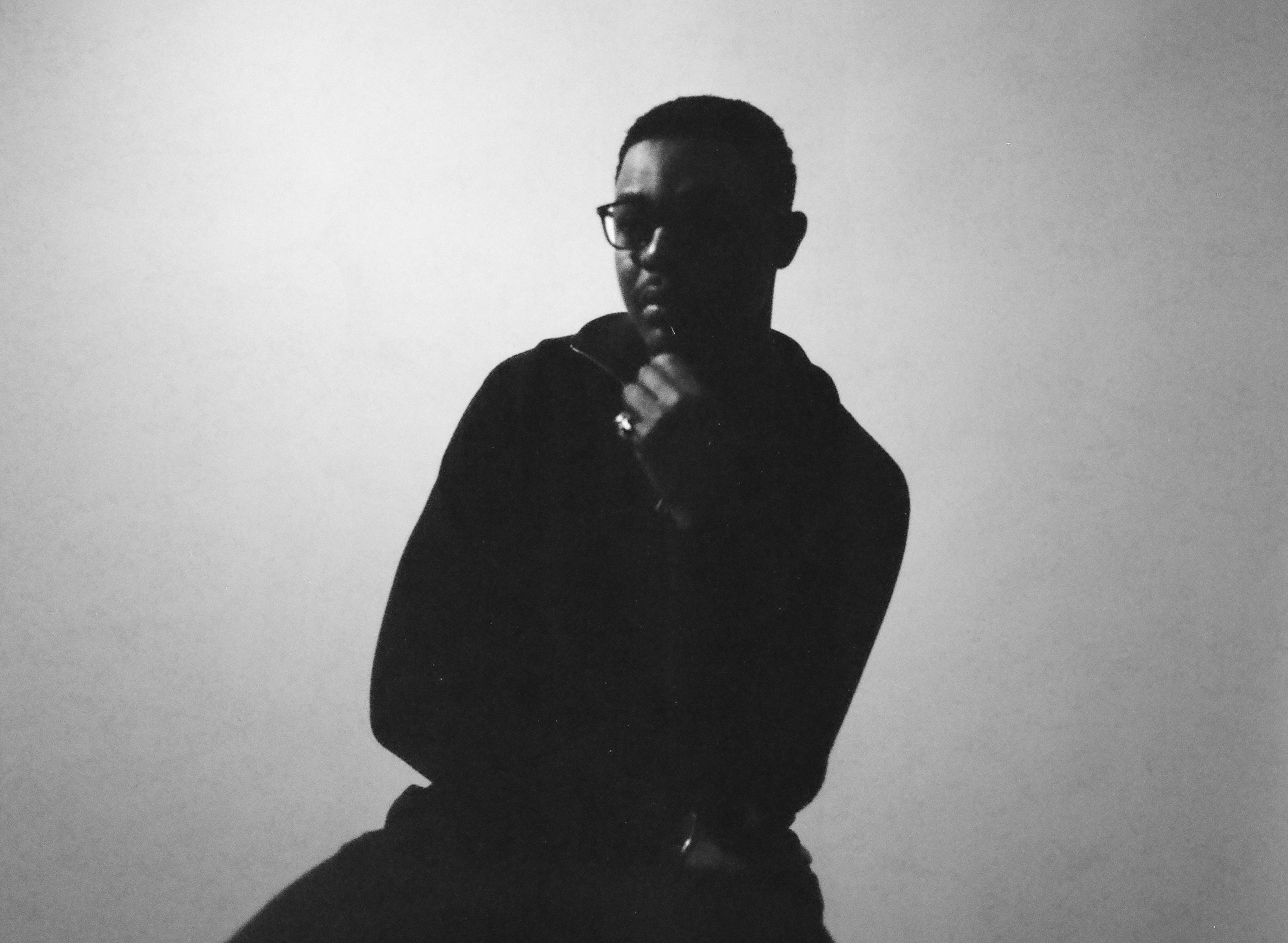
jev. Image via Press.
There's something about jev. that's hard to pin down. The Congolese-born, South African-raised, and now Canada-based rhymer has built a blossoming audience that spans continents, united in their adoration of his dense, tactile bars.
A bulk of his following found their way to jev's artistry through viral hit "where's the confetti", which served as the lead to his debut studio LP, the color grey, back in 2022. The shredded track may have been their entry point, but it isn't the reason they stayed: the beauty of jev's emcee skills lies in elastic rhymes, sharp visuals, and searing conceptual stanzas.
Following his 2024 follow-up, when angels cry, jev. continued to solidify himself as one of the most exciting recent additions to the rap landscape, with trap-tinged scorchers like "THE ART OF WAR." and the Slovenian sample-flipping "ALICE." which pulls pages directly from the boom bap playbook. Fusing old and new-school hip-hop, he's carving his spot in the industry like he's always belonged there.
Fresh off the back of his own European tour and still buzzing from tearing up stages across the continent, jev. has since taken to the London spotlight, opening for the legendary Virginia rap duo Clipse—and with a new project in the works featuring heavy hitters like Conductor Williams and Planet Giza, jev.'s only on chapter one of his rap-life biopic.
With LONERWORLD, vol 2 newly minted, The Culture Crypt sits down with jev. to discuss his road to rap stardom.
The Culture Crypt: How did the path from Congo to South Africa to Canada shape your artistry?
Jev: "Spending most of my childhood and adolescence in Congo and South Africa, I always had to adapt. In South Africa, they saw me as a Congolese person, so there was a lot of code-switching. Then, when I'd go back to Congo, I'd have a different accent, a different way of speaking, so I'd have to adapt again.
Moving to Canada was another version of that. Canada is diverse, but when I entered the North American music industry, especially in hip-hop, I didn't see many people with my background. Most people were born and bred in New York, LA, or Toronto, and they didn't really understand my kind of culture.
At first, I thought that was a disadvantage, but it turned out to be an advantage. I realised that music is universal. When I make music, I don't just have New York or the West Coast on my mind—I'm thinking about how I can make my sound gloabl . Even if people don't fully get the culture, they'll get the story.
There are so many people like me who've moved around, had to adapt, and find themselves in between worlds. That's who I make music for. I'm really just coming into my own now."
When you lived in South Africa, did local music influence you much?
"Yeah, heavy. That was a major part of my teenage years. Nasty C was blowing up when I was in high school, A-Reece and Cassper Nyovest were going crazy too. Cassper is actually from the same area I'm from, and A-Reece even went school with my brother. Between 2010 and 2016, South African hip-hop was booming. That era definitely shaped me."
If you didn't make music, what would your creative outlet be?
"Honestly? I'd start a LEGO-style puzzle company or something. I love solving things, creating something out of nothing. Or maybe marketing, making visual content for brands. Either that or I'd start my own sunglasses company."
A lot of people first discovered you through your hit track "where's the confetti", which blew up on TikTok. But what would your ideal entry point be for someone first discovering your music?
"For the longest time, I wanted it to be word-of-mouth. That felt more personal, like it sticks more. But 'where's the confetti' having the run that it did kind of changed my mind. Now I'm just like, 'Let it be, man.'
Some guy even told me that he found my music through Clash Royale! He was playing multiplayer and someone had my track in the background. You just never know how people will discover you, so I'm open to everything—I'm cool with the randomness now."
Your visuals feel intentional, almost cinematic. It's clear that you have full creative control. How do you stay true to that aesthetic while keeping things fresh and relevant?
"A lot of it comes down to budget, honestly. Being independent forces you to be creative in different ways. To the naked eye, I'm just a rapper, but behind the scenes, I'm a videographer, digital marketer, and graphic designer. You have to naturally expand your creativity.
My first love was film—I fell in love with visuals before I fell in love with making music. I love being behind the camera, figuring out shots or scenes, and then combining that passion with my music.
My sound is very old-school rap-influenced, so I like finding ways to convey that visually. If the visuals are strong and the music connects, that is relevance. You don't have to chase it."
You went from working and studying full-time to being a full-time artist. What fears came with making that jump?
"Man, that was a big one. I quit Staples in 2023 to really focus on music—that's when 'where's the confetti' was going crazy on TikTok. Suddenly, there were label talks, management offers and all these industry conversations.
My biggest fear was being labelled a 'TikTok artist'. I didn't want people to be like, 'Oh, he had that one song.' That fear is what pushed me to make the jump. I tried to turn the hype into something lasting: real fans, real community.
I started being strategic, building Discord communities and broadcast channels, always following one song with more content. Staying independent was a conscious decision too—I wanted to grow on my own terms."
“To the naked eye, I’m just a rapper, but behind the scenes—I’m a videographer, digital marketer and graphic designer. You have to expand your creativity naturally.”
Your new project features Conductor Williams and Planet Giza—both are on incredible runs right now. How did those collaborations come about?
"The Conductor Williams one came from just reaching out. On my first album, all the features were homies. But now I'm in a different position, so I hit up Conductor and his team like, 'Yo, I'm a big fan, I'd love to work with you.'
He was super cool, he literally sent over like 15-20 beats. I recorded a bunch of them, found one I loved, sent it back, and the rest is history. Conductor's team made it seamless.
With Planet Giza, shoutout to my homie Durelle. During my label talks, he told me those were his guys. I mentioned wanting to work with them one day, and he said, 'If you ever need a feature, let me know.'
Fast-forward: I hit them up, they invited me to their Montreal studio, and we made the song that same day. It was actually one of the first times I recorded with collaborators in the same space. Real energy."
After your Europe tour and opening for Clipse, what does community on the road look like for you? Do you prefer intimate settings or bigger stages?
"I think it's both—intimacy and scale. I haven't really seen an independent artist in my lane reach the top of the top, so I'm still figuring it out. But intimacy is key. All my favourite artists have a real bond with their fans. I really saw that on the road with Clipse, the fan love was insane.
My fans feel like a community. On the last tour, we had everyone wear football jerseys—it turned into something bigger than just music. People on my Discord talk about more than just my music. That's what I love: building worlds as well as my audience."
Stream LONERWORLD, vol 2 below: