

Exploring 'Blair Babies' and Black British Identity with Ceebo
We sit down with rapper and former Culture Crypt cover star Ceebo, along with key collaborators from his mixtape's creative gauntlet, to unpack its sociopolitical themes in full.
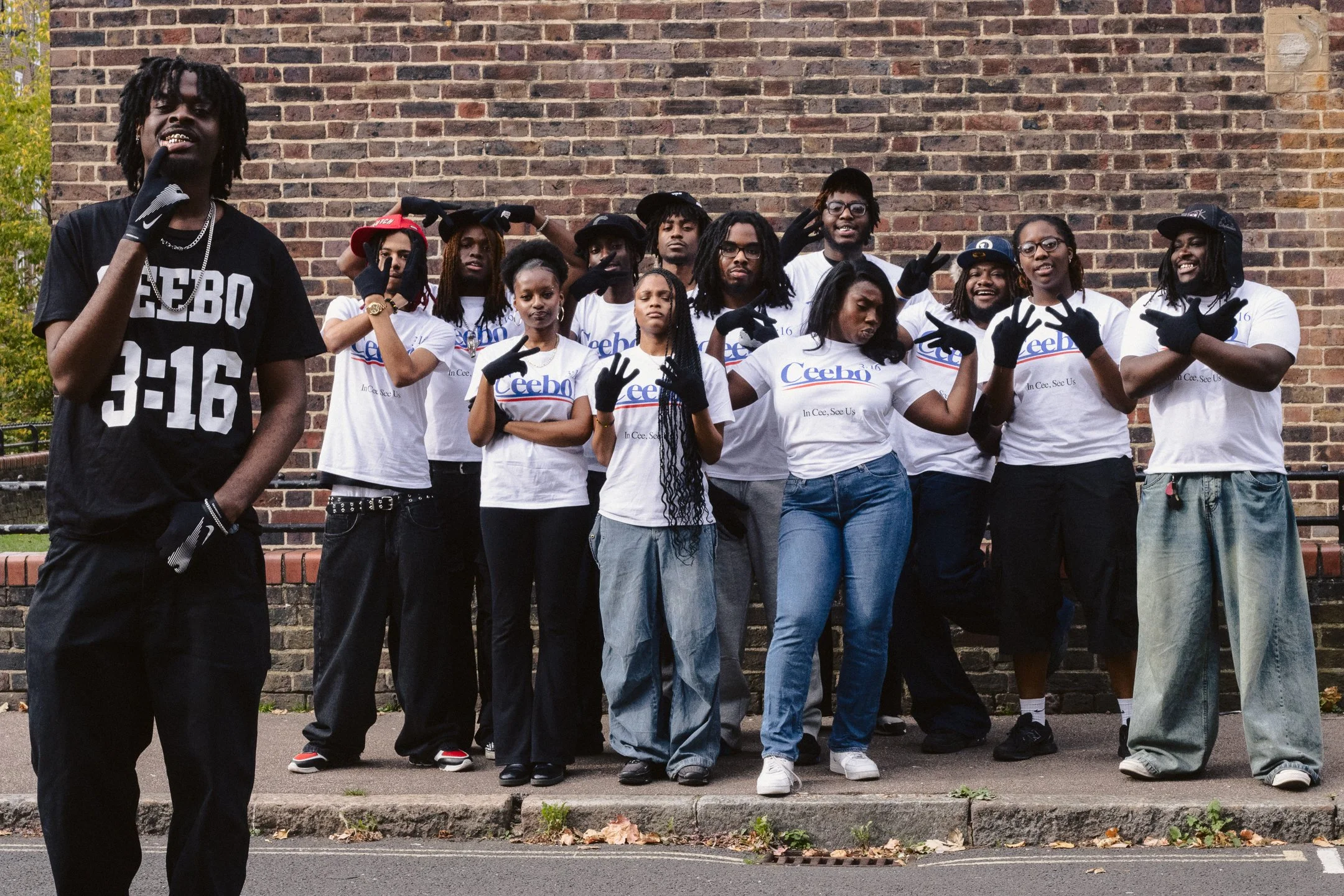
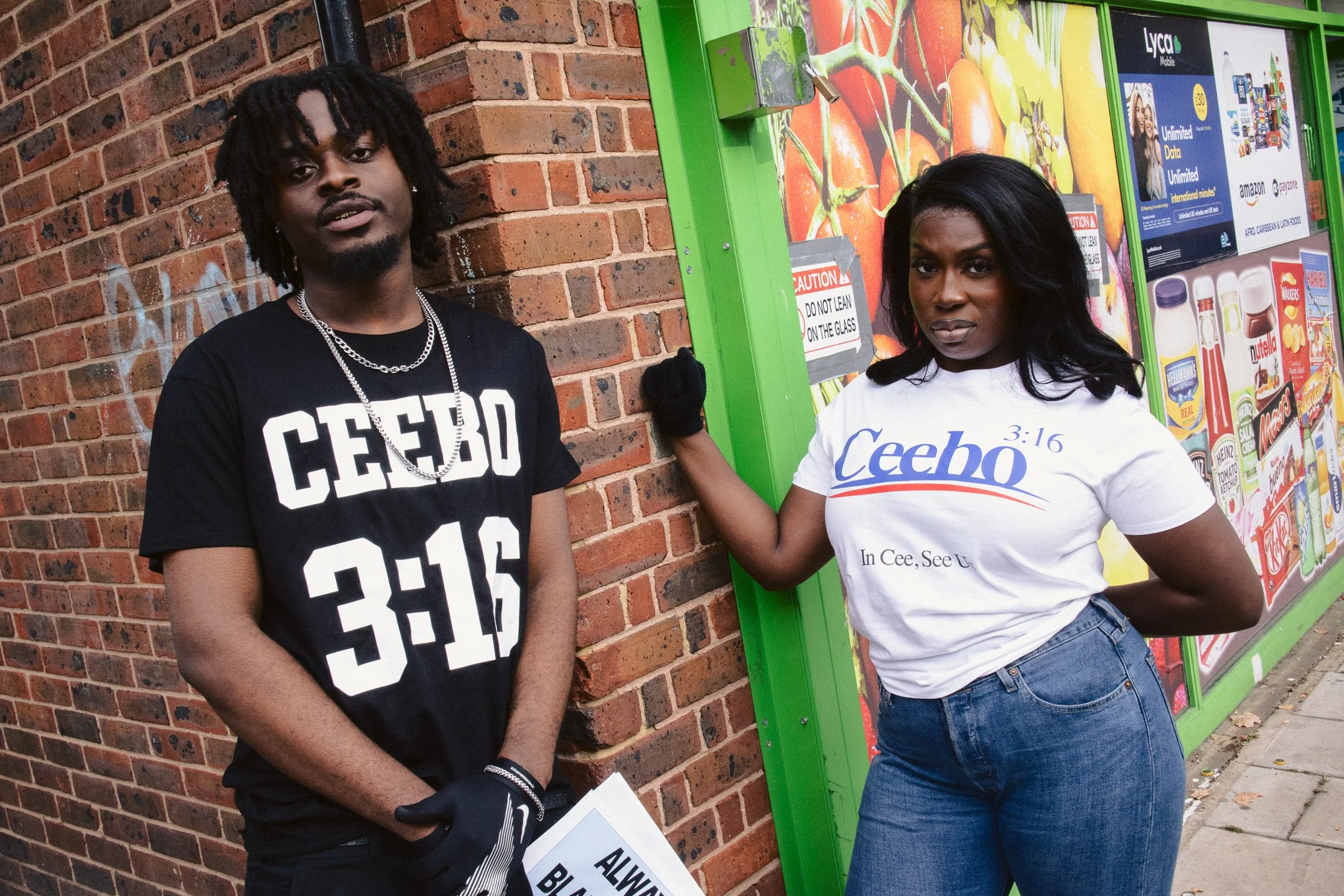
Ceebo in 2025. Image property of Patrick Sear.
Countless St George's flags and Union Jacks appear seemingly overnight across England. Several of them are on my street in Essex. They remind me that I, the daughter of Nigerian immigrants, am not welcome here.
One hangs languidly outside my neighbour's window in full view of my room—an interesting symbol of hostility from a family whose children had attended Cub Scouts with me for several years. It's this complicated relationship with British identity that anchors my conversations with rapper Ceebo and his creative team regarding the Blair Babies project.
As an artist, Ceebo has woven his political consciousness intricately into his bars, entwining a sociopolitical narrative with lyrics that are raw and personal. On his new mixtape, Blair Babies, Ceebo gives his double entendres a visual stage: this is the story of a Lambeth native trying to make it in a world gripped by capitalism, white supremacy and fascism.
But what does it mean to live in that world? Ceebo's music is for the people. He raps about relatable experiences of love, loss and struggling to make something out of nothing in a world set against you, powerfully portrayed in his 2024 project LAMBETHNOTLA.
"I make music to tell my stories", he tells us in a candid conversation. "I know what my story is because of the background I have in politics and sociology. Like, they're not isolated. They exist within a much bigger political framework. I want to give full context to anything I ever say."
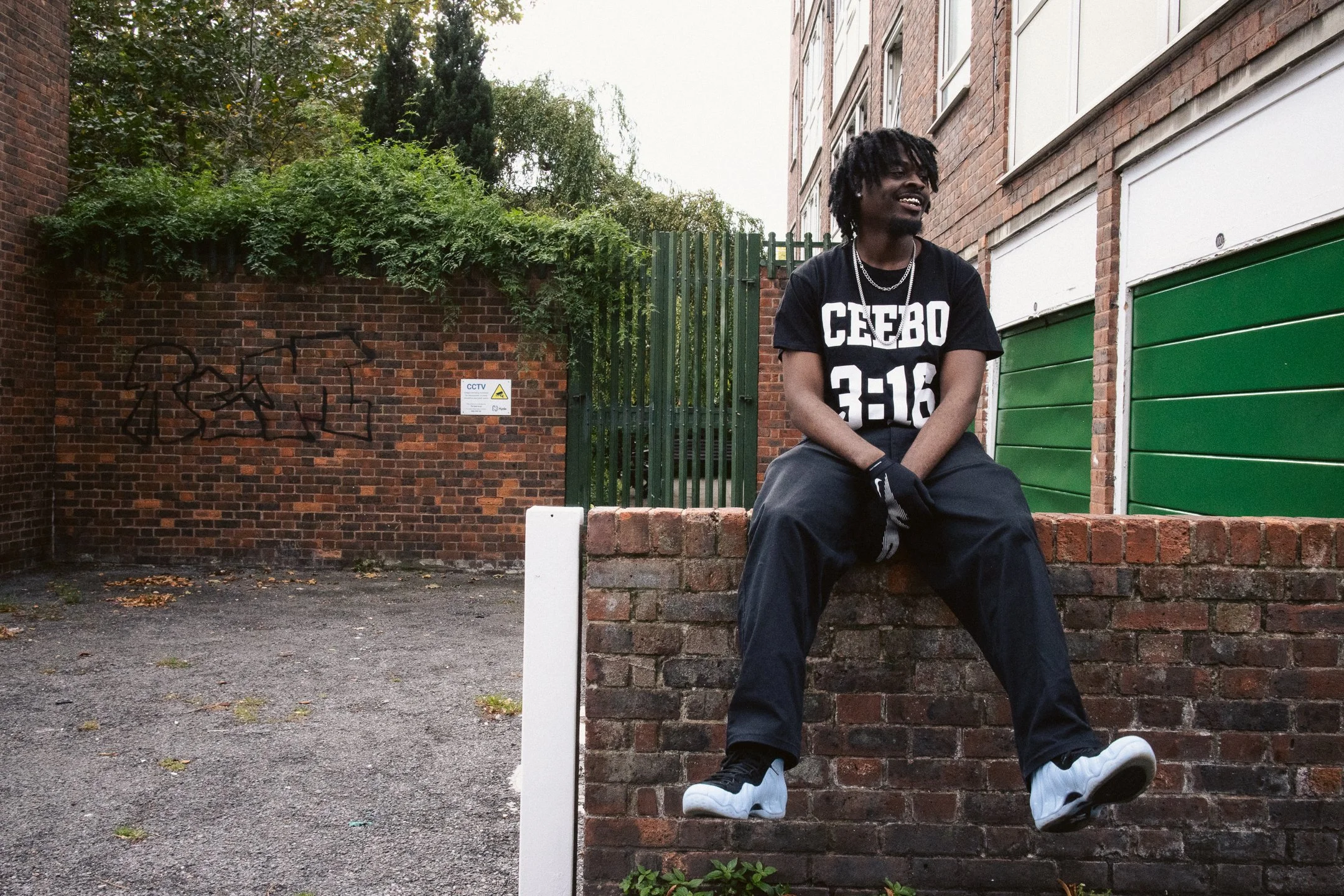
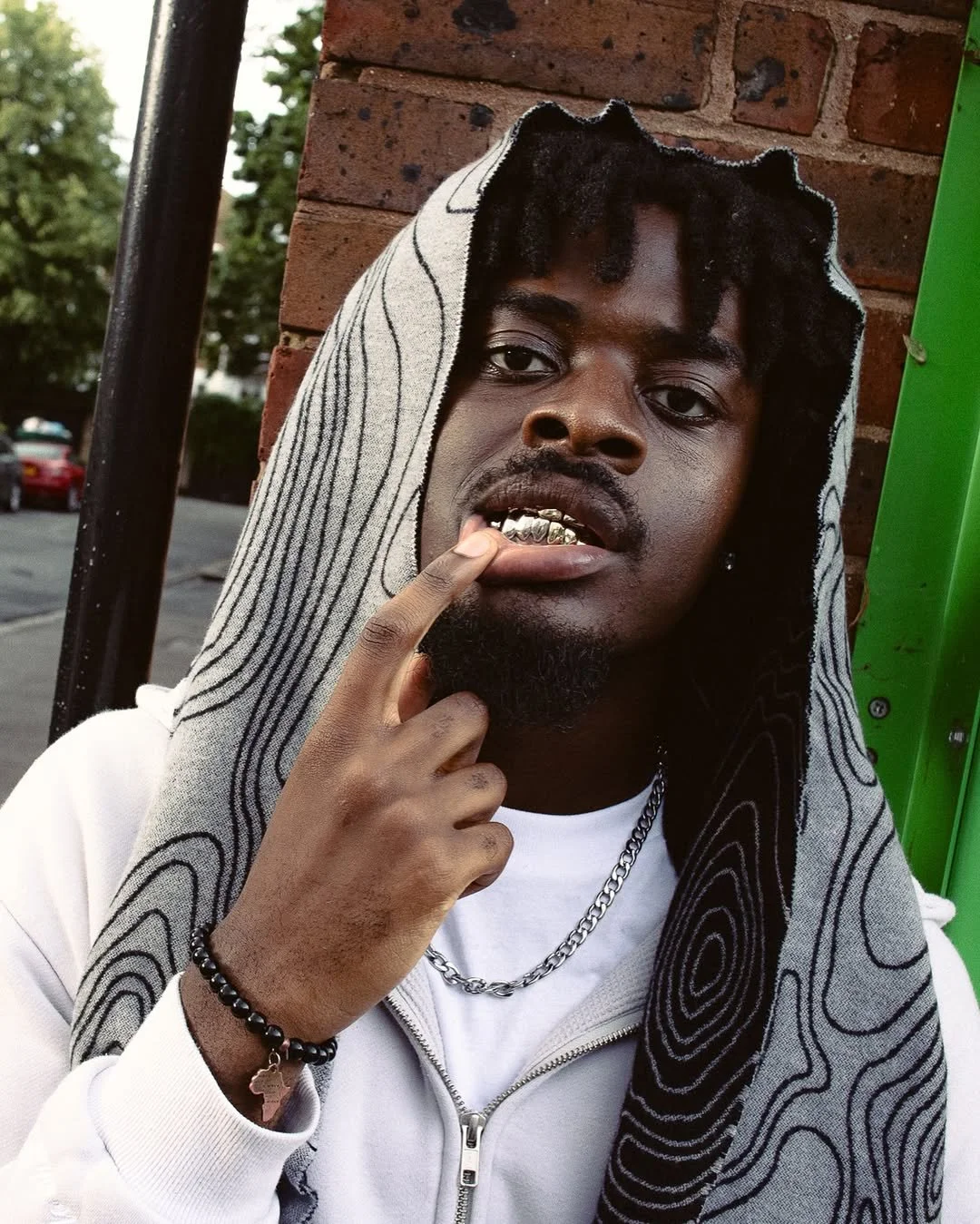
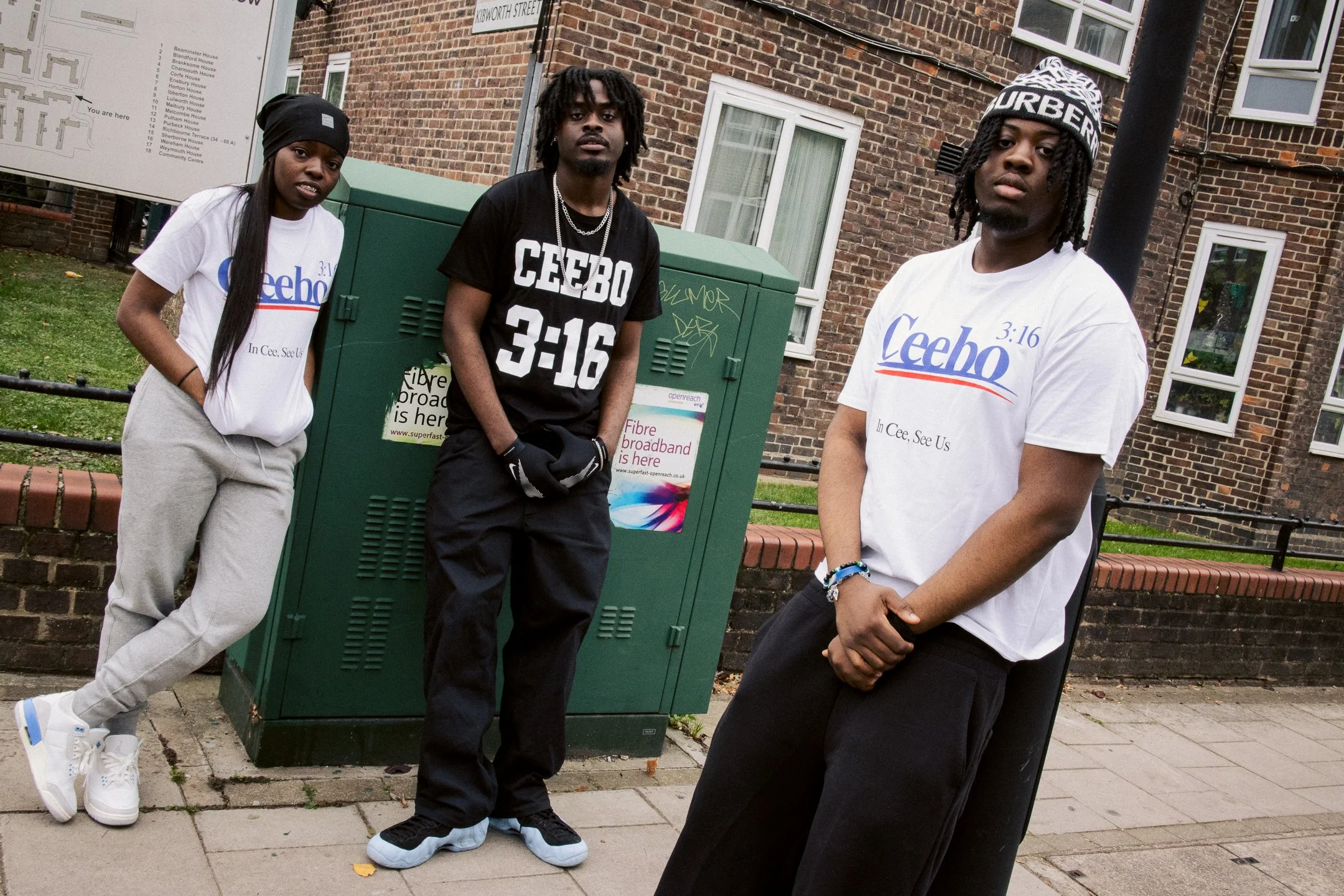
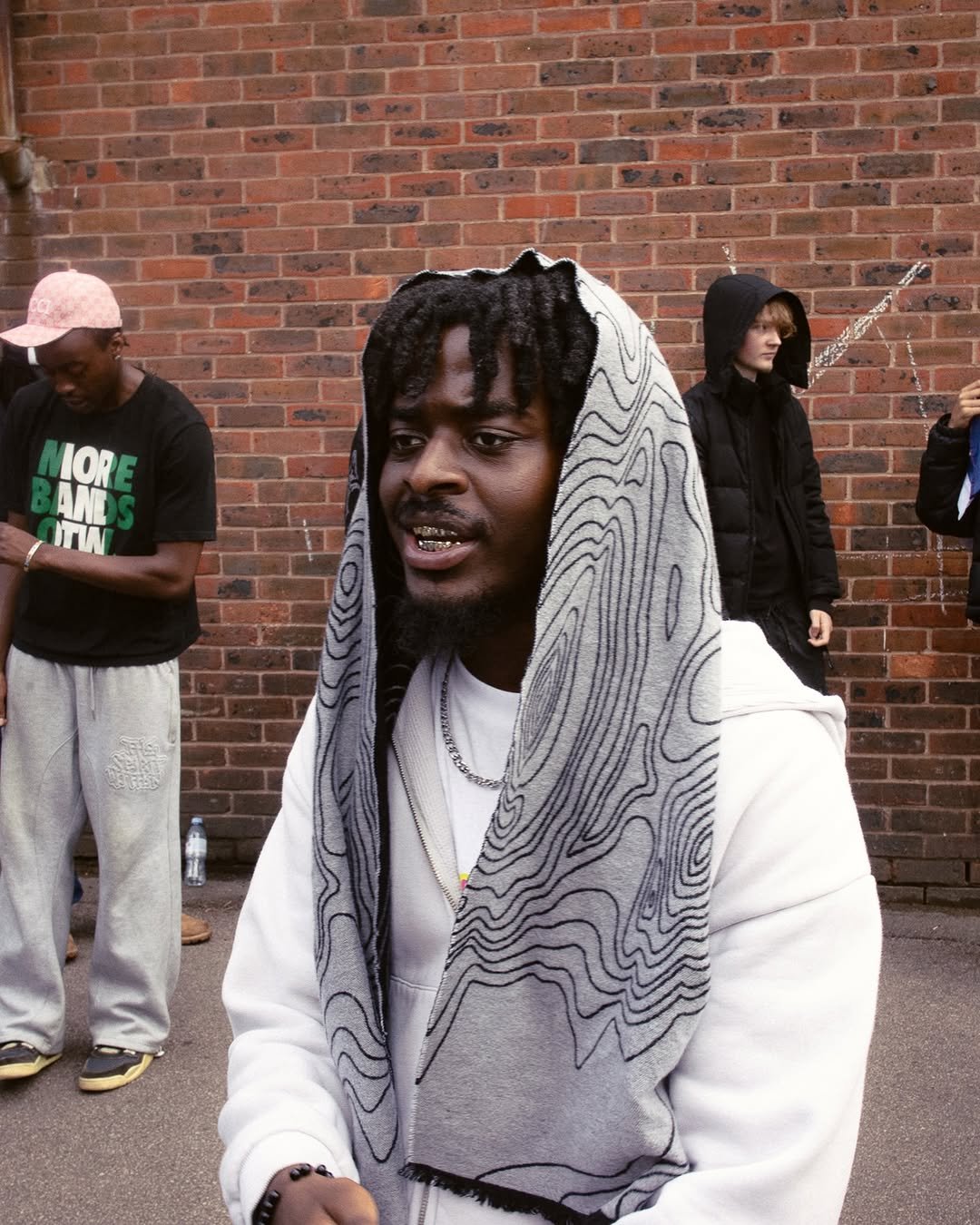
Giving that context through a visual lens builds on the messaging behind his music; many of the issues Ceebo addresses in his art can seem abstract, though their tangible effects are felt in the scenarios he presents.
But in an age where short-form video is king, Ceebo knows that the most powerful way to communicate may be through optical channels—thus he is immersing himself in "the visual language of Ceebo".
Ceebo's social awareness is rooted in the tumultuous history of Black people in Britain. For years, Britain has struggled to keep a lid on the right-wing extremism and fascism permeating the country, something that the Blair era was complicit in—under the power of Prime Minister Tony Blair's "New Labour", Black and Brown communities in London suffered through criminalisation, hollow promises and gentrification.
“Ceebo has woven his political consciousness intricately into his bars... The visual language that he’s creating subverts the role of media-led propaganda.”
Labour's "regeneration" plans opened the doors for a class of "super-gentrifiers" to push established communities out. Those of us born between 1997 and 2007 watched the noose of New Labour tighten while the "Britpop" aesthetic developed in contrast. For many of us, the iconography of the early 2000s coloured our young memories, with the Union Jack as a technicolour symbol of an alleged multicultural Britain.
It's understandable why the Union Jack became integrated as a cultural symbol in our generation: we spent our primary education being repeatedly told that each splash of patriotic colour symbolised a nation that welcomed us. Although artist Chris Ofili's dramatic reimagining of the flag, Union Black (2003), has provided a pan-African alternative, it has not succeeded in overshadowing the deep sense of loyalty to the traditional symbol.
Musically, the mainstream held tight to the remaining dregs of Britpop and capitalised on the marketability of its iconography. Visually, there hasn't really been a shared mainstream symbol like the Union Jack for Black Brits despite Ofili's work. Rather than facing this, we hold onto our memories of that Britpop 2000s aesthetic to ease the hopelessness that has taken hold in our adulthood.
While many of our material realities didn't reflect the dreams Blair sold, the birth of Black British identity left us susceptible to the propaganda. Ceebo's awareness of this has shaped his vision for Blair Babies. Although vehemently opposed to nostalgia core, Ceebo describes the project as a "reflection" of how the past shaped the present. Taking his video "Jook" as a starting point, he uses the past to satirise the present ruin that our current society is facing.
The visual language that Ceebo is creating subverts the role of media-led political propaganda. Reminiscent of Blair's first speech as Prime Minister at Aylesbury Estate, Ceebo's "Jook" is what his director, thrtnmo, described as "political brainrot". Featuring warped images of politicians like Blair and Boris Johnson and using a shade of red reminiscent of BBC News, Ceebo and thrtnmo harness the power of visual propaganda.
"A lot of the tongue-in-cheek and satirical stuff is off the back of our sense of humour," thrtnmo explained over the phone. "A lot of the political commentary and ideas that I enjoy come from a place of humour—if you don't laugh, you cry".
This bleak saying is a modern-day reflection of Robin Kelley's thoughts towards the surrealism of Black life in Freedom Dreams. In the face of racist white supremacy's absurdities, if you don't laugh, you'll cry indeed.
This thinking has punctuated the videos of the underground rap scene this year. Artists like afrosurrealist and Jim Legxacy have gone to great lengths to capture the joys and sorrows of their lives using quintessential noughties iconography. Legxacy's music video for "I Just Banged a Snus in Canada Water" exemplifies this, using a Blackberry to reminisce about adolescence and simplicity.
afrosurrealist's BUYBRITISH album cover features stylised graffiti of the Union Jack and a Black caricature, and the question mark beside "Britain?" is equally evocative. Here, Britishness is explored through Blackness. The use of the Union Jack in both afrosurrealist and Jim Legxacy's work reveals that there isn't a centrally accepted symbol of Black Britishness to express these sentiments.
Ceebo was amusingly elusive when I asked about his plans for album art. "It's a painting. It's referencing something. I don't think many people are going to know what. I feel like it will take people a while to know because we took the reference and then we skewed it."
Much like his work with thrtnmo on the "Jook" video, Ceebo adopted a collaborative approach for the cover, creating a piece with blatant political overtones. "It was towards the final stages of recording and I realised that I didn't have a concrete idea for the cover", he revealed, "That's when I enlisted the help of SHELDON DA CR8TOR".
When discussing his part in the process, Sheldon's art direction was rooted in socio-political research and a desire to personify the abstract title of a "Blair baby". With a unique opportunity to scour Ceebo's unreleased lyrics, he created a mock-up that translated the lyrics into visuals. "This cover to me has a bit of character from every Blair baby," he mused.
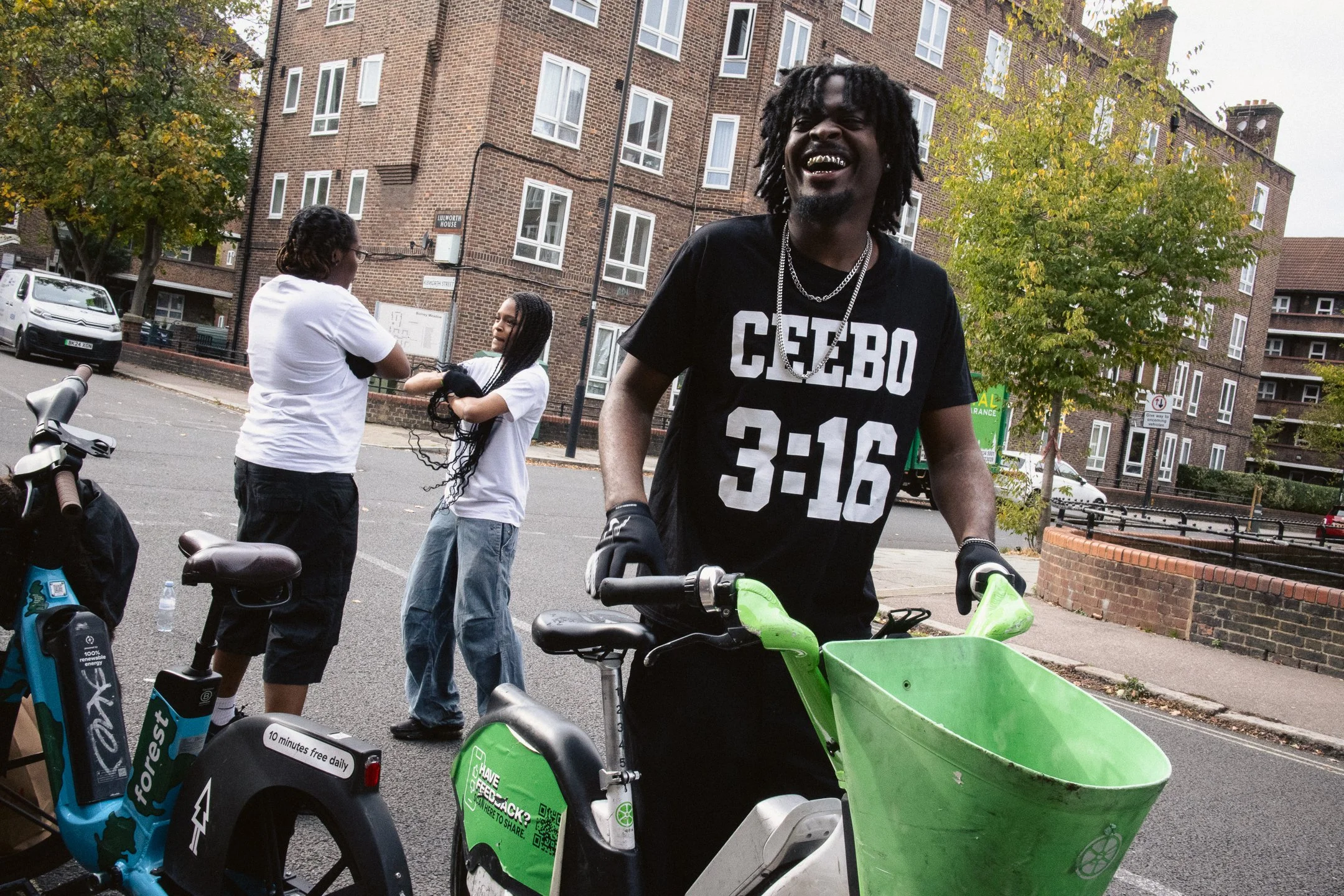
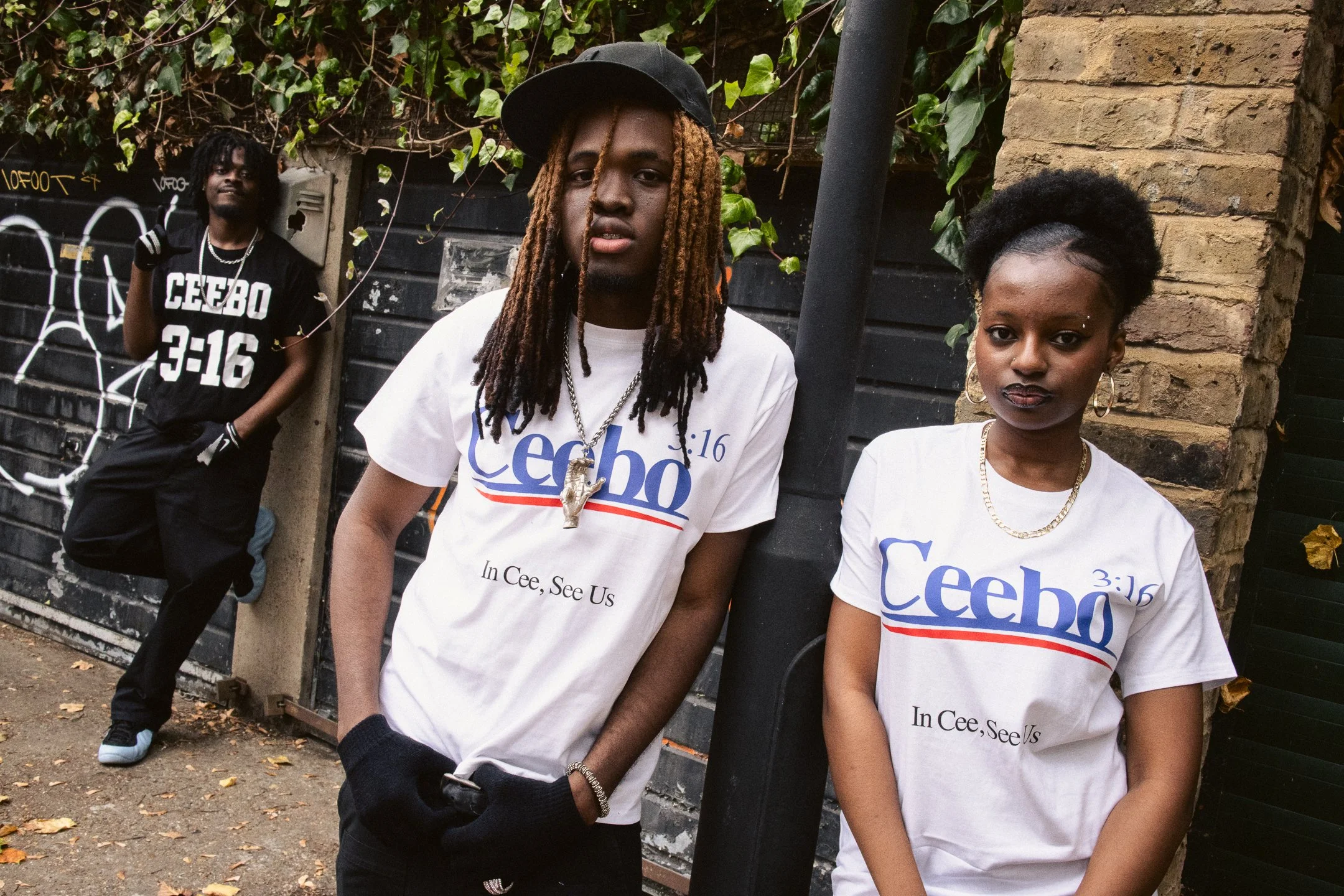
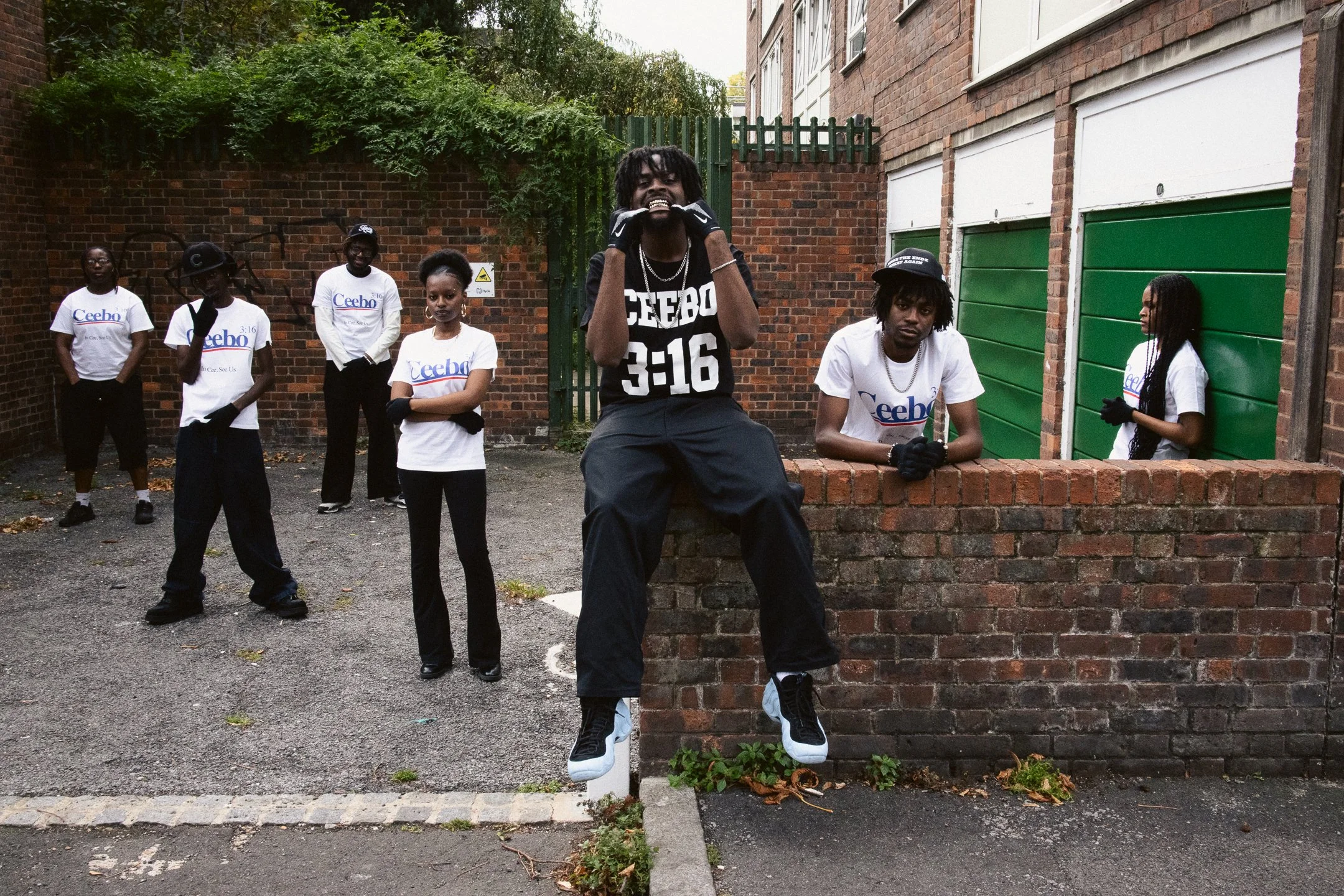
"I feel like there's a familiarity in how things are presented in terms of the characteristics and features." In this sense, the Blair baby depicted in the artwork can be taken as a sort of "everyman" figure for our generation.
To solidify these plans, Ceebo reached out to afrosurrealist's cover artist, marzdakid. Pulled in by the mixtape's title, marz's part in the creative process was entirely organic—"I saw him post the title Blair Babies and I messaged him like, 'This is one of the best titles I've ever heard!'". From there, marz's distinct, cartoonish style became the medium to interpret Ceebo's message.
Although marz's work has a history of incorporating discernible British paraphernalia, like the Union Jack and stamps, her approach to this Ceebo cover required extensive research to create the "skewed" reference that Ceebo mentioned. "I had to reach into my A-Level politics bag for this one, I searched on The Guardian for a political picture of Tony Blair," she expressed to me.
"Ceebo's smart because he touches on things like social politics. I think a lot of people are too afraid to become this Black political artist because they don't want to be boxed in. But that's gonna happen because you can't make something without speaking on the timeline you're in."
Ceebo's ideas, thrtnmo's videography, Sheldon's planning and marz's artistry each have played a big role in creating the image of Blair Babies. The project stands as a satirical masterpiece, capturing the essence and Black British resolve of today's youth.
Early standout "Captain Roscoe with a Crossbow" nods to early Boy in da Corner-era grime through a post-modern lens, whilst the startling "Black On Both Sides (?)" interlude before "Jook" seats the listener beside a child version of Ceebo, witnessing the social venom aimed at Black youth from the former Prime Minister. Even lighter tracks like "Buzzball Summer" are still equal parts escapism and contemplation.
To sum it up, the project stands as a satirical masterpiece, capturing the essence of the time it's rooted in. As Blair babies in the infancy of an established Black British identity, maybe Ceebo's work of art begins to define us all.
Stream Blair Babies below: