

How Sun Ra's 1974 Film 'Space Is the Place' Reimagined Jazz and the Future
We explore how Sun Ra's seminal film-album combo fused jazz, science fiction and Afrofuturism to imagine liberation beyond the limits of history.
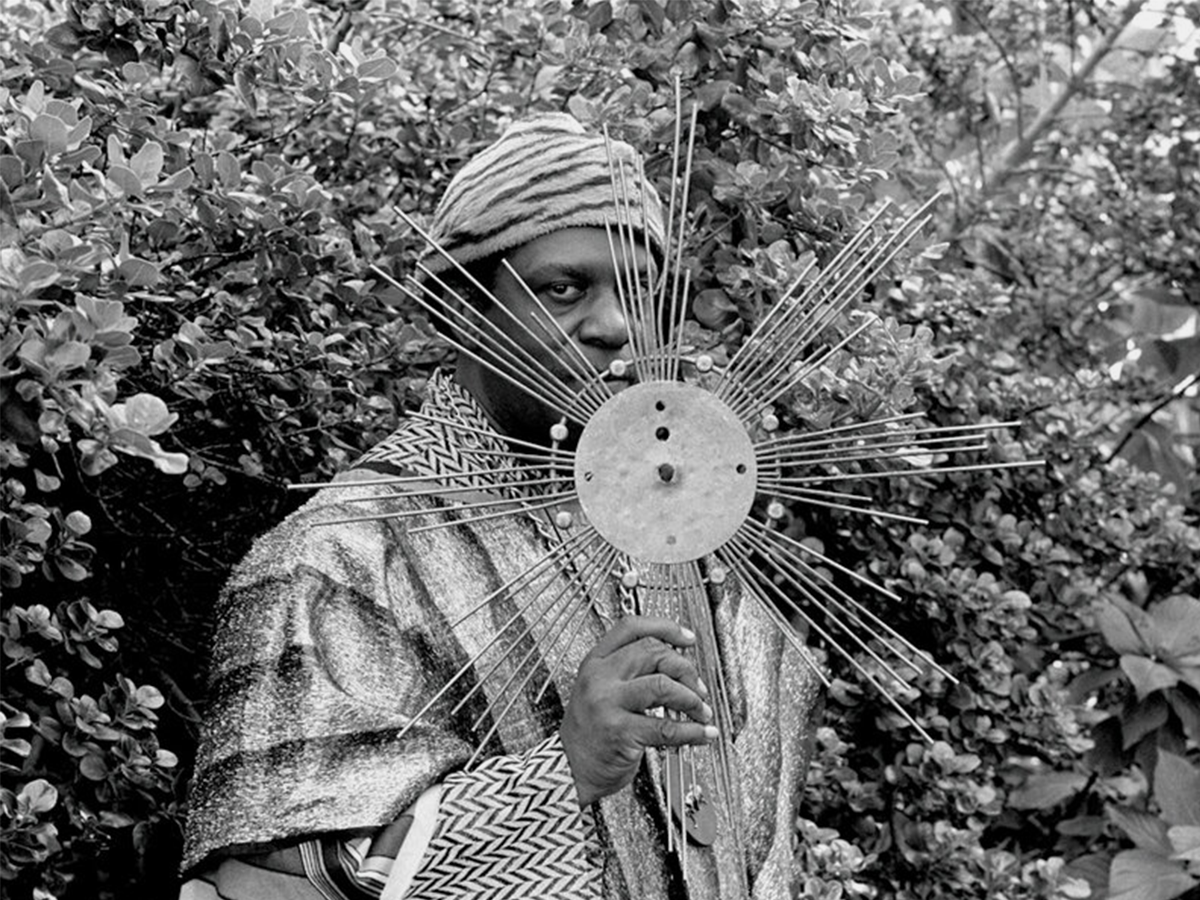
Sun Ra in 1968. Image property of Baron Wolman.
Before Afrofuturism had a name, Le Sony'r Ra—better known as Sun Ra—was already exploring ideas that had largely existed only in literature. Born and raised in Alabama, he developed into a jazz piano and synthesiser maestro and left a blueprint for experimental Black music that bent time as both history and imagined future—inevitably becoming a central influence on figures such as Madlib and groups like Parliament-Funkadelic.
Born Herman Poole Blount, his early years were shaped in Birmingham, a Southern city so maliciously segregated that racial supremacy operated as both law and custom in all directions of public life. By way of celestial transformation, Sun Ra, whose life was tethered to the persona of the Egyptian god of the Sun, released the 1974 film Space Is The Place, a surrealist science fiction epic written by and featuring Ra and his ensemble, the Arkestra.
The film sees Ra returning to Earth after travelling through space seeking to transport people to another planet through music. The premise is deliberately strange, but underscores an important question about the process of liberation. In Sun Ra's universe, liberation was the imagining of elsewhere. In the opening scene, Ra remarks: "The music is different here, the vibrations are different."
The 20th century's technological utopias were designed elsewhere because modernity excluded Black life from its visions of tomorrow. Time was never the progression promised by modernity for Black American communities. The future remained perpetually deferred, history offered little stability, and against that backdrop, self-reinvention became a necessary act of survival and possibility.
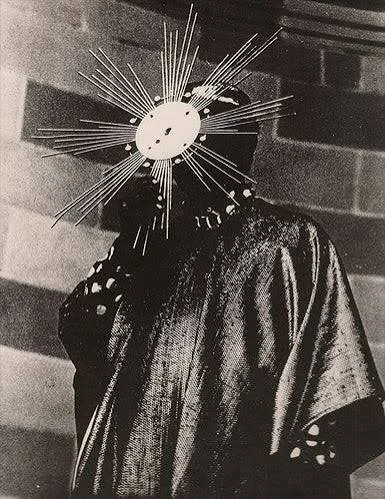
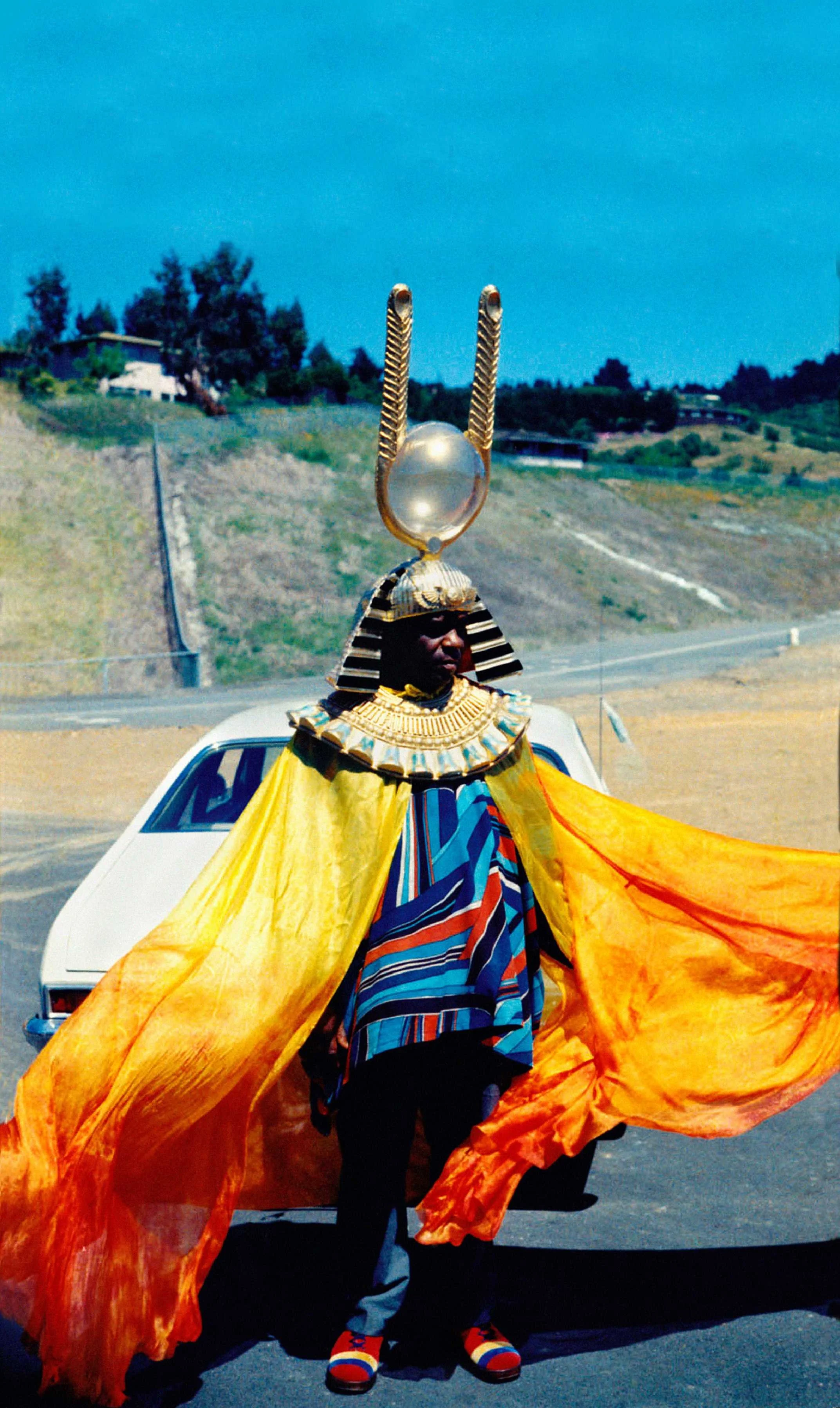
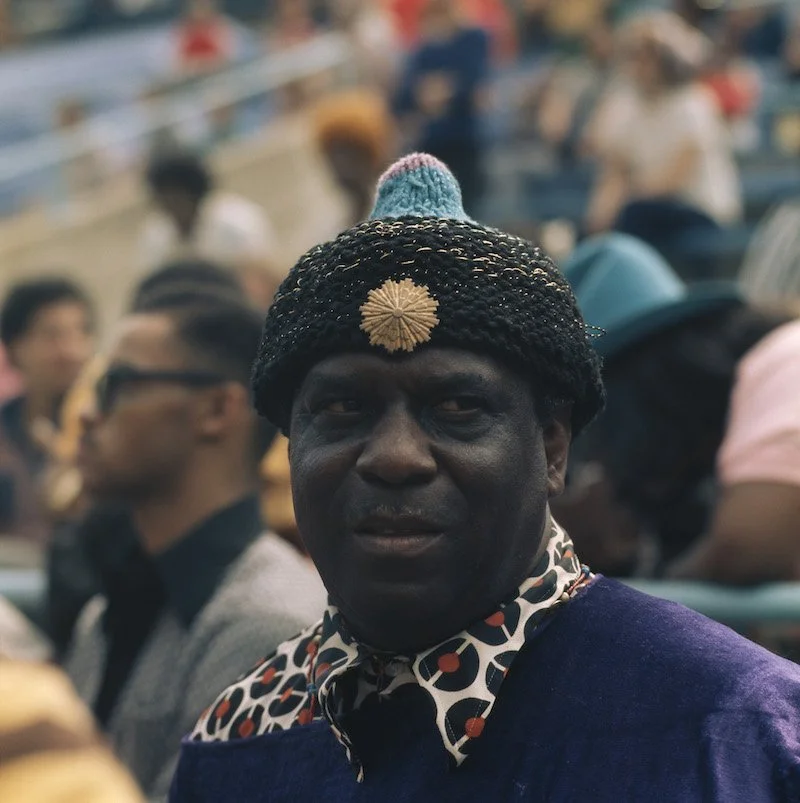
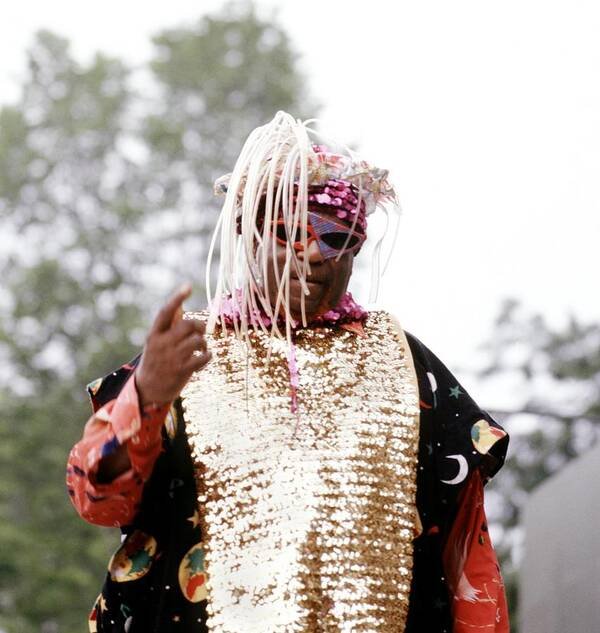
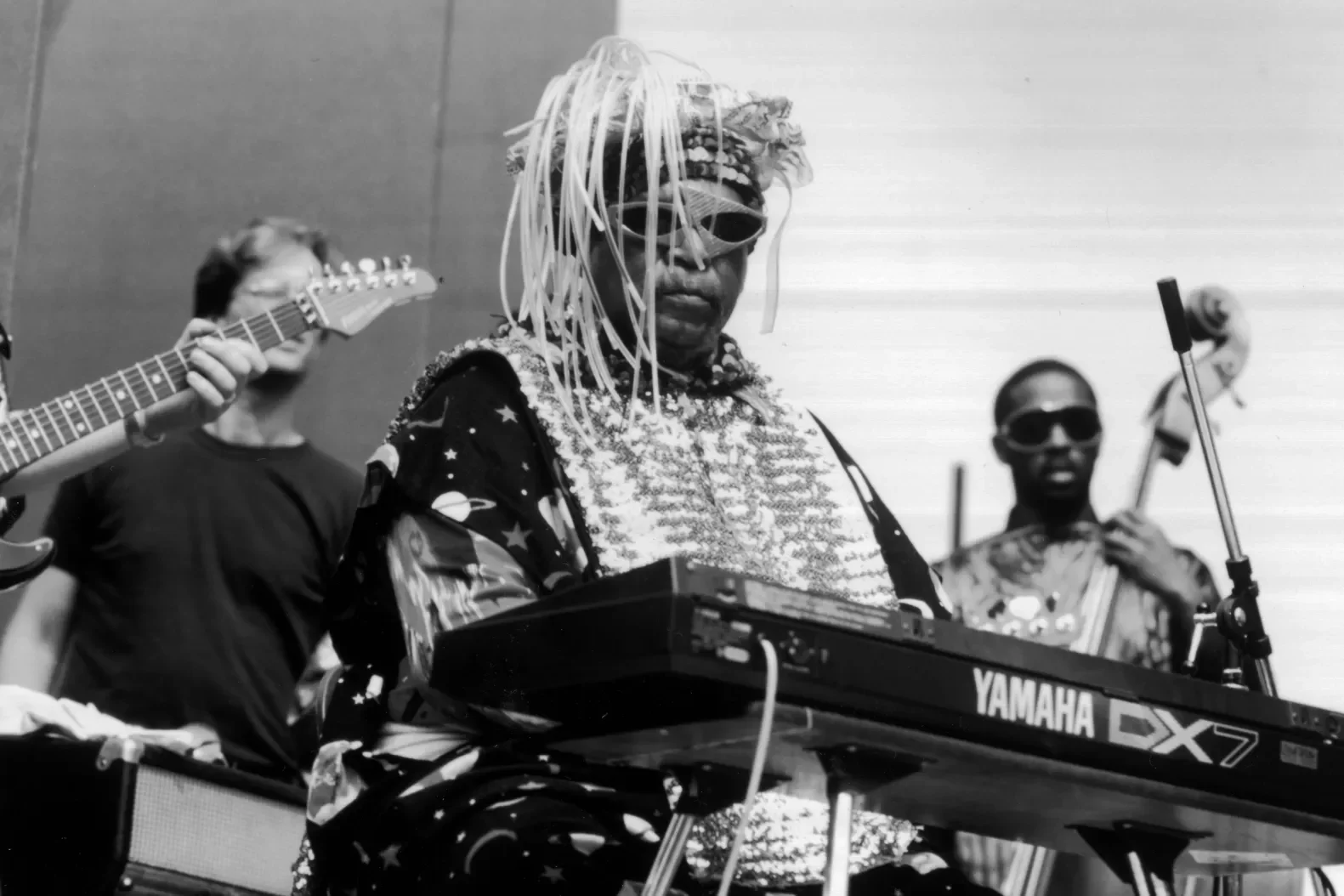
Sun Ra spent his life abandoning the constructs of his own biography: birth dates, family histories, his place on Earth. He recast himself as something beyond those limits. With Saturn as his alternative origin story and mythology as a political language, his music became a kind of technology for imagining elsewhere.
Marshall Allen—a free-jazz saxophonist and one of Sun Ra's closest collaborators—recalls rehearsals lasting for hours, with arrangements and musical parts rewritten at pace. Sun Ra encouraged musicians to "play what you don't know", emphasising that knowledge was a limitation.
That philosophy's fullest expression is in Space Is The Place. The film arrived during a decade of transformation for jazz. Miles Davis and Herbie Hancock were pushing jazz-funk, electronics and psychedelia into new territory. Sun Ra remained distinct within that climate of innovation.
Space Is The Place avoids the sleek chrome futurism of traditional sci-fi. When Ra arrives two minutes late to his own transmission dressed as an ancient Egyptian pharaoh, the film shifts from classic Blaxploitation into a surrealist deconstruction of the Black diaspora. Just as the album has gospel incantations that dissolve into the volatility of free jazz, Ra produces a world where multiple temporalities exist simultaneously.
When you press play on the accompanying album, the sweltering 21-minute title track enraptures the listener, creating the distinct Arkestral soundscape. It's part experimental jazz, part inter-dimensional transmission. Traditional jazz remains present throughout, but is pushed towards unfamiliar territory through electronics. Cultural identity is untethered from a historical moment.
Although the term 'Afrofuturism' wasn't coined until 1993, near the end of Sun Ra's life, the interplay of past and future sits at the heart of the movement. Music theorist Kodwo Eshun explores this disruption of history in his book More Brilliant Than The Sun: Adventures In Sonic Fiction. The past, present and future overlap and change one another, and that logic defines Space Is The Place. It unfolds as a transmission, combining performance, tradition and surrealist chaos.
“Me and time never got along so good. We just sort of ignore each other. I came from somewhere else.”
The sequencing is a constant disruption. Within five minutes, the film moves from an outer-space employment agency in Oakland, with Ra sitting behind a desk interviewing a long line of uncanny characters, to a cosmic card game in the desert featuring an oversized sand timer and back again to a 1970s American bar. Sun Ra's project is to expand cosmic consciousness within the Black diaspora through a pastiche of low-budget 1950s sci-fi.
As director John Coney said, it was "a time of dislocation" and the film reflects that. While locations are constantly shifting, characters are incongruously superimposed onto their scenes whilst Sun Ra speaks in paradoxes, claiming to be simultaneously "everything and nothing". Its disorientation of space-time remains the hallmark of the Afrofuturistic movement.
The Arkestra and their music are the infrastructure for this. Or, to paraphrase Ra: music is spiritual, with sound capable of engineering experiences that invert conventional space-time. History and the archive become fluid, carrying movement, sound and the potential for rearrangement, much like the film’s shifts between sunny Oakland, the desert and the cosmic beyond.
Sun Ra's legacy confirms Eshun's argument. This relationship with time continued long after his death. The emergence of sampling culture in the 1980s demonstrated that the past is no fixed artefact but instead material for recomposition. One of the producer greats, Madlib and his track "Shadows Of Tomorrow" on Madvillainy distils that relationship with Sun Ra's recordings. As the track states, "Yesterday belongs to the dead. Tomorrow belongs to the living."
The archive is recontextualised as digitalised memory; cultural histories are fossilised amongst new electronic soundscapes, layering ancient Egyptian iconography onto futuristic electronics. The legacy becomes a process for reconstructing the future without escaping its history. As Madlib pays homage to his predecessors with albums like Sound Ancestors, time becomes a material that can be cut, looped and rebuilt.
The sampler performs the same method that Sun Ra performed on jazz. In that sense, the influence of Sun Ra and his Arkestra extends beyond Afrofuturism as a genre or as an aesthetic, becoming a process of reimagining histories and futures.
Years after his death, his Arkestra lives on, performing on channels like NPR's Tiny Desk Concerts, but it is more than 50 years after Space Is the Place that Sun Ra's music continues to remind us that liberation begins with the freedom to imagine another world.
Watch Space Is The Place here.