

Fête, Fashion and Identity: How Minorities Shaped the Season's Biggest Event
One month on, how did this Parisian street festival become a hub for diversity and expression and what does that really look like today?
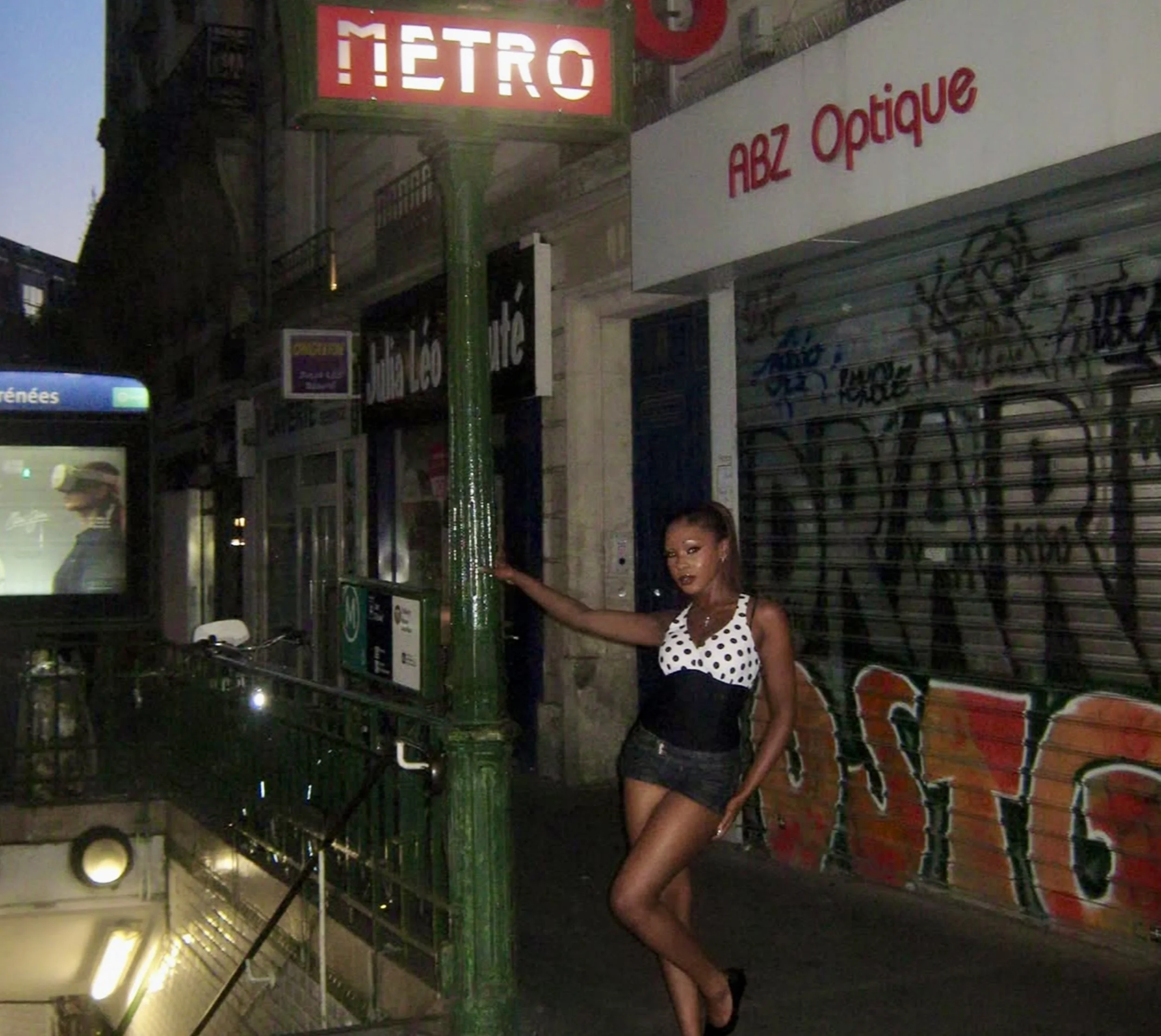
Singer and Culture Crypt cover star Natanya in Paris this year. Image via Instagram.
In its earliest days, Fête de la Musique, initiated by Jack Lang, was for the most part attended and performed by white, middle-class urbanites looking to usher their way into the summer season via the summer solstice, falling on June 21st. While the festival was open to all, the structural and social barriers that defined the Parisian social hierarchy often excluded racial minorities and immigrant communities from prominent participation.
Between the late 1990s and early 2000s, however, the rise of 'world music' aka "Musique du Monde" as it began to influence the French creative scene brought sounds emerging out of North and West Africa as well as the Caribbean, infusing a new diversity into the festival.
Particularly, in cities with large ethnic populations like Marseille, Paris and Lille, artists and attendees from diasporic communities began to participate. Nevertheless, the biases that characterised the festival's earliest celebrations remained somewhat prevalent, relegating Black and Brown musicians to less central stages, oftentimes treating their performances as exotic novelties rather than integral parts of the French cultural atmosphere.
From the mid-2000s to the present day, the broader social context surrounding racialised forms of discrimination has begun to shift. The introduction of Black Lives Matter, anti-racism protests and debates over French identity bled into the influence behind the festival.
In tandem with this, the increased visibility of Black, Arab and other minority musicians—often with political or socially conscious themes—helped to solidify a new perspective amongst Parisians, a good majority of whom would find themselves attending the festival in the years to come.
This year's edition saw that evolution on full display: a diverse range of performers took to stages across the city, including US hip-hop acts like Freddie Gibbs and Clipse, whose sets drew large crowds and media attention, as well as rising UK stars like Natanya, whose well-received performances spanned multiple Fête events.
Recess was instrumental as well, collaborating with SIXTION and Every Day People, alongside sister platforms like Better Listening and PlayPiem, each bringing their own soundsystems to inject fresh, grassroots energy to Fête. Their presence highlighted a growing appetite for diasporic sounds and stories, even if questions remain around whether true equity in representation has been reached: especially given how certain communities still get overlooked in festival coverage.
Fears surrounding a lack of consistency where equality is concerned were only amplified in light of Macron's unveiling of a new right-wing government in September 2024, including the appointment of Bruno Retailleau: a key member of the Conservative Republicans Party who was appointed interior minister, a profile that includes control over immigration.
The precarious nature of socio-political tensions in France begs the question of how Fête has become such a hub for multiculturalism and inclusion. Particularly, this year saw that many attendees were young Black Europeans emerging from the UK, predominantly, as well as countries like Ireland and Germany with increasingly large black populations.
“Primarily, the virality of Fête this year on TikTok helped to incorporate more diversity into this year’s festival amongst its younger population. For those planning to attend, the algorithms likely cater to relevant content, showing daily outfit ideas for the Fête posted by fashion content creators. Alongside this, there was a discussion with warnings from French natives to Black British women about the festival’s dos and don’ts.”
The buzz surrounding the festival captured the attention of Black British attendees everywhere, with the impending party being held so close by, and rumours circulating surrounding news that Black British influencers like Nella Rose and Madame Joyce would be attending also.
Fête coincides with Paris Fashion Week, which showcases designers and models from around the world. The increased visibility of ethnic designers has enriched this year's event. Pharrell Williams' Pharrell's SS26 Louis Vuitton show highlighted the contributions of Black and Brown designers, including Willy Chavarria, who featured a predominantly Black and Brown lineup in his menswear collection.
Notable designers and influential figures from the fashion industry attended recent shows, such as Wisdom Kaye at the Amiri Menswear SS26 show and Anok Yai at the Louis Vuitton show. Renowned Black musicians like French Montana and Giveon were also present, alongside The Carters, who attended the Louis Vuitton event. Interestingly, Fête de la Musique coincided with a stop on Beyoncé's Cowboy Carter tour in Paris, attracting a large crowd of Black Europeans eager to celebrate both Beyoncé and the festival in the same week.
Specifically, this refers to the international Francophone countries whose descendants have migrated to France. As Pride Month came to a close, Fête de la Musique continued to evolve over the years as a safe haven for the queer community in France, despite rising geopolitical tensions concerning various queer identities. In celebration of Pride Month, queer DJs at Fête received a warm welcome.
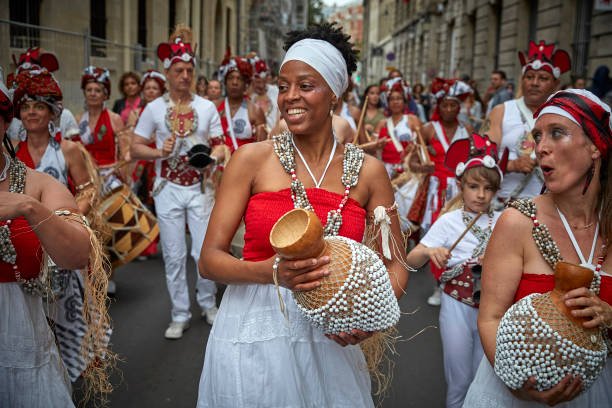
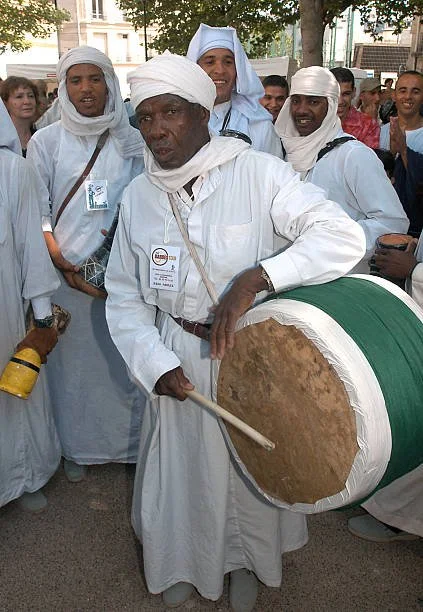
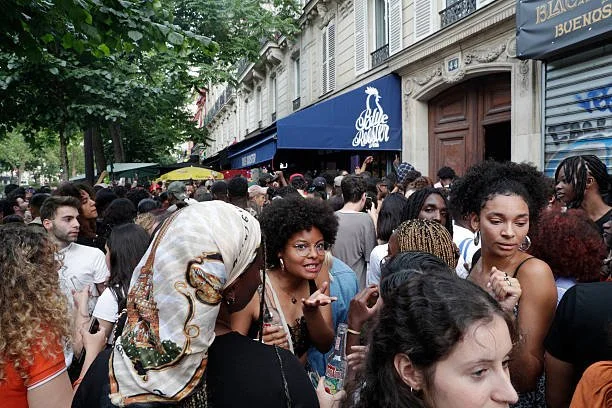
Fête throughout the years.The queer bar Le Bunker, located near the city centre, hosted Kali Kalite on the 21st. She attracted a significant crowd with her set, which she performed from a window of the venue, blending Afro-funk with French classics. Joining her was DJ Neko (aka Neko Lean Lean), who also played at Le Bunker. His set featured a diverse range of music, from amapiano to a fusion of rage and hype.
Although the Pride parade was officially scheduled for June 28th, celebrations began throughout late June. The heart of the Pride celebrations showcased distinct Pan-Africanism, which was prominently visible.
Queer members of the Algerian and Moroccan communities raised flags in celebration of where the identities of race, gender and sexuality intersect. Mostly, these intersections compound the forms of oppression the individual faces. Yet, pride in Paris continues to subvert narratives around shame and repression, transmuting their energy into a parade of reclamation and transcendence.
Despite the ongoing contention surrounding marginalisation within the Parisian socio-political sphere, this year's Fête served as a testament to where resistance continues to co-ordinate with fashion, music and culture, creating a safer space for Black Europeans, queer Europeans, in addition to those who belong to both demographics.
Whilst the white-middle class continues to hold privilege in Paris, they're finding themselves filling the stadiums and auditoriums of state-sponsored events, rather than the street festivals and block parties that have come to define Fête de la Musique.
Where Black and Brown creatives continue to influence mainstream pop culture in France, attendees of some of the year's most memorable events represent where minorities continue to carve out space for themselves in formerly exclusive circles.