

Brixton Calling: The man who bought the Academy for £1
A new play at Southwark Playhouse Borough traces the origins of South London's beloved live music scene, Brixton Academy. We delve into this one-of-a-kind story and its on-stage depiction.
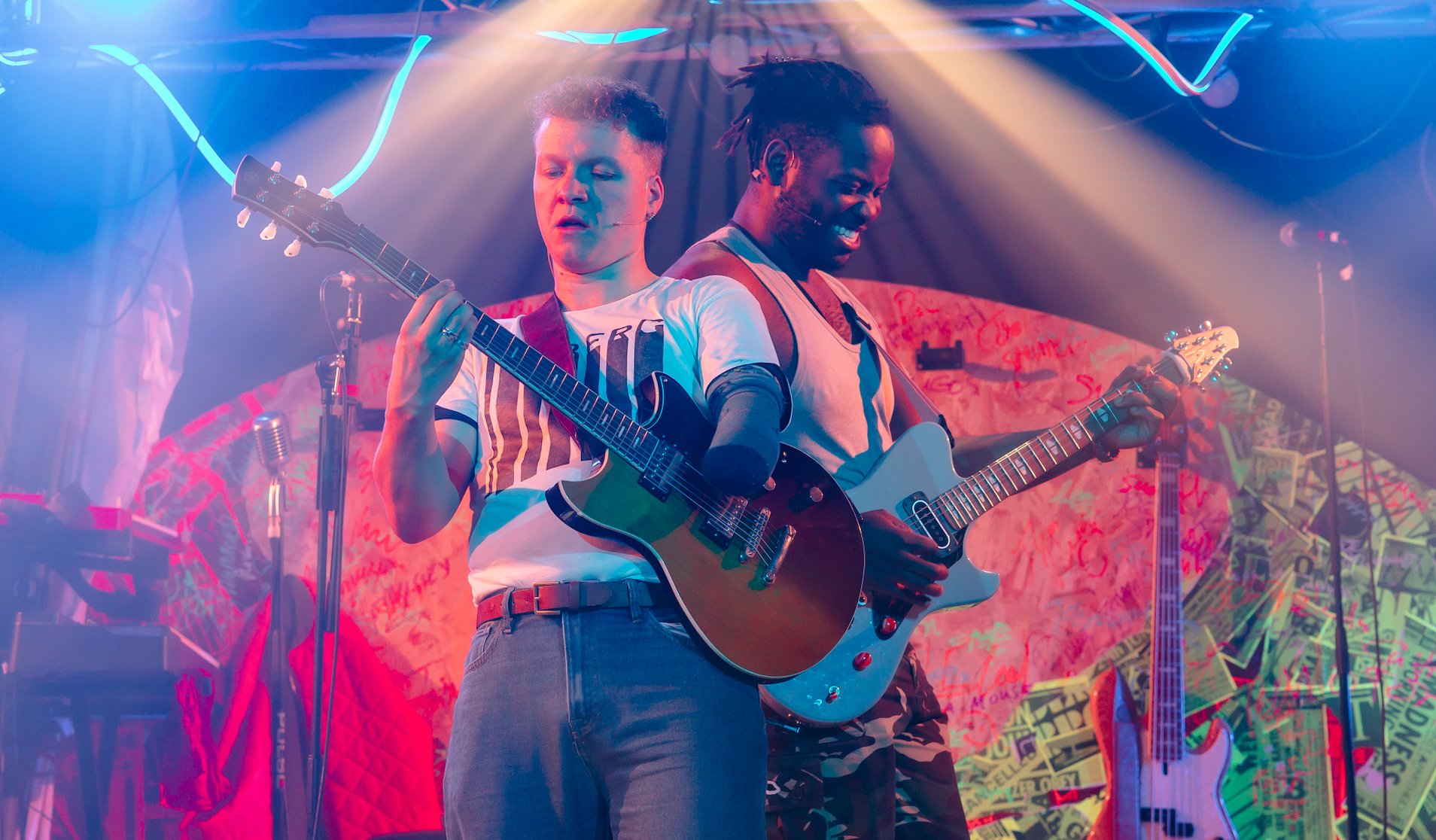
Simon Parkes (Max Runham) and Johnny Lawes (Tendai Sitama) in Brixton Calling. Images property of Danny Kaan.
It sounds like a myth. A 23-year-old Simon Parkes, without music industry experience or investor backing, buys a derelict building that would later become one of London's most iconic live music venues—purchased for just £1. This was Brixton in the 1980s and among the Greek soup of Odeons and Astorias, the Academy wasn't built quite so easily.
Long before Brixton was all sourdough and yoga studios, it was the gritty heart of South London's music scene. Brixton Calling, a new play running at Southwark Playhouse Borough, is Parkes' incredulous story amid complex social and political change, brought to the stage just 15 minutes from the Academy itself.
Brixton Academy has many past lives: the building was a cinema in the 1920s, a discotheque in the 1970s and then a derelict shell awaiting reinvention in the 1980s. Parkes (played by Max Runham), a Thalidomide baby born with only one arm, acquired the art deco venue from Jim Millar and Bob Scaddon, who were ready to sell for £120,000. Parkes' counteroffer fell short of the mark—"I'll give it to you for a quid"—but was accepted on the condition that he'd sell Millar and Scaddon's beer brand exclusively for a decade.
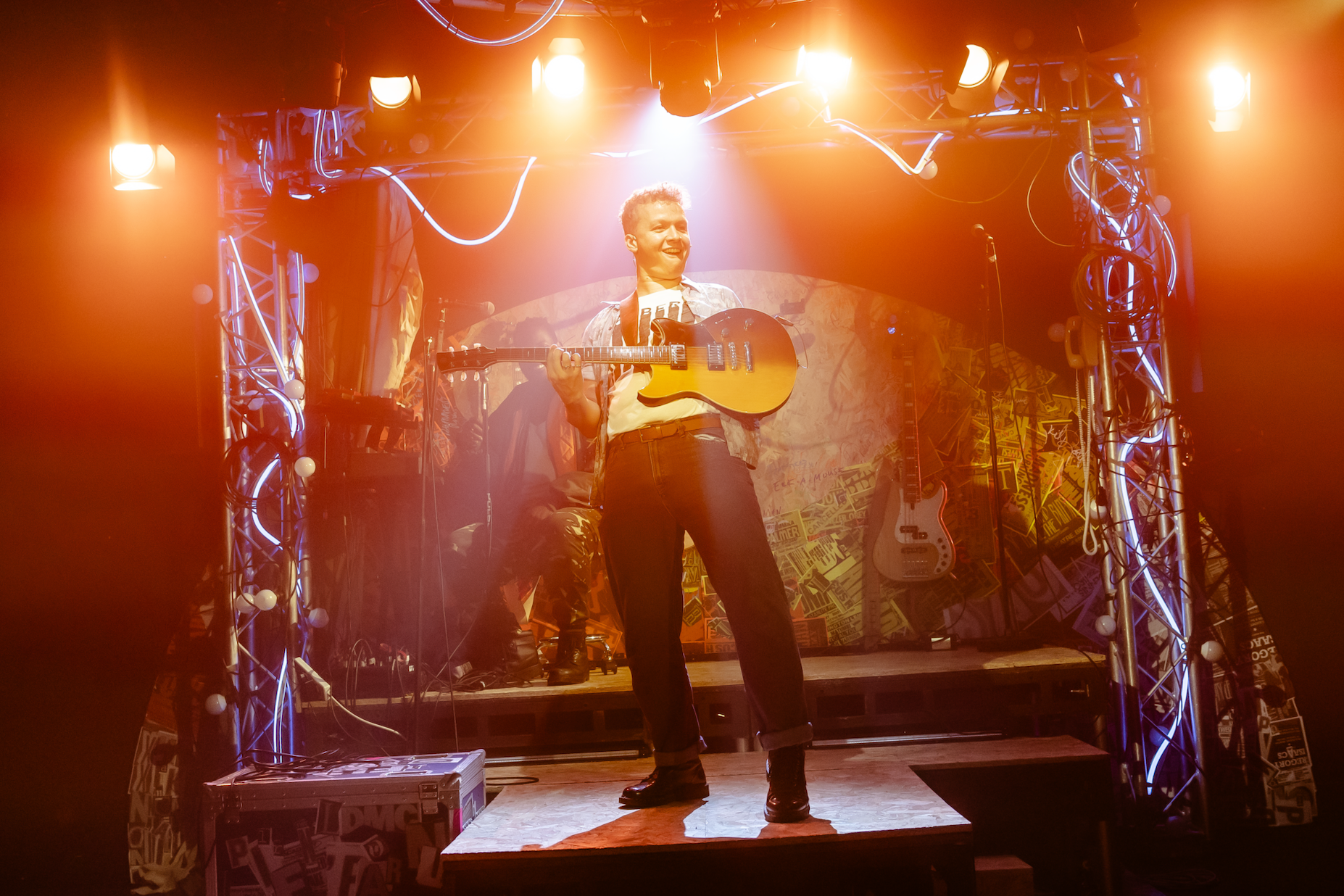
Securing the deal, he owned and operated the venue for the next 15 years between 1983 and 1998, a notoriously formative period for Brixton, an area which was often the frontline for London's racial tensions. Alongside Parkes was Johnny Lawes (Tendai Sitama), mellowing out Simon's humour and cockiness with much-needed knowledge, militance and promoter prowess, as he managed to secure the Academy's first major booking: English reggae band, UB40.
Brixton Academy flourished soon after and was home to icons: David Bowie played there; the Smiths played their final gig there; and in 1989, Diana Ross made a surprise appearance at a show that left Terry Wogan asking her, on national TV, if she was afraid to come to Brixton. It was as revealing as it was absurd, but some things never change.
Adapted from Parkes’ bestselling memoir, Live at the Brixton Academy, the play is written by Alex Unwin—Oxonian and former political speechwriter-turned-playwright—who was drawn to the story of a man fighting local bureaucracy, national politics and the cutthroat music industry to build the venue, somehow undeterred by the realities of 1980s Brixton. As Unwin describes it, the play depicts a "not so obvious marriage between a place and a person".
“The production doesn’t shy away from the necessary social and racial tensions—the 1981 Brixton riots, violent, heavy-handed policing and institutional racism all form the backdrop for this show.”
Parkes' unlikely arrival as an outsider in a predominantly Black community stands out in the tumultuous context of a 1980s Brixton, but Lawes is a major helping hand in the story's legacy; Brixton Academy is as much a culmination of his efforts as Parkes. However, in one harrowing scene, Lawes too is forced to bear the brunt of police brutality.
Blink and you'll miss the script's reference to Linton Kwesi Johnson, a renowned dub poet whose experiences of Brixton after arriving from Jamaica fuelled his works and activism. "Sonny’s Lettah", "Inglan is a Bitch” and "Di Great Insohreckshan" are era-defining poems-come-songs in response to Section 4 of the 1824 Vagrancy Act, which allowed police to stop and search individuals suspected of loitering with the intent to commit a crime. This law was used to justify the disproportionate targeting of young Black men in the 1970s and '80s.
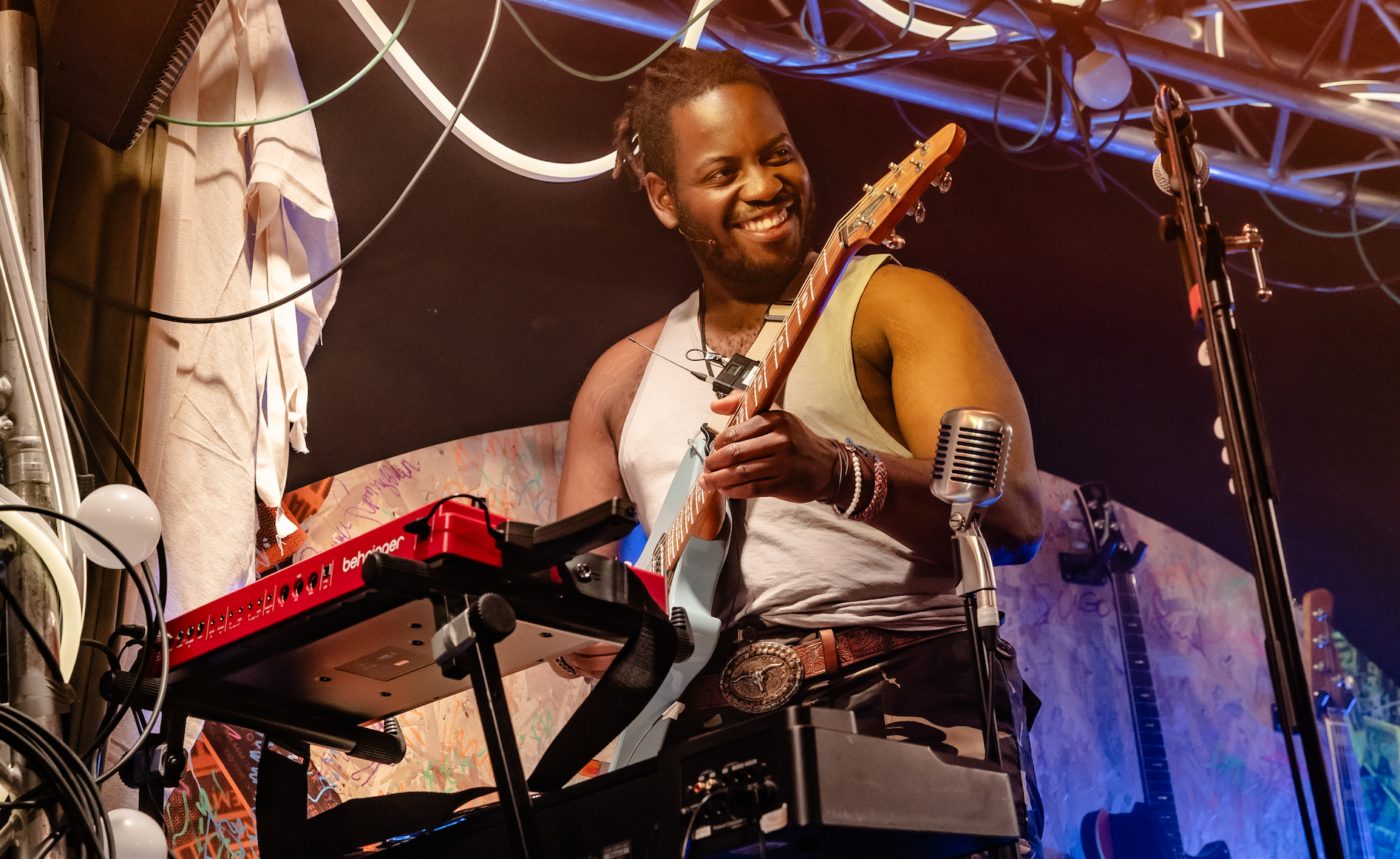
With the help of a thrilling live soundtrack running the gamut of reggae, ska, calypso, punk, rock, rave and acid house, the play is hoisted up by powerhouse performances from Runham and Sitama, both actor/musicians who step out of their starring roles to perform the great songs of the time, from Blondie to The Clash. With these breaks, the production switches on a dime—quid?—from play to gig, with needle drops from Chuck Berry's "Johnny B. Goode" and Gregory Isaacs' "Night Nurse" too, which Johnny's dog is lovingly named after.
As for the Academy as we know it, we have Chuck Berry to thank. The idea of bringing a live music venue to South London came to Parkes after he saw the father of rock 'n' roll himself at London's Rainbow Theatre in 1980. This inspired him to head up a venue, but crucially, one with no seats. Here, The Clash held the largest punk gig performed in London on their first headline tour. The song "White Riot" led fans to tear out 200 seats and throw the wreckage on-stage.
However, long after Parkes had quit the venue, the Academy hit breaking news again for all of the wrong reasons—a crowd crush at an Asake concert in December 2022 shuttered the venue for 16 months after two people tragically died and others were injured.
Overall, Brixton Calling is a play that pays homage to the people who helped live music survive and thrive in South London, culminating in the "celebration of a venue that changed British music forever". To catch the immediate standout of off-West End theatre this summer, you can see the play for the price of 15 Brixton Academies.
Brixton Calling is showing at Southwark Playhouse Borough until 16 August.