

Find a Way: How Dwele Gave Up Rap and Found Soul
Before he became one of neo-soul's most understated and revered voices, Dwele was a reluctant singer chasing a rap dream. His self-released 2000 debut quietly—but powerfully—changed the course of his career. Let's explore.
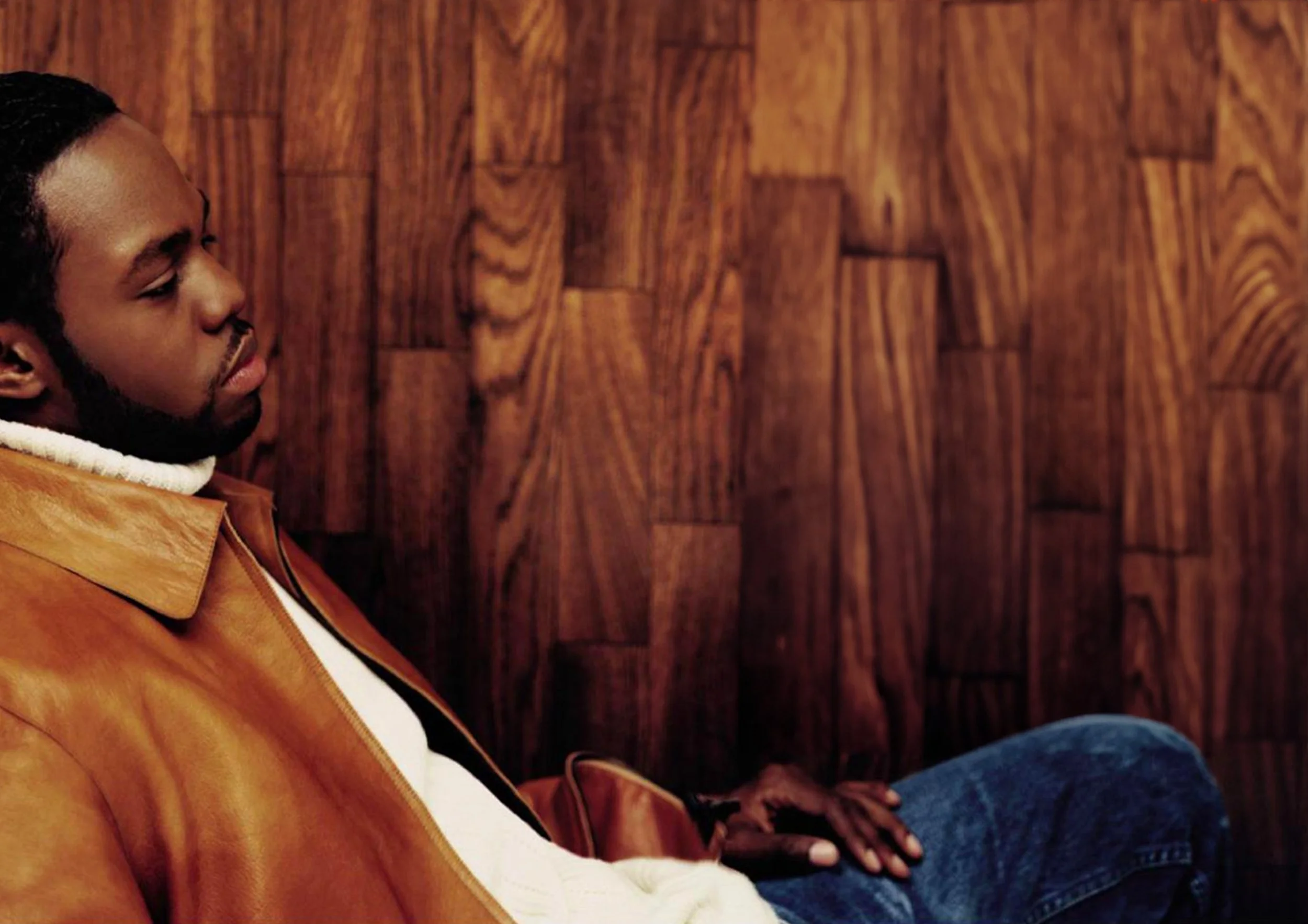
Edited artwork for Dwele's Subject album. Image property of Virgin Records.
"I don't even wanna do this shit, I wanna be a rapper," said a 25-year-old Dwele while recording his debut single, unaware of the road he was destined to travel. The career change. Sometimes it's not what we want, but it's what we need. This was no different for struggling Detroit rapper Dwele who, in 2003, was looking for his big break in the music industry.
Dwele's big break did come, but in a different shape to how he'd pictured it all those years as a struggling artist—putting in doubt if he even wanted to go through with it. As we are now able to see, however, Dwele grabbed that chance with both hands and ran. Well, eventually.
Before any label came calling, the Motor City emcee was already self-producing his own work in a makeshift home studio under the moniker 'Dwele G'. But his story didn't start there. Born Andwele Gardner, he was raised on Detroit's West Side and grew up playing trumpet as a child barely in double digits, later teaching himself piano and guitar. He studied music theory and performance at Wayne State University, steeping himself in jazz and soul.
Around age 19 or 20, he began recording rap tracks for local distribution—but listeners always seemed to gravitate toward the songs where he sang. "People would listen... and say 'I like that song' or 'I like this song,'" he told MVRemix in 2003. "They would always gravitate more towards the vocal songs... I thought I may have something here."
Dwele's creative catalyst—and the subject of our story today—was Rize. The artist pressed 100 or so copies of his self-released debut, which sold out in a week. Thanks to widespread bootlegging and early web peer-to-peer file sharing, the project reached London, Amsterdam, Shanghai, and back to Detroit. For a young artist, the writing was on the wall: even if it wasn't the writing he wanted to read.
Musically, Rize is jazzy, neo-soul-inflected, and funky, often taking significant gaps and detours from hip-hop. The album was an unhurried collection of demos from 1998 and 1999, loosely sequenced together. Tracks like "Early Morning" are vibrant, soulful, and subtly understated, while "Imagine" channels the spirit of the late Roy Ayers, blending '70s Detroit soul with modal jazz. Imagine The Temptations meeting Miles Davis.
On tracks like "Flywun"—one of the rare moments where Dwele's bars take centre stage—he delivers sticky flows over laid-back beats that echo Slum Village's style, seamlessly blending rhyme and soulful rhythm. Meanwhile, "Timeless" perfectly captures the late '90s neo-soul movement, sounding like it could effortlessly slip into any Soulquarians session or project from that era.
The city's creative sphere (where J Dilla, Amp Fiddler, and Slum Village quietly reshaped Black music) gave him a sonic blueprint. That quietly viral success, without a single rap verse in sight, would lead him to sign with Virgin Records in 2001. Ironically, as a singer.
Rize, alongside Dwele's guest hook on Bahamadia's "Beautiful Things", aided in the artist's steady ascent. Both moments were entirely vocal-led, and led Virgin Records to believe they had found a singer. Dwele, however, still wanted to rap.
His vocals on Slum Village's 2002 single "Tainted" took off, becoming a defining cut for both him and the group. "If it wasn't for 'Tainted', I'd probably still be shelved right now," he admitted to YouKnowIGotSoul in 2012. The record's success made the label double down. They wanted a soul album, not a rap one.
Dwele got to work. But for someone used to doing it all (writing, producing, performing), sharing space in a studio was foreign territory. And emotionally, he was still torn. Dwele wasn't just recording for fun—he had lived a life rooted in music, shaped by the loss of his father at age 10 and the sounds of Marvin Gaye and Donny Hathaway. That jazz sensibility quietly shaped the soulfulness of his arrangements.
He was steeped in the same musically rich environment that birthed J Dilla, Slum Village, and Moodymann, giving him a grounding in both musicality and streetwise poetics. That duality—technician and traditionalist—was key to why the industry found him so marketable, but also why the shift away from rapping felt like a personal fracture. He wasn't just being told to switch styles: he was being asked to mute a part of himself.
During the recording session for "Find a Way", producer G-One pushed Dwele to keep re-recording vocals. At his breaking point, Dwele snapped, "I don't even wanna do this shit, I wanna be a rapper," as he recalled in a 2016 interview with 247HH. G-One responded, "Man, do you ever see the type of women rappers get, versus the type of women that singers get?" Then he said, "Man, go cut the vocals." Needless to say, "Find a Way" became a hit and remains Dwele's best-performing solo single on the charts.
That was the turning point. Dwele's voice was now his currency. He became a respected figure in 2000s R&B and neo-soul, even as he remained a quiet, conflicted presence. His contributions to hip-hop—most notably Common's "The People", Kanye West's "Flashing Lights" and "Power", and countless Slum Village records—cemented his cultural legacy, even if not as an emcee.
Dwele's path, switching from rap to singing, was unique but not unprecedented. Lauryn Hill's move from The Fugees' bar-heavy The Score to the soulful, sung-through The Miseducation of Lauryn Hill set a template. So did Kanye West's shift on 808s & Heartbreak. And Tyler, The Creator? His biggest hit, "Earfquake", is a singing record.
Dwele needed a push in the right direction from producer G-One before he came to terms with his destiny as a soul singer—but we're glad he eventually did. Maybe he never stopped grieving the rapper he might've been, but whether spitting or singing, Dwele always gave his all to the music.
Stream Subject below: