Built to Last: How Champion and Timberland Became Streetwear Icons
We delve into the parallel journeys of Champion and Timberland, tracing how these two utility-focused brands evolved from purely functional origins to become enduring fashion icons in streetwear culture.
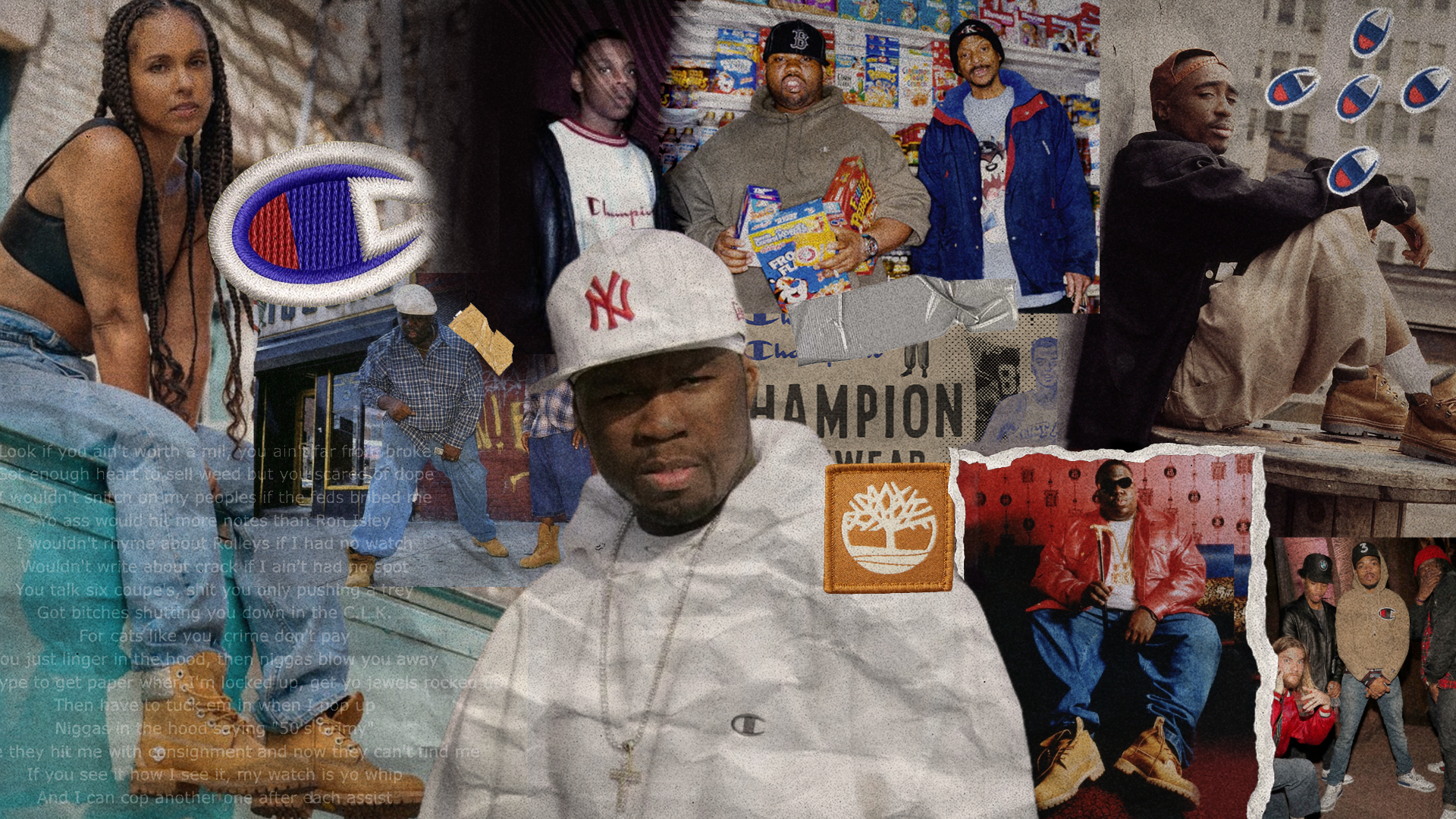
Collage. Image property of The Culture Crypt.
Amid the noise of today's streetwear scene, few brands can claim cultural significance that spans decades, genres, and continents. Timberland and Champion, however, remain enduring reference points, not simply as product labels, but as symbols of style and subcultural history. Though often name-dropped in rap lyrics, vintage dealer captions, and style forums, the deeper narrative behind the staying power of both brands is rarely explored.
Both brands trace their roots back to functional American design: Timberland with rugged workwear built for the outdoors, and Champion with sportswear engineered for durability. Over time, each was recontextualised, first by inner-city youth, then by musicians, stylists, and creatives who helped turn necessity into some of the most recognisable iconography in fashion.
Timberland: From Work Boot to Hip-Hop Staple
Timberland, like many blue-collar classics, rose from its working-class origins to find a place in the wardrobes of fashion and music tastemakers.
Initially designed for labourers in New England's tough winters, Timberland's 6 Inch Boot became an unlikely style statement in 1990s New York. What began as a utility product, prized for its waterproof leather and heavy-duty construction, was quickly adopted by hip-hop culture.
Rappers in Brooklyn, Queens and beyond began wearing Timbs not as a fashion flex but as an unpretentious everyday uniform. By the time Biggie rapped "Timbs for my hooligans in Brooklyn," the boot had transcended its intended purpose. Wu-Tang Clan wore them in videos and press shots; Nas laced them up in Queensbridge during the Illmatic era; Mobb Deep made them synonymous with the realism of mid-'90s street life.

Since its early origins in 1978, Timberland has made one thing clear: some silhouettes don't need to be tweaked. Today, Timberland is subtly repositioning its legacy. While the original 6 Inch remains a staple, newer silhouettes like the Boat Shoe are being introduced to an entirely new generation, blending over 50 years of craftsmanship with quiet reinvention.
Timberland honours its heritage while embracing the future. Every pair in the newest collection, from the Men's Classic 2-Eye to the Women's Noreen Lug, features Premium Timberland leather, sturdy rawhide laces, and hand-stitched nylon construction built to endure countless seasons and adventures.
The brass eyelets stand as enduring details, weathered yet resilient, reflecting the timeless legacy they represent. Despite their ability to hop on fleeting trends, Timberland proves that true style isn't about changing with the times; it's about building something that outlasts them.
Champion: The Architecture of Streetwear
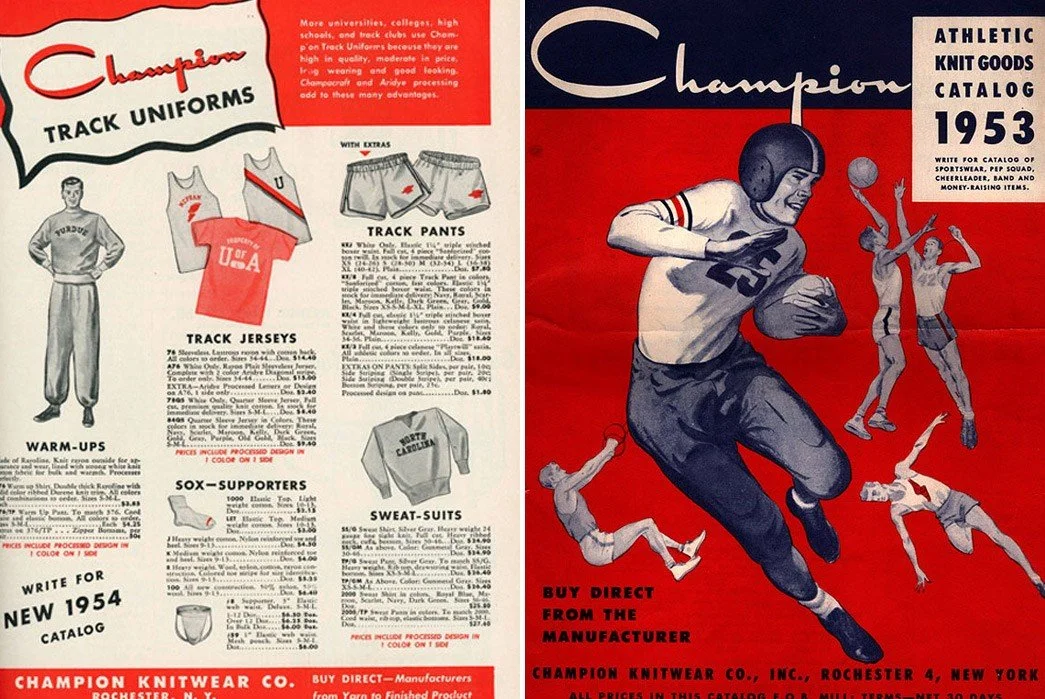
Champion's entry into the cultural lexicon also began with functionality. For nearly a century, Champion, once known as the Knickerbocker Knitting Company, has been at the forefront of sportswear innovation. In the 1920s and 1930s, its designs became staples for American athletic teams, from local schools to top universities.
By the 1970s and 1980s, Champion was outfitting the NFL and NBA, solidifying its place in sports history. Over time, its name has become shorthand for comfort, durability, and classic athletic style. Decades later, their proprietary Reverse Weave technique, designed to prevent shrinkage during washing, would lay the foundation for modern streetwear silhouettes: boxy, heavyweight and utilitarian.
By the late 1980s, Champion was no longer just sportswear; it had become a streetwear staple. Early hip-hop artists began gravitating toward the brand for its comfort and structure. Vintage photos of Wu-Tang Clan in oversized Champion hoodies captured a moment when athletic wear was crossing over into cultural symbolism.
As streetwear's popularity exploded globally in the 2010s, the brand experienced a full-scale revival. Its archival aesthetics aligned perfectly with the rising appetite for normcore, authenticity, and vintage Americana.
Collaborations with the likes of UNDERCOVER, Vetements and Stüssy repositioned the brand within a new fashion hierarchy. At the same time, artists like Westside Gunn brought it back into the spotlight, often pairing thrifted Champion pieces with luxury tailoring and references to fine art.
More recently, the brand has doubled down on its roots with collaborations like the All Stars collection with Duke's Cupboard, a beloved London vintage institution. The collection, built on archive silhouettes and community-oriented styling, feels like a deliberate handover to a younger generation that has always viewed Champion as more than just a logo.
The Shared Cultural Code Between Both Brands
What connects Timberland and Champion, beyond their American origins, is their role as vessels for cultural memory. Both were adopted organically, long before marketing teams chased 'authenticity.' They became staples in rap not because they sought celebrity co-signs, but because their practicality, price point and understated design enabled reinterpretation.
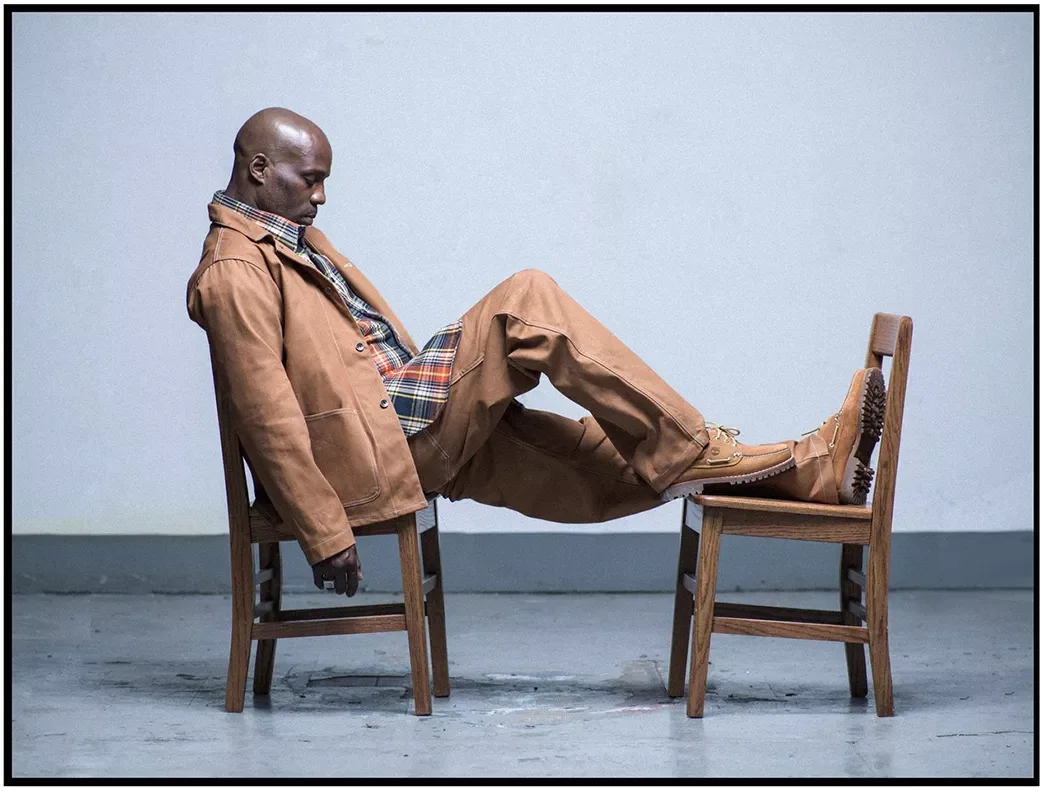
In doing so, they helped sketch the contours of what we now recognise as streetwear: a movement grounded in utility but elevated by expression and undeniably tied to hip-hop music and cultural identity.
The brands' recent campaigns have highlighted stylists and creatives in cities like London and New York, tapping into the crossover between vintage prep, streetwear, and global youth culture. The aim is clear: to evolve without erasing what came before.
While newer brands enter the conversation with calculated buzz and limited drops, Timberland and Champion stand apart by virtue of their embeddedness. They weren't built to be cool; they became cool by showing up, consistently and unassumingly, in the places where culture was being made.
Discover the full Duke's Cupboard x Champion collection here and explore the latest Timberland footwear here.