

Susan Wokoma Shares Lessons From 'Dark Skin Bruises Differently'
Chewing Gum and Cheaters star makes her mark at the 2025 BFI London Film Festival with Dark Skin Bruises Differently—a powerful short exploring education, childhood and care through a distinctly Black British lens.
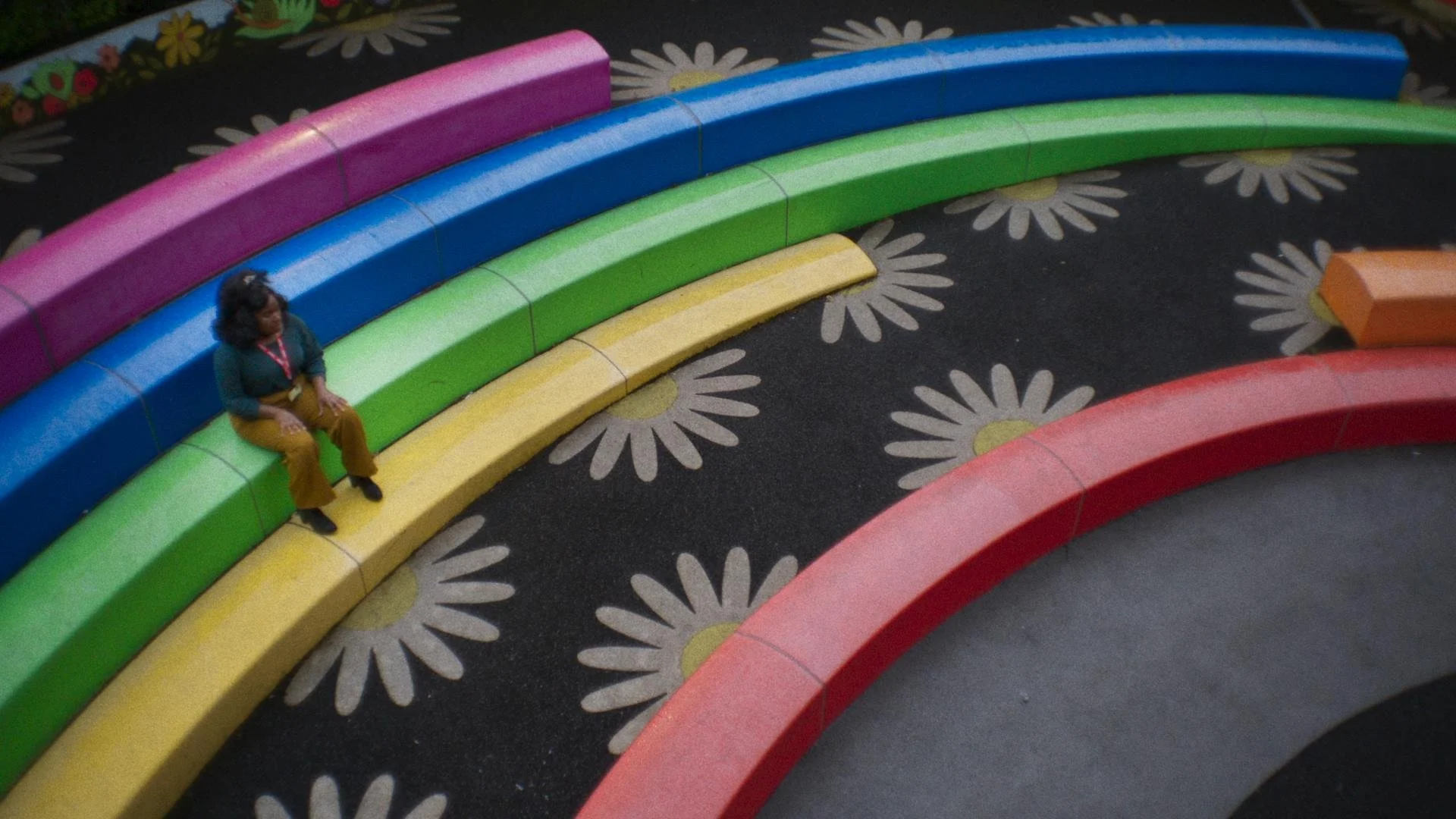
Susan Wokoma as Ms. Lawson in Dark Skin Bruises Differently. Image via Press.
"The judges are looking for a sense of adventure, a passion for the environment and of course, confidence on camera," says the chirpy voiceover of Serious Jungle—a CBBC relic from 2002 that plucked 14-year-olds out of their school corridors and into the humid wilds of Borneo under the guise of edu-tainment. Among them was a fresh-faced Susan Wokoma, already brimming with personality and presence.
Wokoma, now 31, is a known force in British television, making indelible appearances in Michaela Coel's E4 hit Chewing Gum, as well as Cheaters, Crazyhead and Taskmaster—not to mention also being in the writer's room for Sex Education. However, this year, she returns with something entirely her own. Dark Skin Bruises Differently—a new short film written, directed, produced by and starring Wokoma—features at the BFI's London Film Festival as part of the "Show Me Who I Am" strand. It turns out that the CBBC judges were right, just not in the way that they thought.
When I bring up Serious Jungle, Wokoma remembers the experience with both amusement and a raised eyebrow: "That show was mad. Looking back, there were certain elements of it that I don't think would run now, in terms of child safety laws." It was Wokoma's first flight and her first time abroad. She declined to kill a chicken for dinner, was riddled with leeches near enough every day, but delighted in seeing honey bears and orangutans, and sleeping in hammocks within the jungle's depths. Then came the real surprise: "I was barely featured in it."
Watching it now is surreal—like Love Island meets I'm A Celebrity, Get Me Out of Here!, except everyone's 14. The edit appears to favour the frequently tearful and visibly homesick. Wokoma, however, who got on with the tasks and narrowly avoided the tantrums and bizarre love triangles, was left on the cutting room floor. "I remember my design and technology teacher, Mrs Hall, sat me down after class and said, ‘I'm really upset that you're not in it, and do you know why?' And I was just like, 'Not really.' And she was like, 'Racism!'" Wokoma pauses and adds. "Mrs Hall is white by the way."
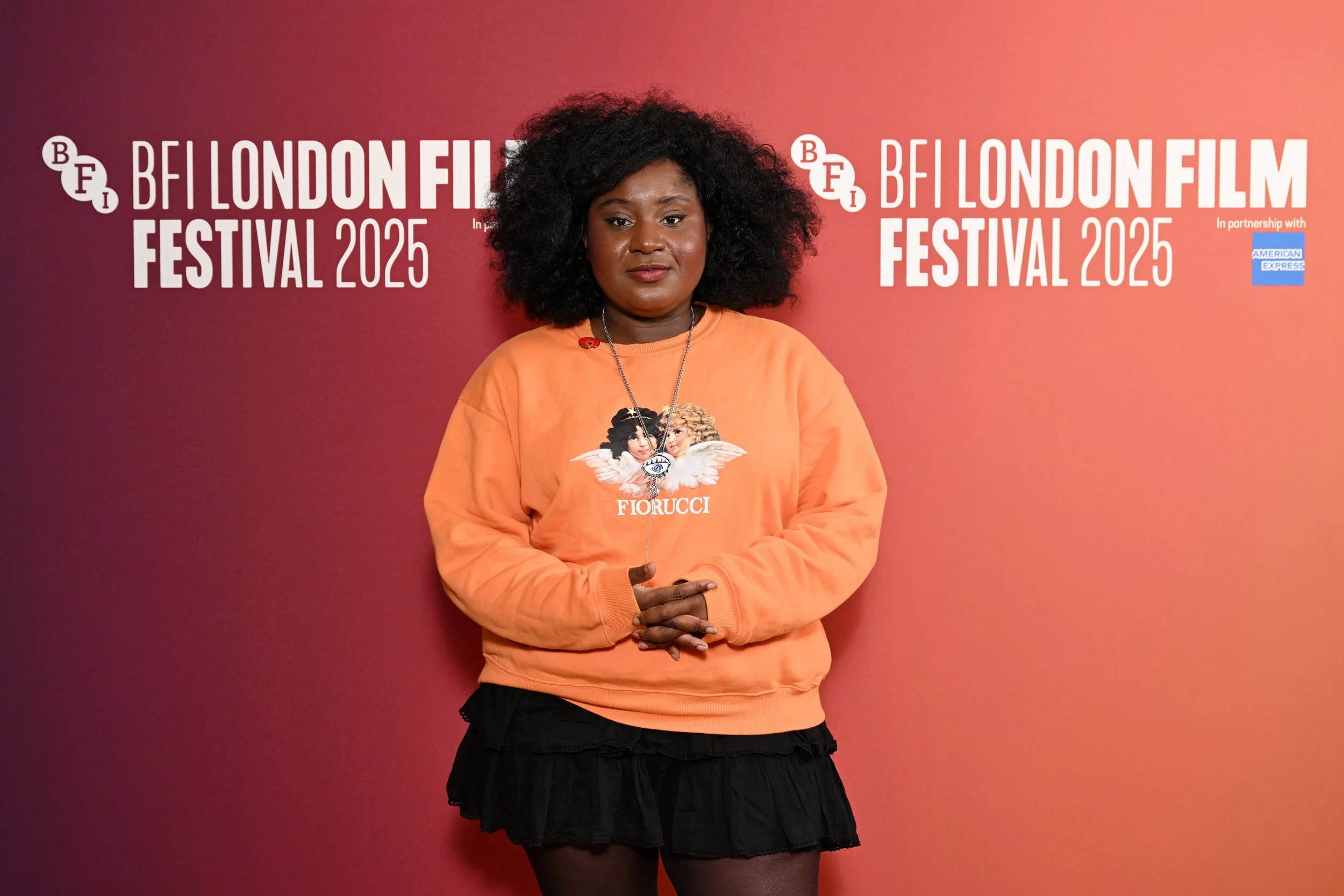
Susan Wokoma in 2025. Image via Press.
Not being a caricature of herself in one of her earliest TV appearances, she says, is one of the many deeply held motivations for making her new film. Dark Skin Bruises Differently follows Maria Abasi, a quiet girl from a London primary school, navigating a system that misunderstands her—or worse, overlooks her. There's concern that she may be facing abuse at home and among some sceptical and unsympathetic teachers, Ms Lawson (played by Wokoma) is the only one who tries to advocate for Maria.
Through Ms Lawson, she says, "I really wanted to look at how young Black children are forced to be grown-ups. Their adultification is something that's really at the heart of this." Spurred by these themes as well as her own experiences, the film started to materialise: "I remember a friend of mine asked, 'What age would you say you grew up?' And we were coming out with like six, seven. And you just think, 'God, we didn't really have all that much time to just play.'" Wokoma even recalls being stopped and searched with her younger sister before age 10. Not one officer asked if a guardian was present.
In one affecting scene, Maria reads out her own report card, which accuses her of being dishonest. When asked what her real primary school report cards said, Wokoma replies, "I would always get, 'Susan is smart.'" This intelligence also came with a deep sense of justice that was far less welcome:
"One girl in our school did something, so I called it out and everyone said that I was lying. My report also said 'Susan was lying about this incident.' I remember feeling such a ball of rage because I was like, 'I did what you adults always say that you should do, which is if you see something bad happening, you call it out.' I remember realising then that not all adults tell the truth." For her, this was an early lesson that the right thing sometimes isn't the most comfortable. Through Ms Lawson's character in Dark Skin Bruises Differently, this aspect of integrity is tested.
“I really wanted to look at how young Black children are forced to be grown-ups. Their adultification is something that’s really at the heart of this.”
The film's genesis lies partly in these moments of having to grow up faster than most. But it was the case of Victoria Climbié—an eight-year-old who died after prolonged abuse and institutional neglect—that also tipped Wokoma into writing. An investigation into the Climbié case showed frequent contact with social services, with many opportunities to potentially save her. They were all missed.
Dark Skin Bruises Differently effectively captures this systemic failure in an economical 10-minute film. Whether in schools, homes or even in hospitals, where Black women are disproportionately more likely to die due to racial bias in pain assessment, the film goes to the root and demands empathy as a baseline: "If you look at a Black child or an Arab child and you feel no empathy, that will only manifest into you not being able to really give a toss about them as adults. I think it starts there."
After circumventing playground politics and chaotic kids' TV castings, she joined the National Youth Theatre, and there she learned about the beauty and complexity of collaboration: "Doing that, being amongst children, I know how fun and exciting performance can be." But had she not been continuously encouraged by her Saturday drama group facilitator at 13, she would not have been on TV at all.
"In my situation, which this film is loosely based on, my teacher [Ms. Maria Leaf] was very fond of me. She immediately said, 'This girl's going to be an actress. I'm going to really help her.' Had she not done that, I wouldn't be sitting here speaking with you today!" Wokoma is acutely aware of this boundary: how and when to intervene in a child's life while maintaining an appropriate distance. The mere perception of collapsing that distance is what gets Ms Lawson, her character, in trouble.
It's sobering viewing against the context of a worsening teacher shortage in the UK as vacancy rates hit a record high in England this year. Even in fictionalised depictions of schools from series Abbott Elementary and English Teacher and film Steve, the sentiment is the same: teachers are undervalued and expected to function as 3-in-1 social workers, therapists and disciplinarians. Steve, for instance, stars Oscar-winning actor Cillian Murphy and musician-turned-actor Little Simz (Simbi Ajikawo) as headteacher and teacher of a last-chance reform school. Murphy, who comes from a long line of educators, says the film is a "love letter to teachers".
How then would Wokoma package Dark Skin Bruises Differently? "I'd probably say it's a warning to teachers: to be very careful, and to really lock into your own personal prejudices that you might be aware of or unaware of, which I think is really important if you're working in any kind of institution. You can very quickly stop seeing the people you're meant to be taking care of, or the people in your care or custody, as human."
With this in mind, now behind the camera, Wokoma has built the kind of environment she would have relished when she was younger. She speaks with glowing admiration for Moizelle Olaleye, her young Maria, and with a sense of pride about the space she made for her to succeed. Wokoma recalls: "I told everybody on set, 'This is like Disneyland for her and her mum. We have to roll out the red carpet.' That was really important."
She found joy, too, in choosing her team. She says, "When you make something for yourself, you don't have to ask permission. You just hire people who you like and who are really, really talented. And it's as simple as that." That, in itself, has been a hard-earned privilege:
"Wes Anderson never apologises for hiring the same 15 people. Martin Scorsese has used the same editor forever. Mike Leigh was using Dick Pope for all his films. As a Black woman, I sometimes feel that your work is this exercise in finding many other unknowns to be in your project. People don’t look to established white male directors and go like, ‘Why aren't you passing the ladder down?’"
Filmmaking for women of colour, Wokoma has observed, doesn't lend well to an ensemble-level consistency, as it is often framed as cliquishness. For an Anderson, Leigh or Scorsese, however, loyalty and preference are regarded as a focused kind of artistic integrity and vision.
“Now behind the camera, Wokoma has built the kind of environment she would have relished when she was younger.”
The hope now is to focus and extend Dark Skin Bruises Differently to a feature-length film version. Unconvinced by the industry's go-to defence for shelving bold or specific narratives—that they are 'too niche' to resonate broadly—Wokoma has heard the excuse before and she's seen it disproven:
"Being in Chewing Gum was actually a big lesson in the lie: the lie being 'we need to make a show that's going to appeal to as many people as possible and make them all feel like they’re seen and heard, therefore it’ll be a huge hit show. That was a show that was really made for UK audiences and then had this massive international appeal. So when people say it’s a story too small, I think that’s just the biggest excuse and way of saying 'let's just find somebody we feel more safe with.'"
With her daring new short, what Wokoma wants isn't exceptionalism—it's the right to ordinariness. "I want this child not to be like Matilda, with this deep-rooted magic about her. I want her to be a regular child." Like Wokoma herself at 14 on Serious Jungle, exploring the story of someone who doesn't fall apart on cue can be just as interesting.
She adds, "What about this quiet, introspective child who probably has a well of things going on internally that no one's tapping into, that no one's interested in?" This is where Dark Skin Bruises Differently turns its gaze: not towards the troublemaker but to the overlooked child. It's not a story too small. It's a story we're too used to missing.
Watch Dark Skin Bruises Differently at BFI's London Film Festival 2025 as part of the 'Show Me Who I Am' shorts programme on 14 and 16 October.