

Rochelle Jordan: Colour in Monochrome
Rochelle Jordan's journey is a masterclass in reinvention. From underground R&B to genre-blending electronica, her latest album is a triumphant return to her roots—and a bold step into new territory.
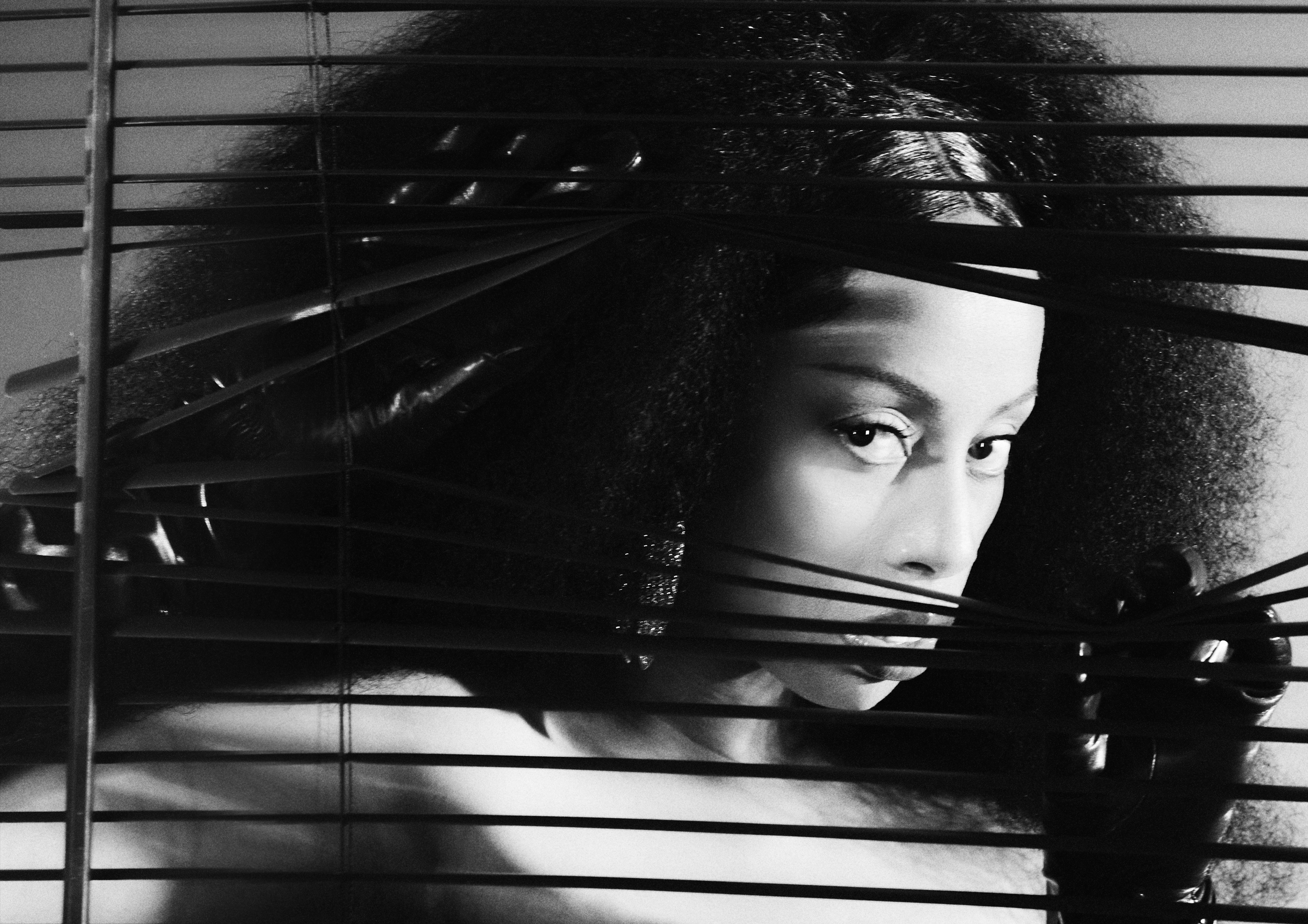
Rochelle Jordan in 2025. Image property of Amanda Elise K.
A childhood bedroom is a place where we play and develop in our formative years. LEGO bricks. Dollhouses. Maybe a Nintendo console wired up to an old, hissing television if we're really lucky. For Rochelle Jordan, she found solace in a whole different set of wires. Through the walls came the echoes of 1990s R&B, UK garage and house music—the early building blocks for her ardent and agile musical style.
Born in London and raised in Toronto, Jordan has always operated on her own terms—here lies a visionary who saw the connection between soulful R&B and electronic music long before those around her.
Rochelle Jordan's early work has truly stood the test of time. And she knows this. She raps, "All these sons, I watch 'em run around," on the early KLSH-produced standout "Ladida". It's not a simple viral hit or two, Rochelle's vault of material—namely R O J O and Pressure—sounds just as great today as they did in the 2010s blog era.
Then, of course, there's her enduring 2014 debut album, 1021, the true benchmark for lo-fi electro-R&B. Sure, 1021 was adored by fans in 2014. But so was "Fancy" by Iggy Azalea and Vine. Where are they now? No, offerings from 1021 like "Follow Me", "401" and "Lowkey" have enjoyed their fair share of post-TikTok revivalism. More on "Lowkey" later.
Radio silence followed—a period of quiet. But what may have seemed like a hiatus for Jordan was actually a period of intense struggle. During this time, she navigated a harsh industry and overcame a series of professional hurdles that threatened to derail her career. It was a transformative chapter, ultimately proving that "the gift remains," according to her own mental manuscript.
This journey paved the way for a creative rebirth on her 2021 comeback record and second album, Play With The Changes. Critics and fans adored it alike and new listeners were easily magnetised by her strong artistic pull. It was an evolution of her sound. R&B was very much still in the foreground, but the likes of house, breakbeat and electronica had tracks like "Love You Good", "Already" and "Got Em" under groove hypnosis.
Its sequel and subsequent remix edit was stacked in the best way possible. Featuring the likes of Kaytranada, Sango, KLSH and LSDXOXO, it was a fresh and welcome reimagining of her album, with new producers using Rochelle's voice as a vessel to commandeer the dancefloor.
2024 saw another triumphant revival for Jordan: she featured on both Kelela's remix album, RAVE:N, The Remixes and Kaytranada's TIMELESS. Equally, "Lowkey" gained real traction all over social media, accumulating just under 30 million streams in the process. These chessboard manoeuvres aligned Rochelle Jordan perfectly for her second creative ascent. With time away from music alongside creative gestation and reflection in full swing, she's found herself once again.
Speaking with The Culture Crypt, Rochelle Jordan opens up about the inspirations behind her new album, her personal growth and how she's navigating this latest chapter in her career.
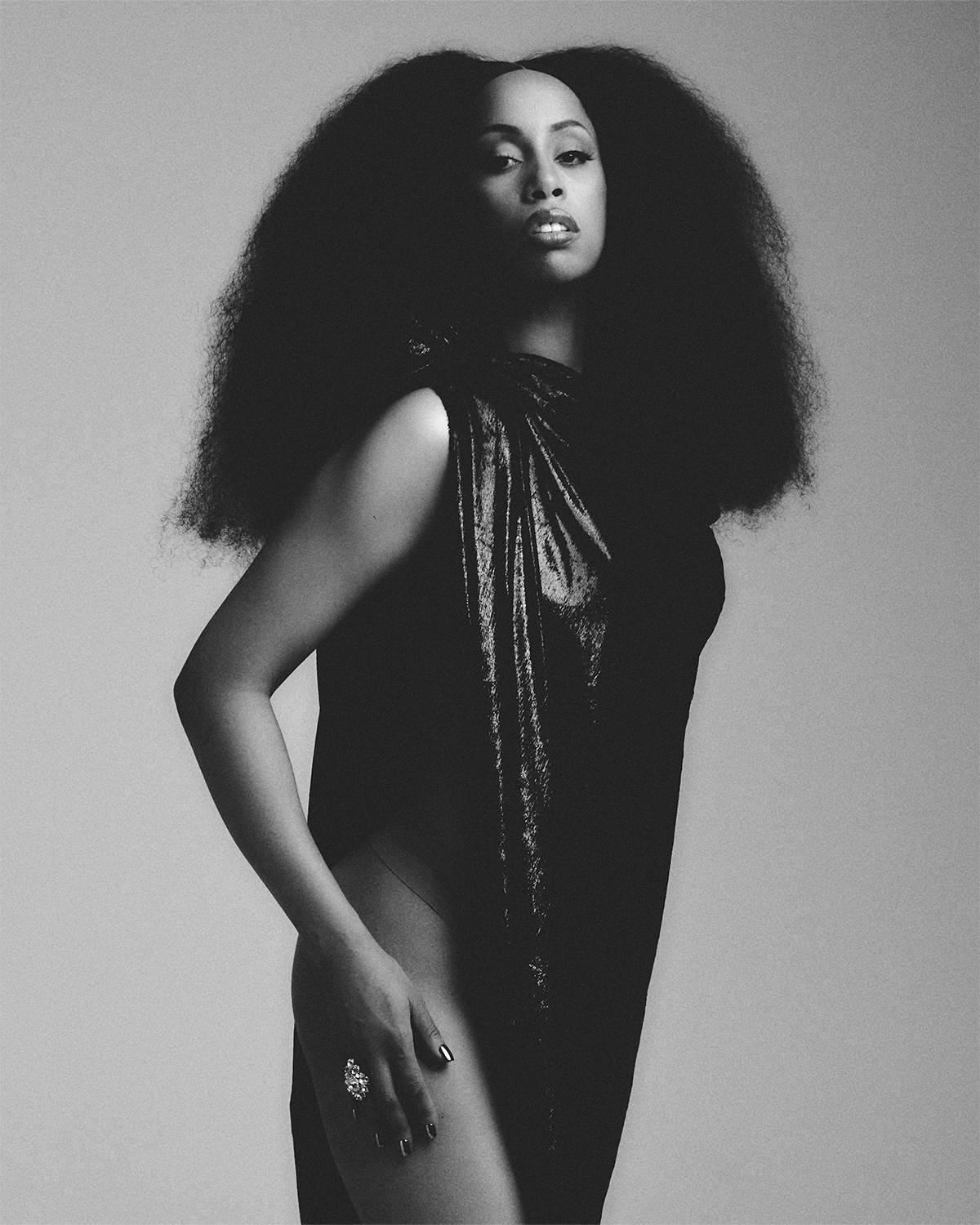
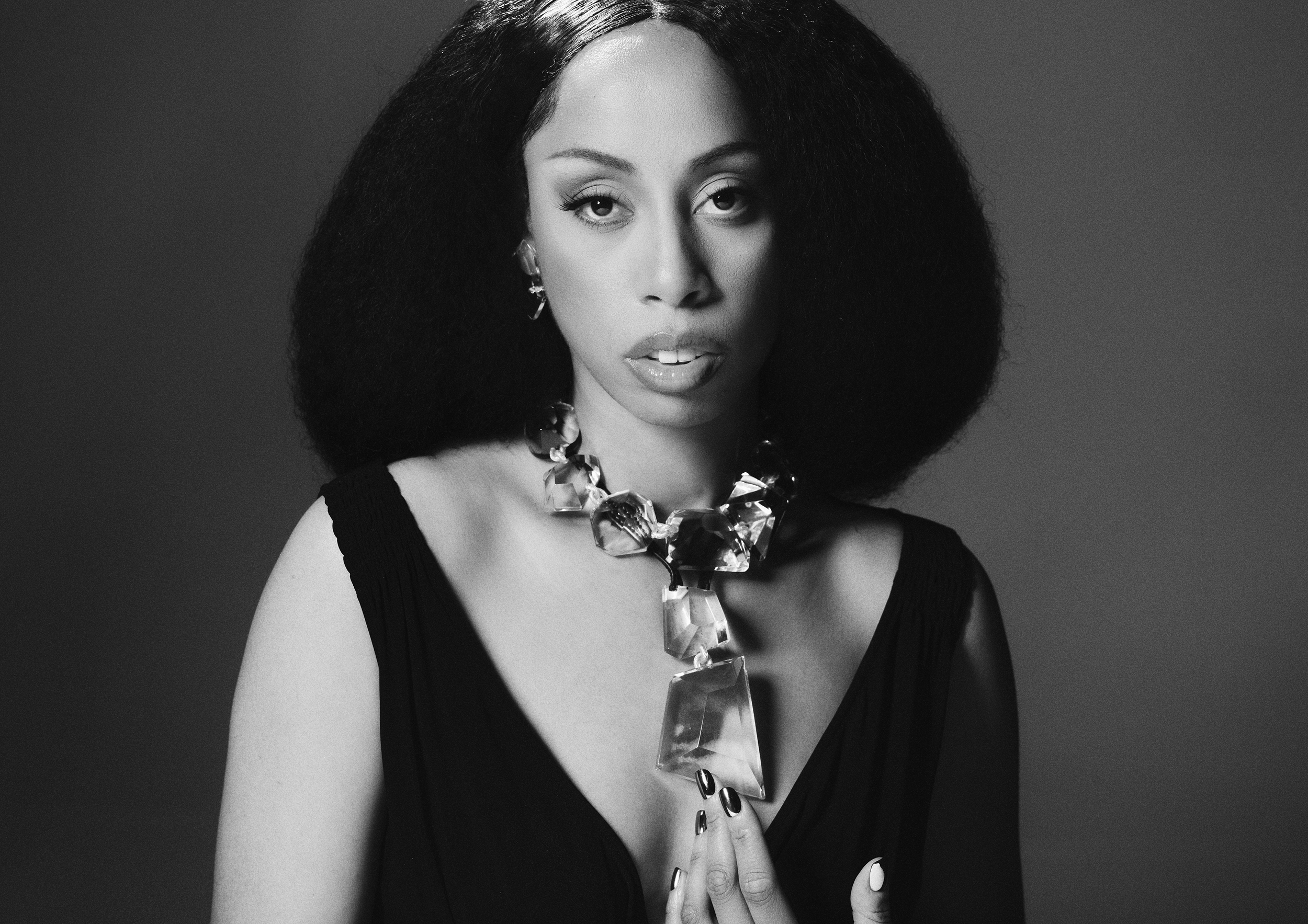
The Culture Crypt: The album's finally here, congratulations. How are you feeling now?
Rochelle Jordan: "Oh my goodness. It feels completely surreal, honestly. After every single album I make, I get this feeling that it's over, that I'll never be able to create a body of work again.
So to have this one out and to see the reaction, I'm just filled with a sense of immense empowerment. It's proof to me that the gift is still here and it's not going anywhere, regardless of external situations or challenges. This project is my favourite one I've ever made, so sharing it with the world truly means a lot to me."
The title, Through The Wall, feels like a definitive statement. Is that how you see it?
"Absolutely. The title represents so many things for me. On one hand, it's about the emotional and mental walls we build as creatives—the insecurities, fears and imposter syndrome that hold us back. This album was a process of completely breaking those walls down and realising that I deserve all the wins and positive things that are coming my way.
But the title also has a deeper, more personal meaning: it's a tribute to my brother. When we first moved from the UK to Toronto, he brought a briefcase filled with cassette tapes from the '90s. He's autistic so that he would play these same tapes over and over through the bedroom wall very loudly.
I would just be on the other side playing with my Barbies, unknowingly absorbing all this beautiful house, garage, gospel and drum and bass. That music was my first education in the fluidity of sounds, harmonies and melodies. So the album is a thank you to him for being essential to my foundation as an artist."
“As an artist, you’re always discovering yourself. Life isn’t always fair, but there’s magic all around you, especially in art.”
This album flips between light and dark, pop and electronic. Which tracks show that balance best?
"You know, every single song has a specific personality. 'Crave' is a tribute to the past whilst moving into the future. It's a wicked way to open up the project. I was a bit nervous about releasing it because I wondered if listeners would understand it.
I think after Play With The Changes, the direction of music started to turn so electronic, and things were moving towards that Charli XCX kind of sound, which is brilliant to me. I put it out to see if people would mess with it… and they did. They understood and I think they appreciated that direction.
Then we let that one ride, and 'TTW' came out. I was like, 'Okay, now let me let my babies know that I'm still that moody girl, you know what I mean?' I'm still in the darkness a little bit, so let's go from something bright to something dark to shock them. It was a very simplistic, very motivating song. 'TTW' is your mantra, just speaking to the inner entrepreneur and dreamer. It's like, 'We're walking through the fire, they're gonna discourage you, but we're still here.' That's the message."
And then 'Doing It Too' is my rendition of Rochelle Jordan in pop music. It's house, but it's also very soulful. It's Black pop if you will. I just wanted to train my fans' minds to also listen to me as a pop star because that's what I am. Usually, pop looks and sounds a certain way, but I'm very much like, this is what it sounds like for me. Now, it's about training the psyche to hear me in that way.
Also, we had to put out 'Sweet Sensation'. Honestly, that song brings me so much joy. It's a girly anthem where it's like, 'There ain't a thing that could keep me staying home tonight.' It's a very positive, vibrant track. The moment I heard DāM-FunK and KLSH creating the beat in the studio, I was like, 'Ooh, this is gonna be a hitter.' So yeah, I love that one."
Let's take a quick trip down memory lane, starting with your 2011 project, R O J O. How does it feel to reflect on that era now?
"I look back, and I'm shocked at how fast time travels. It's just unreal. I think back to when I was 25, and it's so vivid—where I was, the music we were making, the situations we were in. It's not ridiculously far behind me, but it's far enough for me to acknowledge that I may be a different person, but my intentions were exactly the same. I'm so proud of my younger self for birthing this mindset: 'You're gonna do music, but you're gonna do it in your own way. You're gonna have your own identity, your own voice.'
I made music because I loved the '90s sound so much. It gave me butterflies: the harmonies, the melody choices, the ad-libs and how certain ad-libs would end when you listened to Mariah Carey or Aaliyah. Those are the feelings I wanted to give people.
I hear the mistakes in my older music, but I also hear so much imagination. I was truly not afraid to do pretty much anything musically. As I move forward in my life, I never want that feeling to end. I really pray that I can maintain that creativity and that excitement in my music until I'm gone."
There was a significant gap between 1021 in 2014 and Play With The Changes in 2021. Did that time play a key part in your creative transition?
"Oh, most definitely. So, I've been playing with dance and house music since I was very young. Back in 2009, when me and my producer KLSH met on YouTube, he was a huge fan of The Neptunes and the sound spaces that he was listening to matched what I was into.
But even back then, I was telling him, 'I want to do house and dance music.' We experimented with those sounds and then I put out an R&B song called 'How to Feel' and the blogs found me. My music just took off in the underground market. Everyone was like, 'Oh my God, who is this girl? This sounds like Aaliyah.' So we stayed in that lane all the way up until 1021.
After that, I got into a management situation, but it didn't work out. This person came from more of a hip-hop and R&B space, and they didn't know what to do with me. I wasn't a conformative artist. They loved what I did, but they didn't know how to market it. It took me a while to come back into my own empowerment.
That period was filled with depression and fear, but it didn't stop the creation of music. I poured all of those feelings and experiences into Play With The Changes, and the album evolved over a six-year period. It was definitely a journey, just like the album sounds. I think that's what life is.
As an artist, you're always discovering yourself. Life isn't always fair, but there's magic all around you, especially in art. If you can centre yourself in that art, it will bring you back to the reason why you're even doing this. And when you get back to the reason, you find your empowerment again. And when you find your empowerment, there's no stopping you.
The theme of Play With The Changes is taking a negative situation and making it positive; curating your life and your music. That mentality just kept on moving. When Kaytranada found out about the record, he was like, 'I love this. Can I remix something?' And I was like, 'Yeah, you absolutely can, sir.' Then other DJs and producers started reaching out, so we were like, 'Why not create a remix project?' It was super exciting. It gave new life to the album."
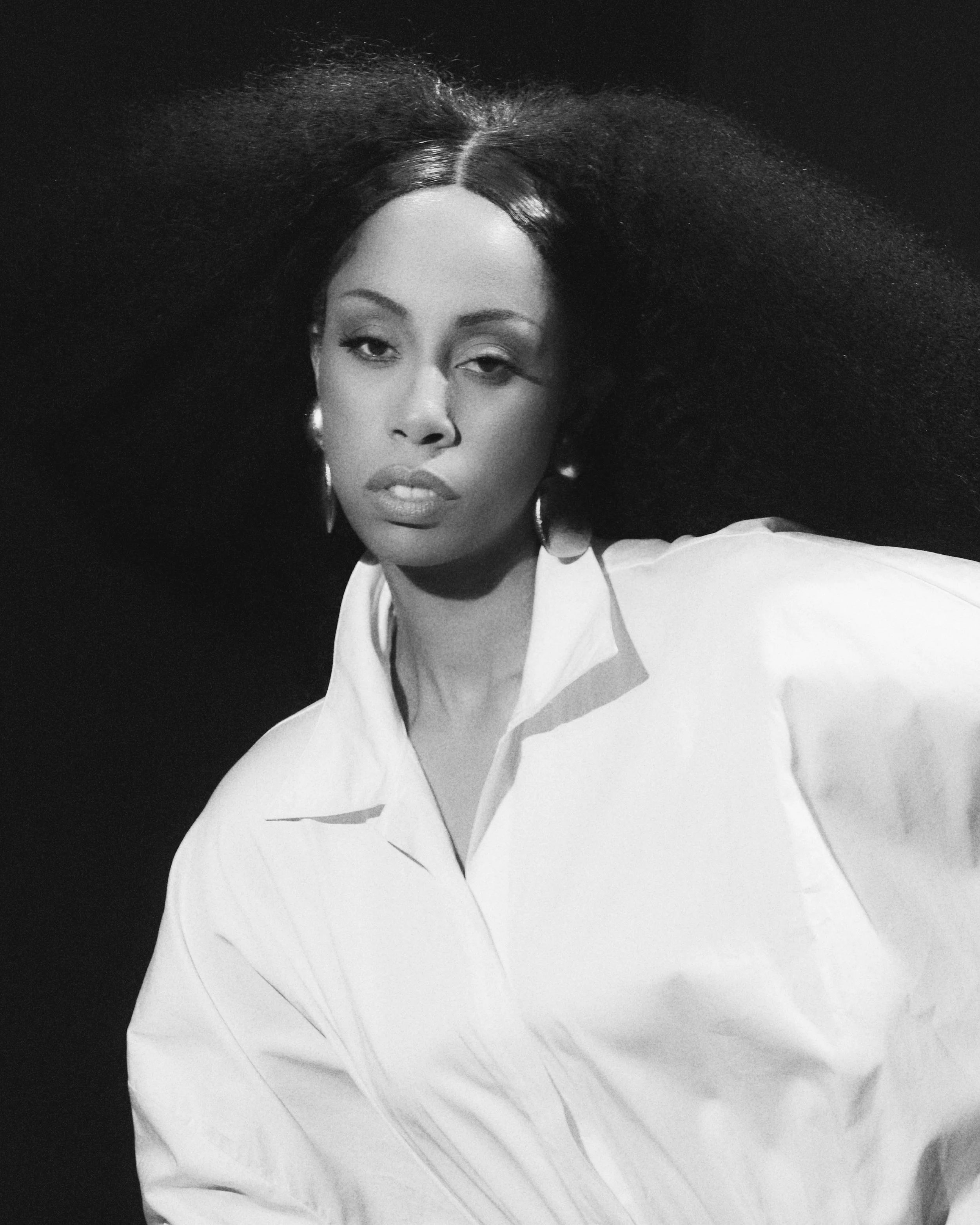
You've cultivated a really devoted community of fans over the past decade, much like artists such as Kelela and Solange. How does it feel to be part of that group?
"It's beautiful. I never take it for granted. 'Day Ones'—my official fanbase—go all the way back to '09, so we have this very deep-rooted love for each other. I also love that my fan base seems to have the same taste as me. I think the reason they love artists like Solange or Kelela is that they recognise a shared sense of leadership in sound and self-knowing.
I have much respect for those women. It's a privilege, because there are millions of artists in the world, and to be in the small percentage of people that listeners truly care for is something special. I thank God for that every day."
I have to touch on the resurgence of "Lowkey" going viral on TikTok. For the new listeners, what do you want them to know about your journey so far?
"It's so crazy. I think the first thing I'd want them to grasp is the history, the deep-rooted history. As they are learning a song like 'Lowkey' and probably stumbling across my new album. I would love for them to go back even further. It's inspiring to listen to the blocks that built the house.
I would love for them to recognise that I am a mother, I'm no one's daughter [laughs]. Well, I'm the daughter of Mariah Carey, Aaliyah and Beyoncé as well. My music branches out from all of them."
Finally, for both longtime fans and newcomers, how would you define this new era of Through The Wall?
"The overall synopsis of this album is simple: Rochelle Jordan has broken through the wall. I'm just happy for people to come along on this journey because the train is moving, and it's only going to get better. Every single time I go into a project, my mindset is, 'How do I top the last one?' I hope the people coming along feel that same magic and get to enjoy the ride."
Stream Through The Wall below: