

Hammed Animashaun of 'Saturday Night Live UK' "Doesn't Want to Blink and Miss It"
Live from London, Hammed Animashaun, star of the brand new Saturday Night Live UK, tells all about the notorious audition and how to land a gig like this despite never having done stand-up.
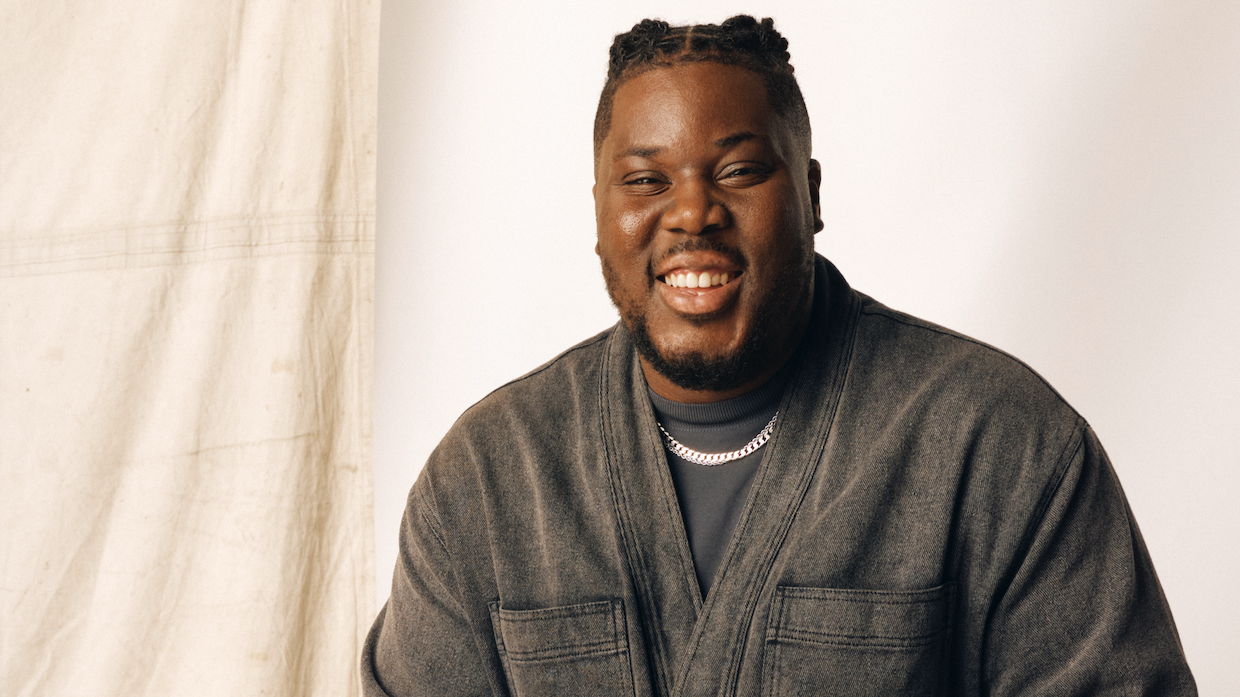
Hammed Animashaun in 2026. Image property of Charlotte Rutherford and Sky.
Nearly anything in US comedy and pop culture sits within six degrees of separation from the late-night behemoth that is Saturday Night Live. Change my mind. Still quote Mean Girls? Listen to Childish Gambino? Binged The Office (US)? Its DNA runs through them all.
The irony, of course, is that the runaway success of the US Office began as a transatlantic misfire, slated at first for being a pale imitation of its British predecessor. But as SNL launches in the UK, the question is less so whether the comic format can survive the crossing but can it stand alone, like its parent, as a new institution in British comedy? Baby steps.
Fifty years in, SNL is old enough to have welcomed O.J. Simpson as an enthusiastic host in 1978, satirised him during 'the trial of the century' in 1995—and even cover his death in 2024. Its place as a moving archive is why the 'SNL host introducing the musical guest' Twitter account is one of my favourites, with odd pairings like actor John Goodman introducing to the stage, "Once again, Ja Rule".
To credit Lorne Michaels, creator of the US export, the formula has never faltered: part sketch show, concert and political bulletin. Live. Broad-appeal? Of course. Toxic? Extremely, and well-documented too. Yet it's still the dream gig for many comics.
"Ask any comedian about SNL. Even if they say they hate it, if it's offered to them, they're going to accept it," says Middlebrow co-host Brian Park. It's an irresistible Faustian bargain. To be a cast member almost ensures instantaneous global visibility, causing it to be considered one of the most effective routes into mainstream comedy.
Case in point: SNL UK's first cold open sketch, shared by US President Donald Trump on Truth Social, depicted UK Prime Minister Keir Starmer panicking over a potential phone call from Trump and seeking advice from his deputy, David Lammy, played by actor Hammed Animashaun.
A few days before the episode in question aired for the very first time on Sky, I spoke with Animashaun, a member of the inaugural cast of emerging British comedic talent. "It's definitely something for the memoirs. I was one of the first cast members. There are only 10 other people who can say that."
Best known for leading BBC's Black Ops as Kay—a well-meaning but out-of-his-depth police community support officer—Animashaun is gearing up for a season many have been eager to see, curious about how the format would fare across the pond.
Dialling in, he tells all about the infamous audition process, how he prepares for the show, and how to land a gig like this despite never having done stand-up. "What helps me slightly is that I've done theatre. I've been on stage before, so that doesn't feel as terrifying."
Still, SNL's live, anything-can-happen element remains its defining thrill. "The hybrid of the live studio performance and it also being broadcast live is what's special about it. You've got to find that balance between performing for the audience and performing for people on TV, which is a skill that we're all learning and perfecting in real time," he says earnestly.
Fellow cast member Jack Shep called the show "comedy boarding school" and the notorious audition functions as the rigorous admissions process—one that acclaimed writer-director Jordan Peele, polymath Donald Glover and even Jim Carrey were all unsuccessful with.
Animashaun describes his own audition with complete incredulity: "I had to perform a five-minute comedy set and I've never done stand-up before. It was crazy." He continues: "The final part was the infamous audition where you’re doing a set in front of essentially no one, in front of a camera, in a really large studio and no one's laughing."
He's laughing now but shares: "You question everything that you ever thought of as a comedic performer and think, 'I don't know if I'm funny.' But thankfully, the people at Sky and NBC thought I was."
“It’s a mission of mine to make sure everyone can see that there are some dark-skinned people here. That we belong and we deserve to be here.”
Part of the intrigue of any new SNL era is what kind of imprint its cast will leave. In the US, alumni have shaped the show in distinct ways: Andy Samberg and The Lonely Island comedy trio dragging it into the digital age; Chris Farley embodying an anarchic physicality or a young Adam Sandler penning original songs for Weekend Update. To this, Animashaun says, "I want to be able to bring all of those things. We're not trying to emulate anyone so the main thing for all of us is to make it our own."
Translation, though, is rarely neutral. Alongside fellow cast member Ayoade Zahrah Bamgboye, Animashaun is part of a Black British presence entering an institution with a complicated history of representation.
While SNL stateside has marked groundbreaking achievements of a small few, in over 50 seasons, only a limited number of Black performers have been featured or repertory players, with Black women experiencing even sparser representation.
See Garrett Morris, whose run as an original cast member lasted from 1975 to 1980. As the first Black actor on the show, he often felt underutilised and relegated to smaller or stereotypical roles, later describing his time there as generally unhappy.
For The Guardian in 2024, Morris, now 89, said: "I will say to the end of my days: Lorne's writers had a lot of racism going on. Lorne himself? Zero racism. Because remember, when I was hired, I was the only Black writer. Lorne wanted to have somebody Black on TV at night-time. People didn't want that. They were clamouring to make it all white. He didn't."
Eddie Murphy then came aboard from 1980 to 1984 and is credited with saving the show during a difficult transition period, becoming a massive breakout star, though he rarely played characters specifically highlighting race in the way later comedians did. Others of note throughout the '90s and 2000s were comedians like Tim Meadows (the longest-serving Black male cast member before Kenan Thompson), Tracy Morgan and Maya Rudolph (the longest-tenured Black woman).
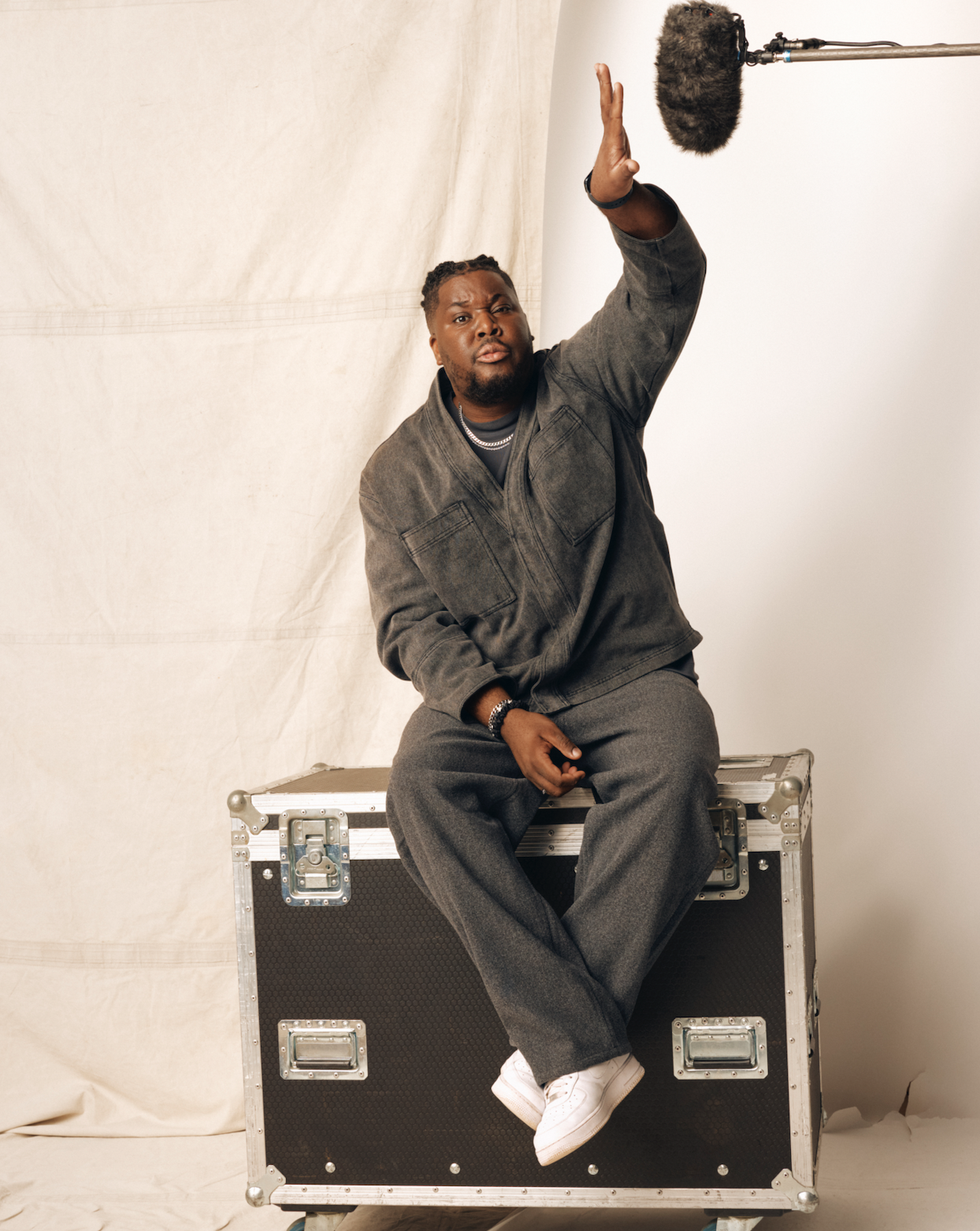
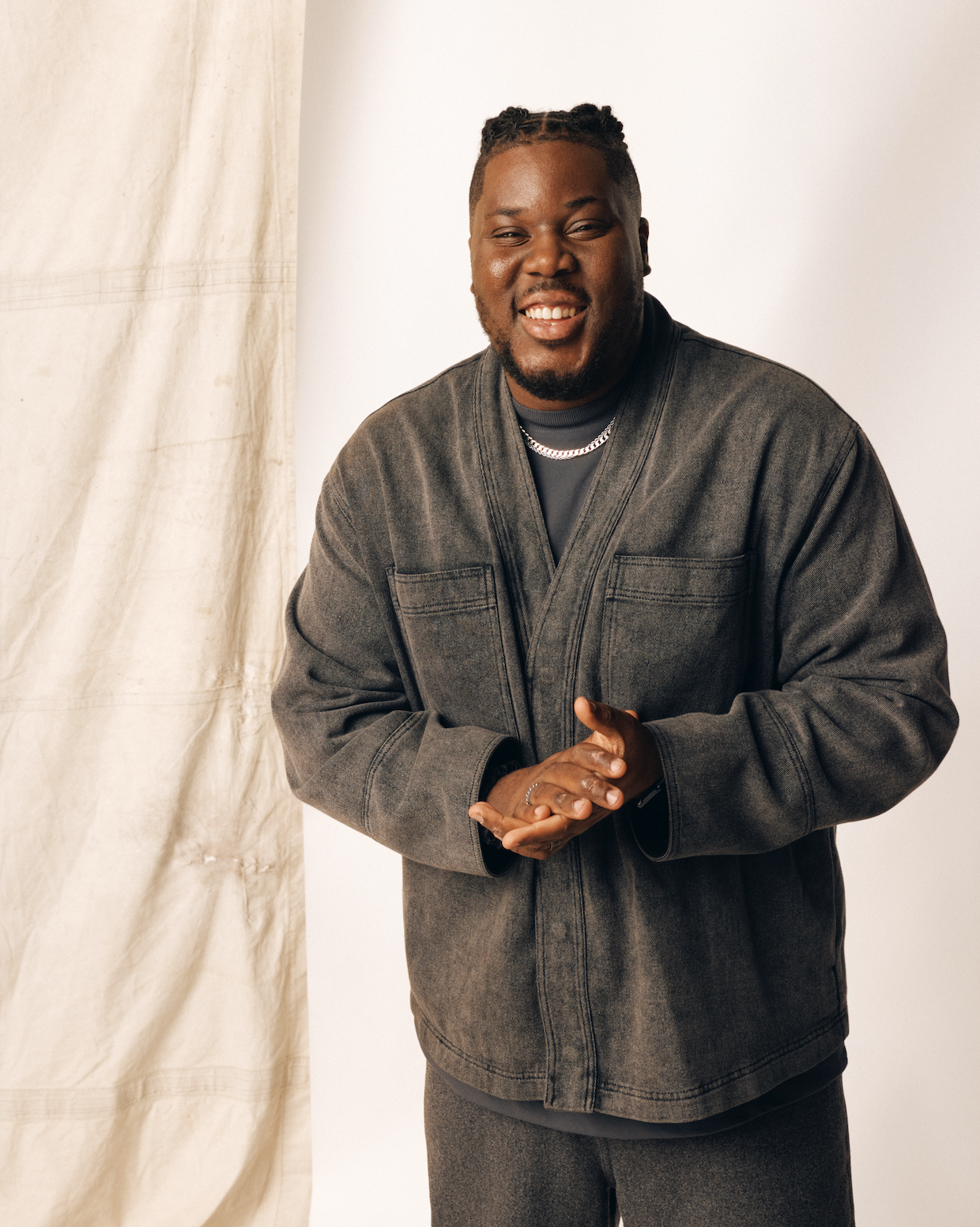
On whether this is the stage for Black British comedy to thrive, Animashaun sees opportunity: "I don't see how it couldn't be. What an honour it is to be one of those members to metaphorically fly the flag for the culture. I'm definitely proud of that fact and it's a mission of mine to make sure that I'll be at the front so everyone can see that there are some dark-skinned people here—that we belong and we deserve to be here."
The hope also is that this representation can break ground to get more talent on board. Morris echoed a similar sentiment: "I feel proud that I was a miniscule part of the beginning of SNL that I created the chair for the non-white performer."
Even still, there is clear precedent for creative divergence. When Keenen Ivory Wayans failed to secure a spot on SNL, he went on to create In Living Color, a rival sketch show that would launch talents including Jim Carrey, who Michaels regretted not hiring in the first place, and even poach Chris Rock from Studio 8H.
Still, the media landscape into which SNL UK arrives is markedly different from that of 1975, or even 2005. Comedy is now mobile-first, TV-second, club-seventh. Since discovery happens on TikTok, YouTube, podcasts, the old gatekeepers have thinned out. Arguably, you no longer need SNL to be seen, which raises the question: what, exactly, is it for?
Ahead of airing, VICE joked about "15 things we fear we'll see in episode 1 of SNL UK", which they wrote is "going to be bad in an entirely predictable way." Hundreds rallied against the article, including comedians Jamie Demetriou, Daniel Sloss and Jack Rooke. The top comment: "Imagine punching down this hard on something you've never even seen."
“All those voices, all that talent, all in one room, it’s kind of unheard of.”
To the naysayers, Animashaun has kinder words: "I think we all do it, when something's been announced, we all have our own opinions on how it's gonna go down. For us, we can't really listen to that noise."
He continues: "For people saying it's not going to go down well here, you don't really know until you see it." A pause. "If you're already shutting it down, at the end of the day, you're still going to probably watch it."
The energy inside the writers room is another thing entirely. Packed with talent comprising seasoned writers and up and coming talent, some have done this for years either on 8 Out of 10 Cats, Never Mind the Buzzcocks, Have I Got News for You, and for some, it's their first writing gig.
Animashaun smiles describing this unprecedented creative abundance: "All those voices, all that talent, all in one room, it's kind of unheard of." The challenge, as ever, is distillation: turning that density into an episode of live television that lands.
Now, the obvious question: who is Animashaun's ideal host and musical guest? "Ncuti Gatwa. I think he'd be great as a host," he says. "Then the ideal musical guest for me would be Sasha Keable. I keep saying her name around the building and I'm just hoping one day someone will listen to me!"
Tune into Saturday Night Live UK on Sky One.