

Battling Bollywood: African Representation in Indian Cinema, With Samuel Robinson and Dibakar Das Roy of 'Dilli Dark'
Urban satire film, Dilli Dark promises to usher in a new wave of African representation in Indian cinema. Nigerian actor, Samuel Robinson and Indian filmmaker, Dibakar Das Roy sit down with us to unpack colourism, counter drug-dealer clichés and celebrate the under-represented chapters of Afro-Indian history.
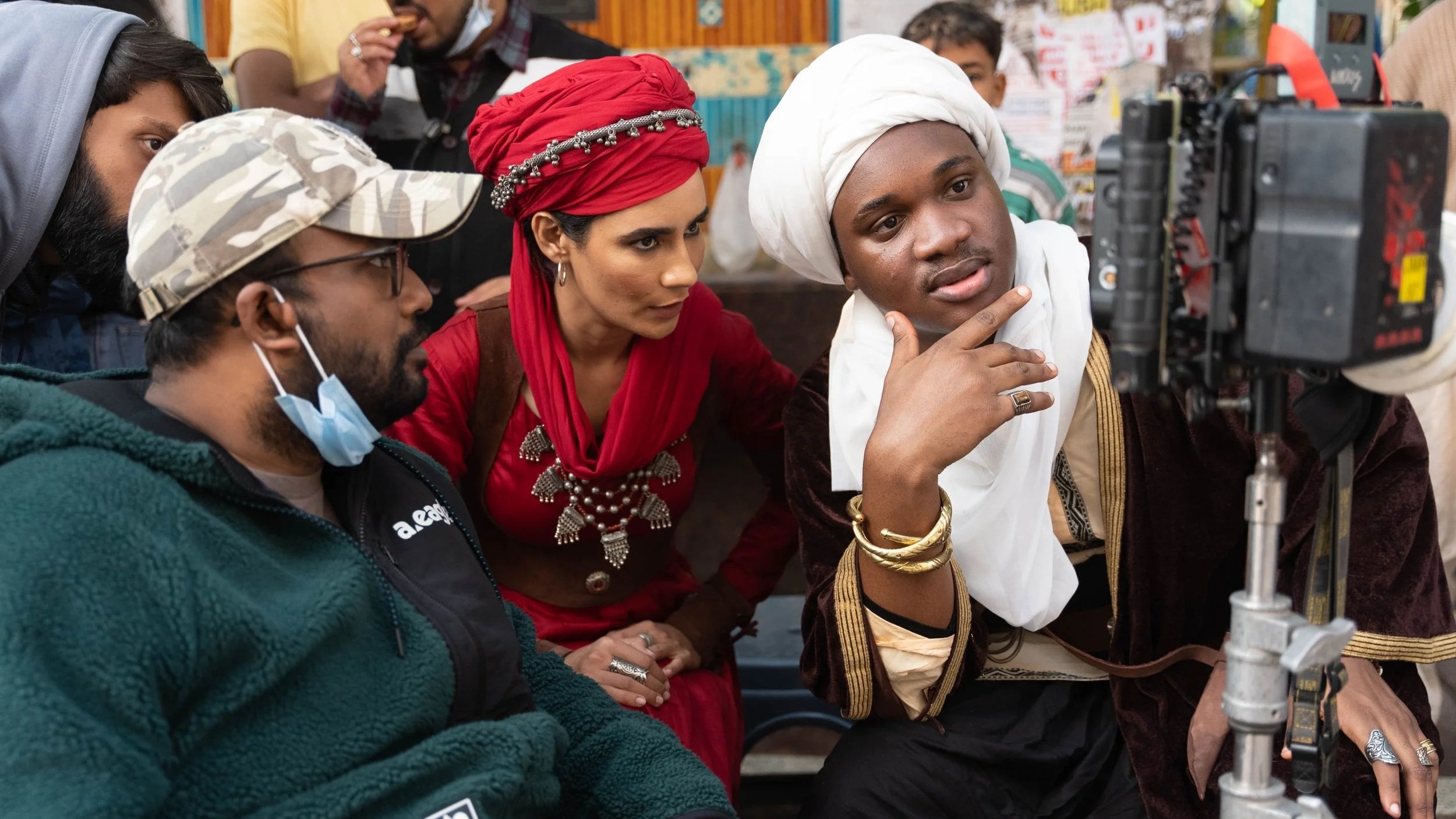
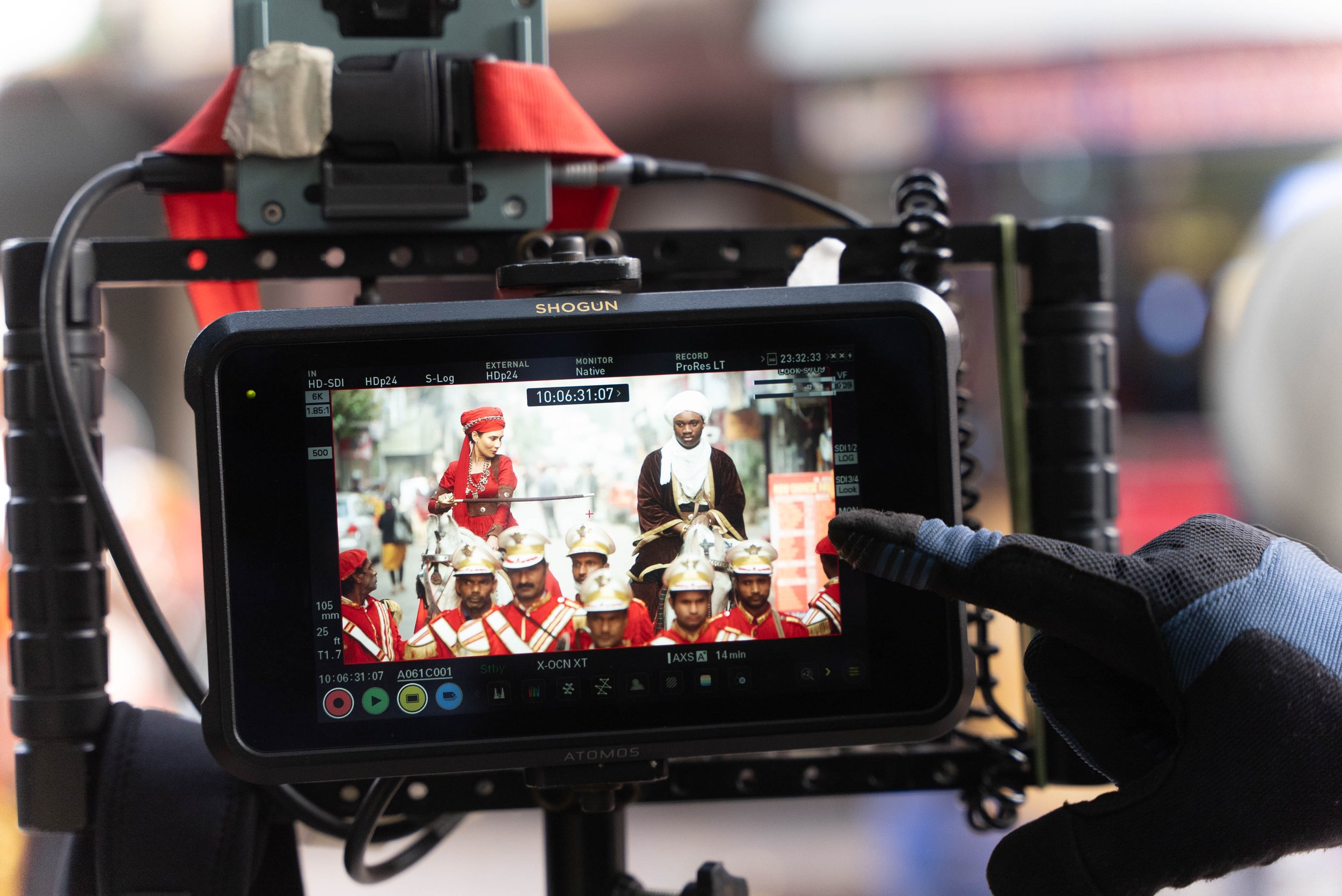
Left to right: Dibakar Das Roy (director), Geetika Vidya Ohlyan and Samuel Robinson behind the scenes of Dilli Dark (2025). Image via press.
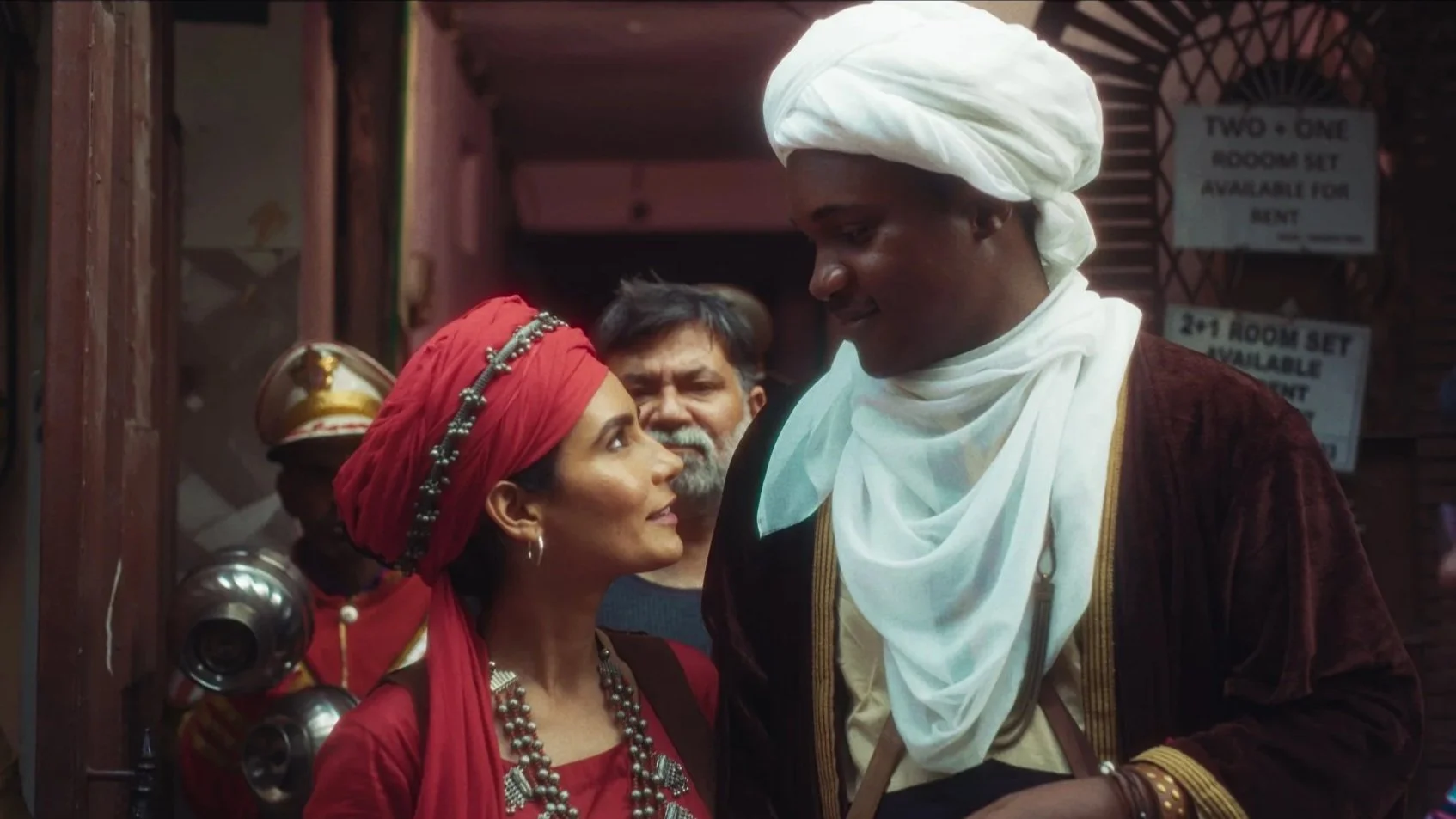
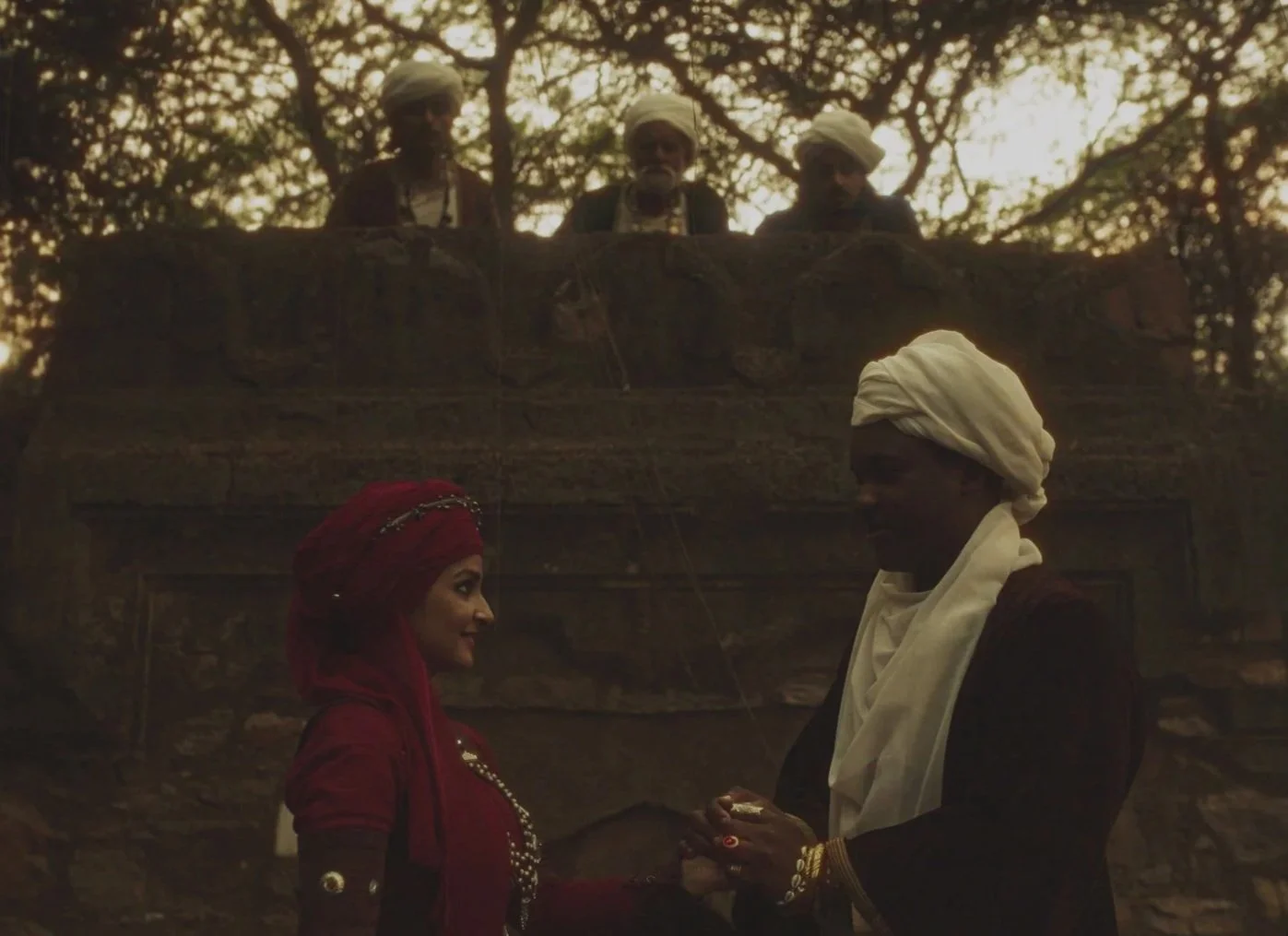
Twenty-something minutes into the Indian dark comedy film Dilli Dark, character Michael Okeke (a Nigerian expat) hears the tale of a 13th century Indian queen and her Ethiopian lover. Michael seems to be amused with this random history lesson from his neighbour, Debu—until hearing the lover's tragic fate of being beheaded.
Conversation surrounding the 1983 epic film Razia Sultan also raises Michael's eyebrows as he wonders if there was ever an African hero in Bollywood, the Hindi-language film industry. Debu refutes the too-good-to-be-true scenario: "Are you crazy? It was Dharmendra (a veteran Bollywood actor). He was painted black for the role."
A Google search on Razia Sultan will indeed offer some shocking glimpses of Dharmendra as a racialised caricature with blackface and a white turban, heavily similar to that infamous photo of Canadian ex-Prime Minister, Justin Trudeau from an Arabian Nights-themed party.
It would take more than three decades for Bollywood (or any Indian film industry) to get its first African hero. Hailing from Lagos, Nigerian actor Samuel Robinson had been chasing the spotlight since he began modelling in his teens, eventually breaking out with projects like Desperate Housewives Africa in which he had a recurring role.
Then, in 2018, Robinson made the move to India, bagging a lead role in the Malayalam-language slice-of-life comedy Sudani from Nigeria—he starred as a Nigerian footballer who strikes an unlikely friendship with a Keralite football manager as he recovers from an injury.
"Being the first African to play the lead in Indian films—it's a huge responsibility and a privilege I don't want to waste." Robinson tells me as we sit down for a Zoom call, revealing how Sudani from Nigeria's team reached out to him as they were seeking out an established but young Nigerian actor. When the then-19-year-old Robinson fit the bill, he never imagined his career would continue diversifying in India.
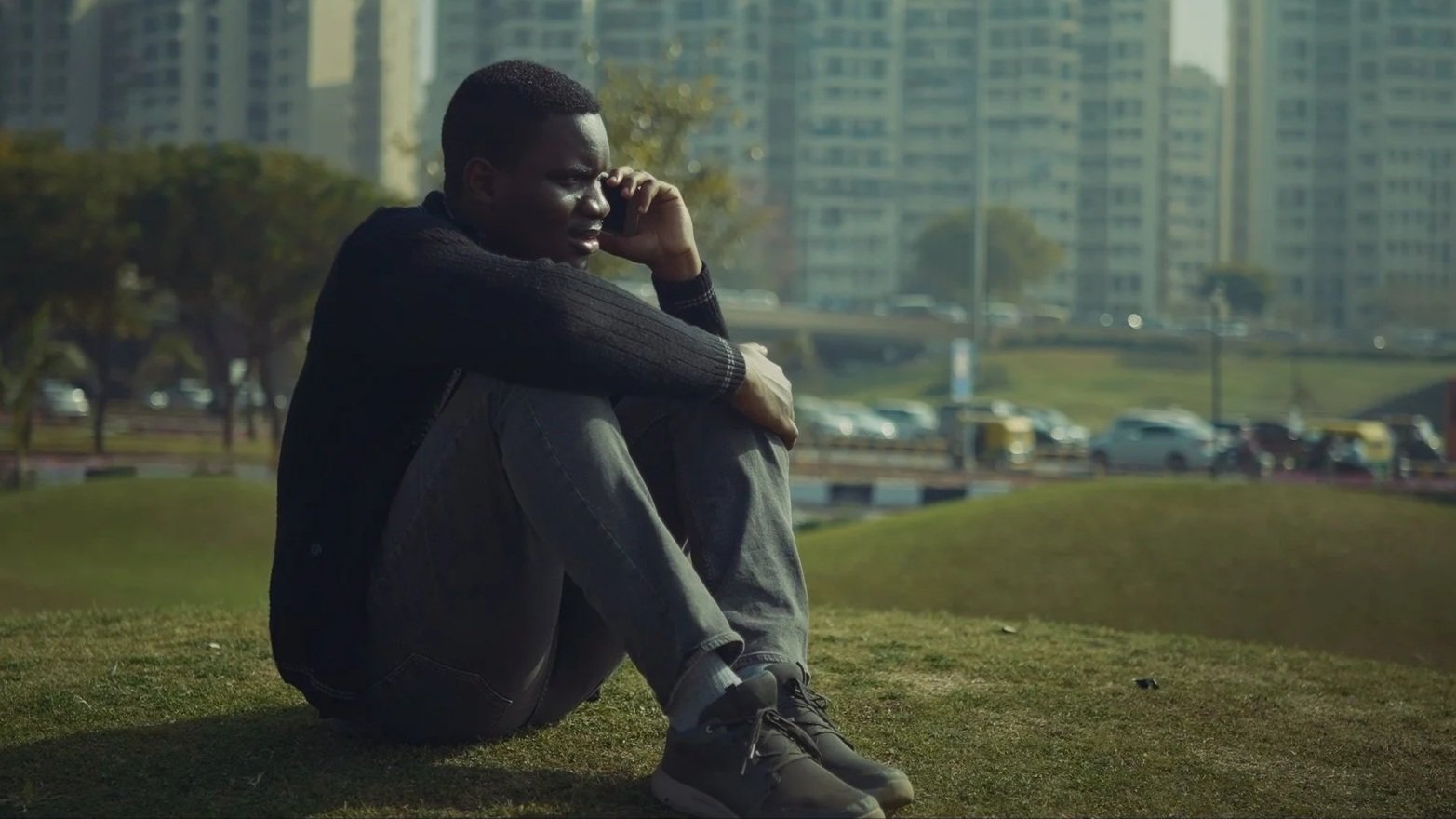
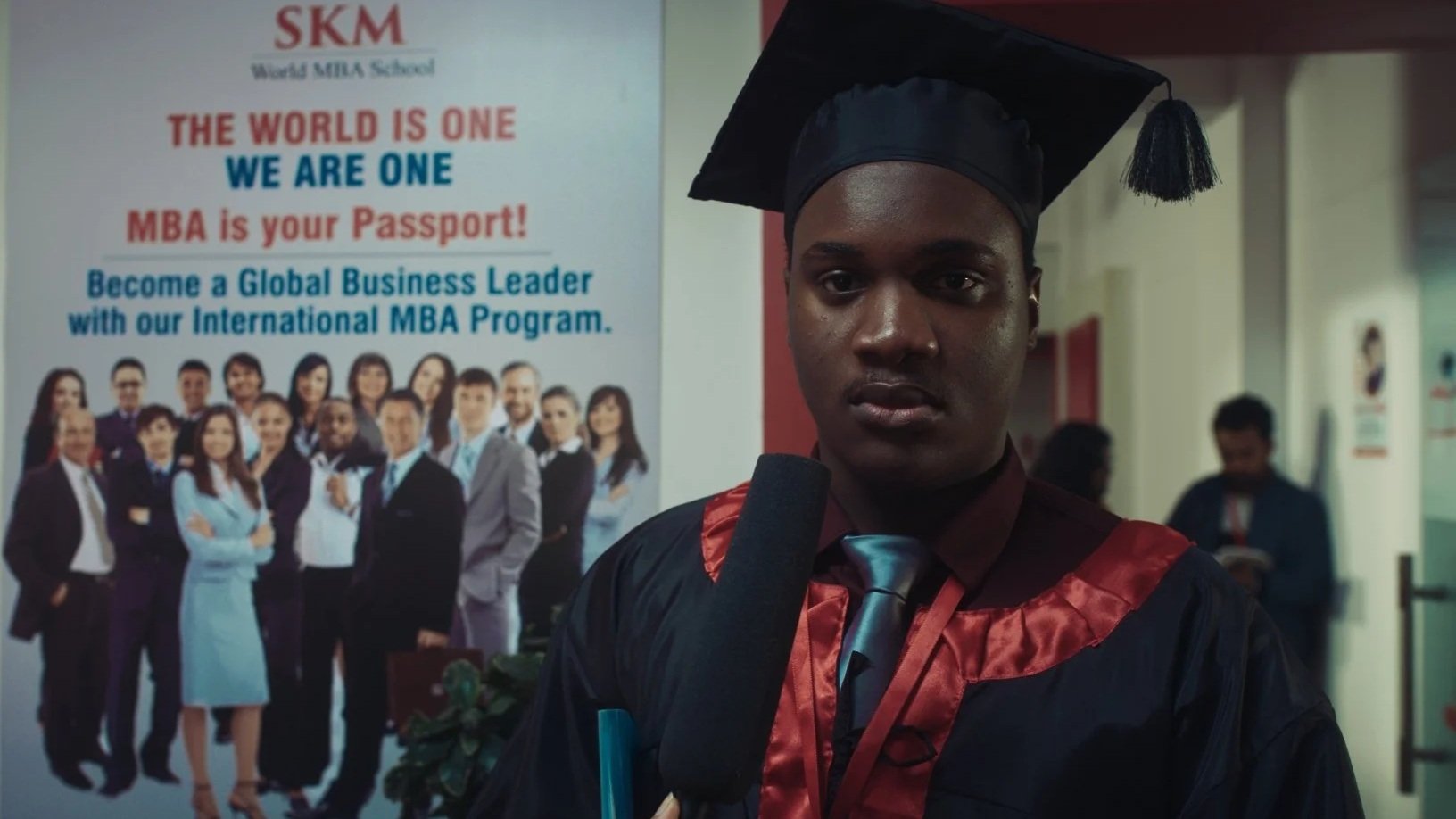
Now, aged 27, Robinson has acted in Indian titles in languages like Tamil, Malayalam and Hindi. He made his debut in the latter with last year's Dilli Dark: a satire centred around Nigerian student Michael Okeke as he navigates his way through the chaotic streets, foul-mouthed populace, and racial stereotypes that blanket the Indian capital city of Delhi (aka Dilli).
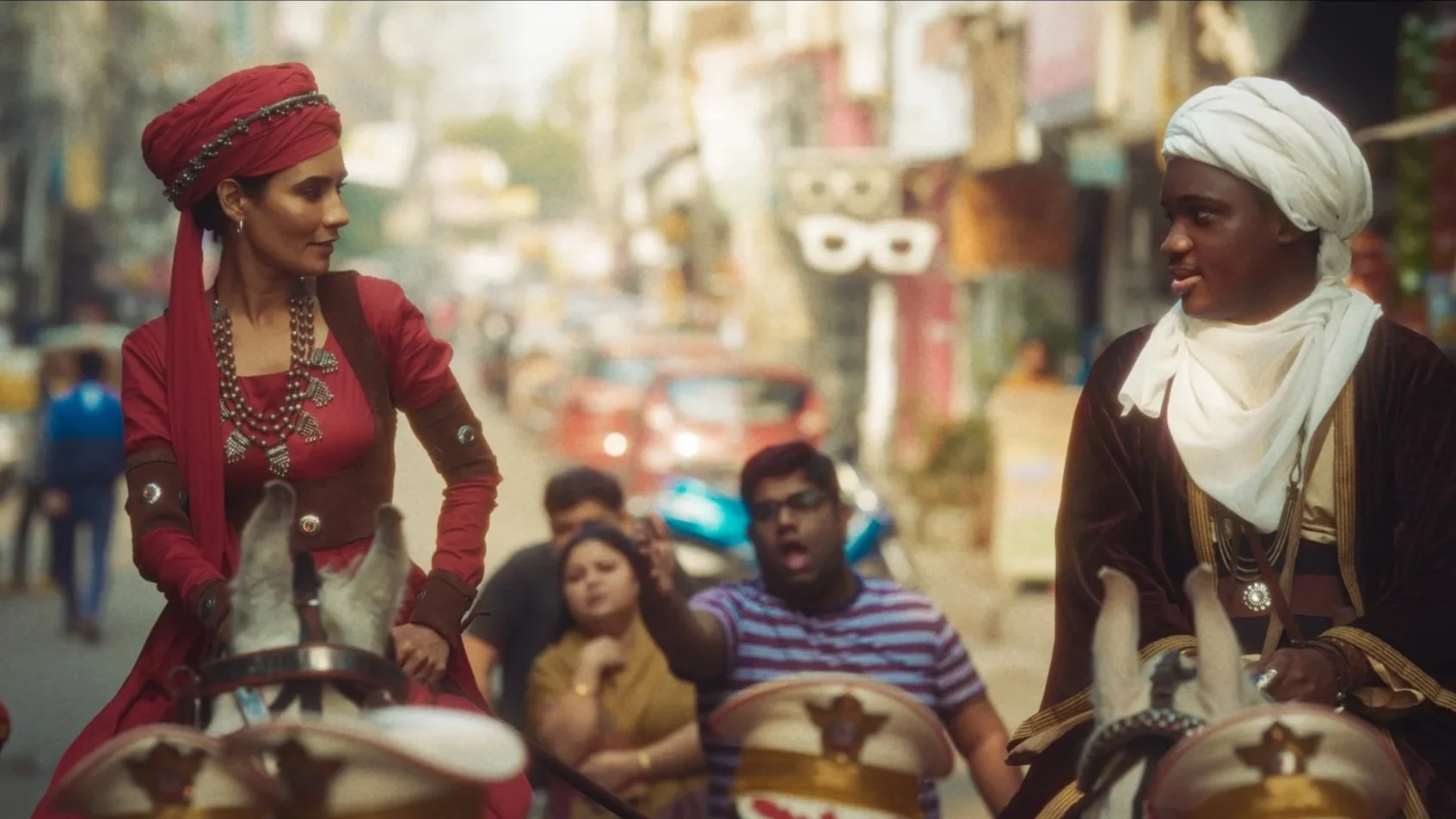
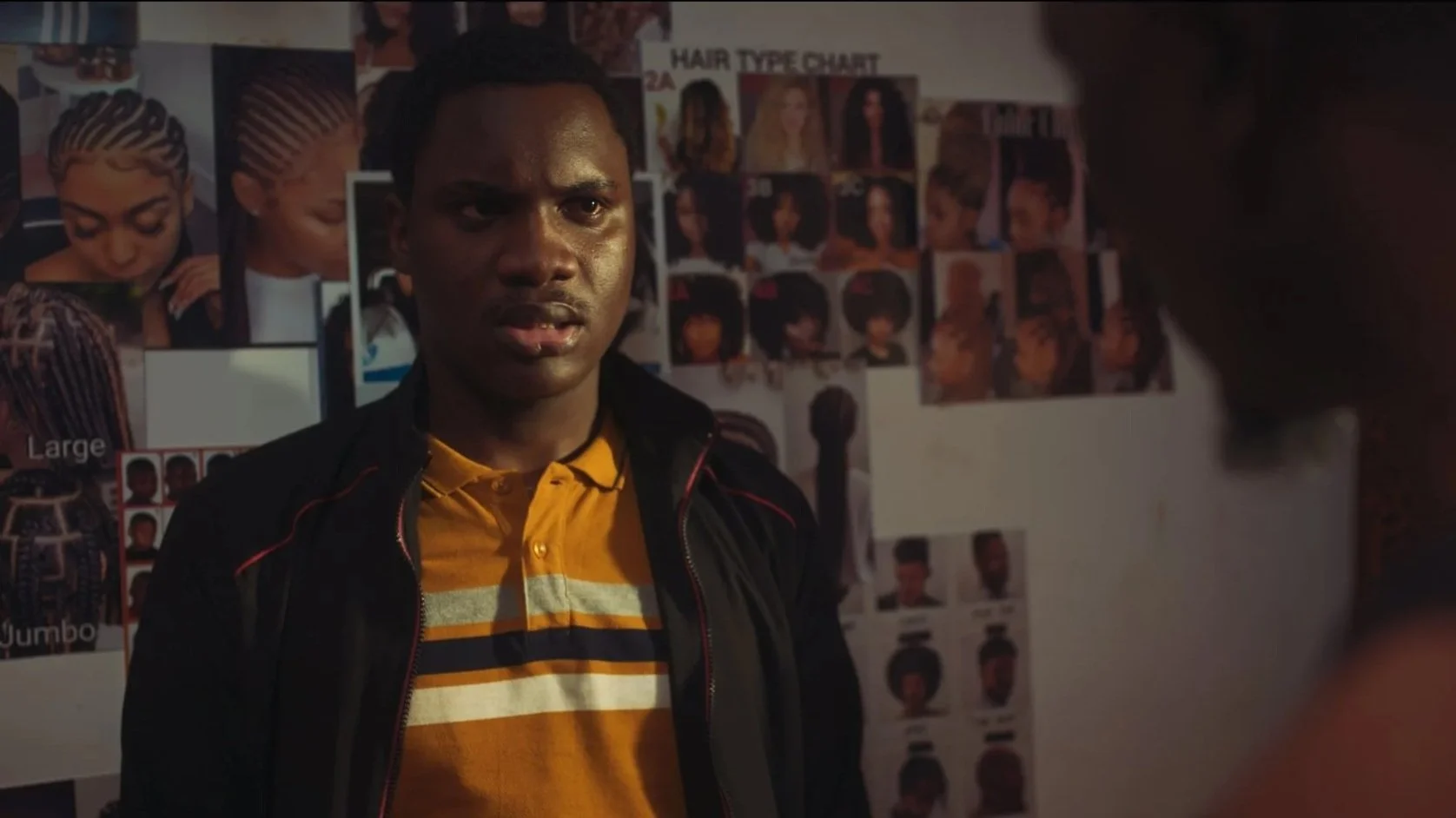
Played with straight-faced humour and slow-burning angst, Michael is a well-meaning hero who always seems to be in the wrong place at the wrong time. Debu, played by actor Shantanu Anam, takes the role of the rare friend in the city who understands Michael's plight... only to throw in backhanded, sexualised compliments like, "Everyone knows that you have the African package!" now and again.
Oh, and Michael also sells drugs to pay his bills. Yes, the Nigerian drug-dealer is a dated albeit prevalent trope in South Asian cinema, one that Dilli Dark attempts to subvert with biting social humour. Michael's dodgy line of work is just a side quest from his MBA dreams.
"I tend to be very patient while accepting roles because I do often get offers for parts like a kidnapper, or security guard, or a drug dealer." Robinson adds. Dilli Dark's semi-drug dealing character is an outlier for him because the usual scripts he rejects don't even feature "the cool kind of drug dealer", but rather "the drug dealer who sold drugs to a kid and then the kid died of an overdose and the neighbours are looking for him."
Fronting projects like Sudani from Nigeria and Dilli Dark, the Lagos-bred star is battling Bollywood and other Indian film industries that have been plagued by blackface. Even when Black actors could be spotted in Indian cinema, their presence was largely reduced to non-speaking parts like the villain's bare-chested henchman or the aforementioned drug dealer.
In other contexts, sleeping with a Black man was often depicted as an act of perversion, a cardinal sin of the highest order. Case in point, a pre-Hollywood Priyanka Chopra, in the film Fashion, plays a model who loses her mind in a sea of drugs and insecurities. And yet her character seems to reach rock bottom only when she wakes up after a drunken night, lying next to a semi-nude Black man.
Even though direct blackface might have lessened now, darkening an actor's complexion is still an unsaid norm to portray any character from a rural or tribal background. It would therefore not be a surprise that advertisements for skin-lightening creams have populated magazines and TV screens for generations. Prevalent in the Indian markets since 1975, the cream "Fair & Lovely" might have been rechristened to "Glow & Lovely" in 2020, but its colourist message continues to persist.
In Dilli Dark, not all of the humour is explicit. Delhi's urban landscapes are peppered with background details, like images of the dark-skinned Hindu gods Krishna and Ram overseeing brown children harassing our protagonist, or hoardings of the skin-whitening powder "Fair & Awesome" urging customers to "win the battles of an un-fair life".
So entrenched are these colonial standards of beauty that for Dilli Dark writer-director, Dibakar Das Roy, the genesis of the project began from his own exposure to colourism. Be it in boarding school or university, slur-tinged jokes formed a common everyday reality. "When you're constantly told dark is ugly, when those two words are always used together, when your close friends continue that humour, it starts messing with you. You start feeling ashamed of being dark skinned."
Raised across several Indian cities, Roy eventually set camp in Delhi which continues to be his home. Reports of harassment and targeted violence against African students over there and the rest of the country drove a deeper exploration into the xenophobia and alienation outsiders can face.
“Toying around with a contemporary Nigerian hero with occasional segues to Afro-India history, ‘Dilli Dark’ rewrites the rules of African immigrants in the South Asian imagination.”
Once Robinson got on board with the project, the actor injected some of his own real-life experiences into Roy's character arcs. For example, when his character draws judgemental stares from his landlord, Robinson himself recalled all the times he crossed paths with Delhi property owners strictly refusing to offer any houses to Africans. Even when Robinson managed to find a flat to rent in this seemingly unforgiving city, a gaze of surveillance constantly shadowed him.
"This one time after I had done a film, I bought myself a new bike. I was feeling good. So I took my bike for a spin. And then a neighbour called the police saying that I had stolen the bike." Dilli Dark is already playing out in real life when such are the lived experiences of the African diaspora in the city.
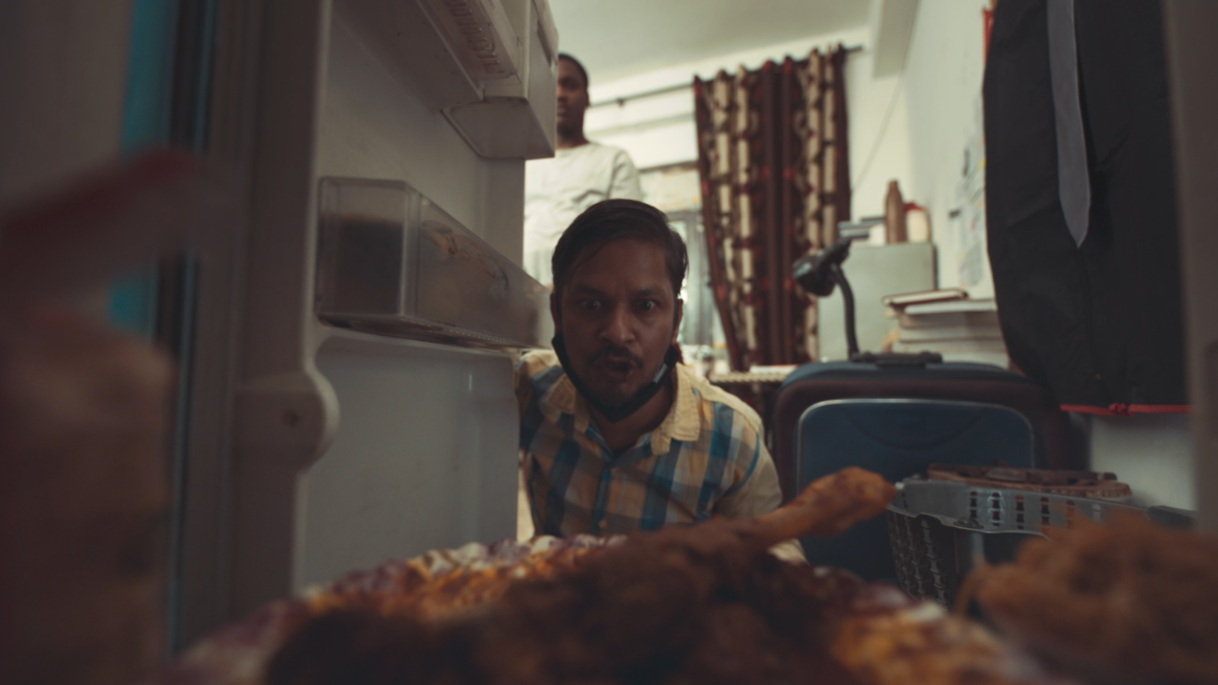
Not eager to pigeonhole the film as a commentary on just race and skin, Roy also made it a point to take a jab at eating habits. Since the Hindu-dominant party BJP formed the Indian government in 2014, "cow politics" and "meat bans" continue to dominate Indian headlines. Set in a time of such food-questioning turbulence, it only makes sense for Dilli Dark to throw in situations when everyone—from the watchman to the landlord's daughter—barges into Michael's room to unscientifically determine that the meat in his fridge is a human carcass.
"I do eat food with dried fish in it so I know how offensive it can get." Roy says while touching upon his meat-eating roots from the eastern states of Bengal and Meghalaya. "But I also know how it can be used as an excuse to start putting people on this hierarchy. You first have the pure veg people, then you have the chicken, fish mutton-eating outsiders. Then you come to the northeastern Indians who are stereotyped as eating dogs. Then they allege Africans to be eating humans." When asked about the Muslims who might face hostility for eating beef, the filmmaker just smiles and sighs, "That's another spectrum at this point."
"India is probably the most diverse country in the world. So, you would think that this would be the most accepting country as well," Robinson similarly reflects, while also expressing hope for changing attitudes in a country that harbours not only diaspora Africans, but also African-origin-Indians like the Siddi community.
When Dilli Dark isn't focused on Michael's daily tussles, the film takes a brief detour to the Siddis, an ethnic group of Bantu origin who settled in the western coast of India as part of the Indian Ocean slave trade. Even Jamal-ud-Din Yaqut, the rumoured lover of the Delhi queen Razia Sultan in the film's other subplot, was of Siddi descent with roots from Ethiopia.
Toying around with a contemporary Nigerian hero with occasional segues to Afro-India history, Dilli Dark rewrites the rules of African immigrants in the South Asian imagination. As for Robinson, the actor has come a long way from his Desperate Housewives Africa days. Apart from securing top billing for Dilli Dark, he was also actively involved in adding plot details such as a recurring motif of constant electricity power cuts that quite literally engulf Delhi in a nocturnal darkness every night.
Robinson will complete a decade in Indian cinema within the next two years. While a story like his might remain unique, he refuses to remain an anomaly in the industry. Eager to hold his own as a stronger negotiator, Robinson chooses to not have an agent to represent him. Making a case for his choice, he says, "It makes me a stronger businessman, and it puts me in a position where I can negotiate for myself, to actually ask for the things that I want."
As Robinson dons the robes of Jamal-ud-Din Yaqut and rides a horse in one of Dilli Dark's surreal dream sequences, the old guard of Bollywood racial caricatures gets replaced by a new face of African representation in India. And with a business sense and centre-stage desire like Robinson's, you might just end up seeing him as the face of much more.
Dilli Dark is now available to watch online via selected streaming services.