

Who Needs Therapy? Just Let It FLO
Fresh off Grammy nominations and MOBO wins, stepping into their most definitive era yet, the UK's hottest pop-R&B trio give The Culture Crypt V.I.P. access, opening up about their new album, sisterhood and newfound creative freedom.
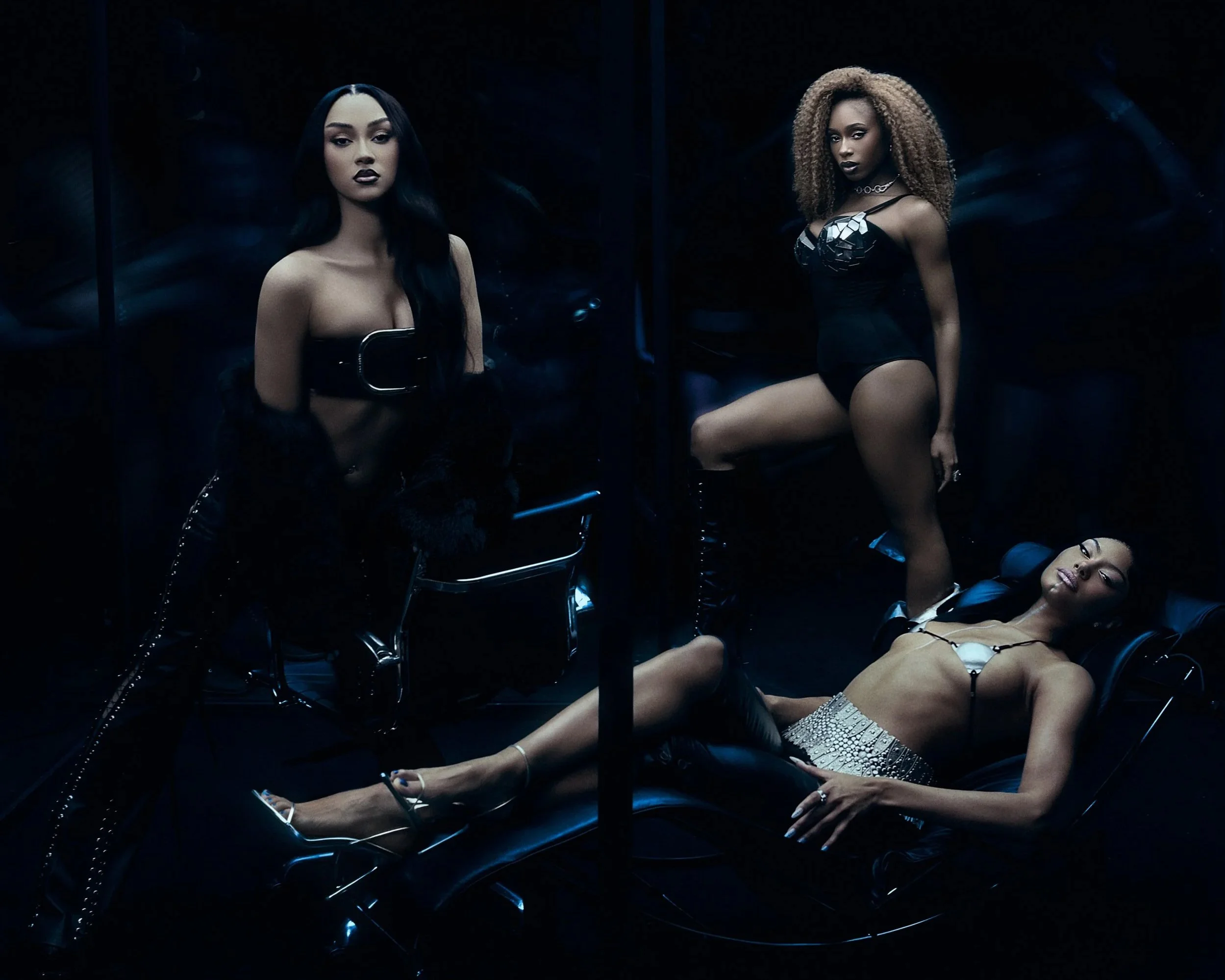
FLO in 2026. Image property of Alex J Piper.
By now, your social media feed's probably been swept up by high-gloss imagery of powerhouse trio FLO. And if it hasn't, where have you been? The British pop-R&B girl group has returned with their molten sophomore album Therapy at the Club—a sonic portal into the cathartic release only the club can provide.
2026 has already been a monumental year for FLO—and for UK R&B overall. With the likes of kwn (a frequent FLO collaborator) and Odeal garnering global success, the long overdue R&B revival has never felt more palpable. It's only right for FLO, the pioneering princesses of the sound, to co-pilot the UK R&B re-invasion.
From their 2022 breakout "Cardboard Box" and their critically acclaimed debut EP The Lead—the catalyst of their takeover—they have quickly learned how to navigate tabloid headlines, fan adoration and the occasional social media storm. The trio have spent much of their twenties in an unforgiving spotlight, making this road to stardom all the more gratifying.
Comprised of singer-songwriters Stella Quaresma, Renée Downer and Jorja Douglas, they stiletto-strutted their way into 2026, earning a Grammy nomination for their debut LP Access All Areas, as well as winning their first MOBO Award for Best R&B/Soul Act and delivering a Tiny Desk performance that's already secured a place in our Tiny Desk Hall of Fame—and that's not an easy feat. Next came the track that's too hot to keep a secret, "Leak It"—one of their fastest-growing singles to date—which birthed a viral TikTok dance trend and catapulted FLO onto the global charts, a far cry from their boxy British bedrooms.
FLO open the album with "Side Effects". The track exudes unapologetic anger and assertiveness, rejecting the idea that Black women should shrink themselves to be more palatable. That boldness quickly yields to another side of the trio on "Cry Ugly", an unfiltered emotional outpour paired with an irresistibly danceable beat. "Call Me" glides over a trap-injected beat whilst "the vocals remain sexy and very FLO," as group member Jorja asserts. Though R&B remains the spirit of the album, both figuratively and literally, a splash of genres like pop, country and rap acts as the chasers.
FLO kept it cute with their debut album, a record introducing them to a wider, global audience but characterised by growing pains, even described as a "toxic ex" by Douglas. You could liken it to Destiny's Child's 1998 self-titled (albeit slightly safe) debut. Whilst FLO's debut record birthed cult classics in their discography (from the sultry "On & On" to the balmy ballad "Bending My Rules"), it was an album still yearning for slightly more edge.
Therapy at the Club, however, finds FLO shedding that restraint. From the emotional R&B nostalgia of "Miss U Missing Me", which channels the lovelorn yearning of Toni Braxton's "Un-Break My Heart" and Mariah Carey's "My All", to the synth-heavy, '80s hip-hop party energy of "Pose" (their reimagining of Technotronic's 1989 classic "Pump Up The Jam"), the album showcases their sonic expansion. They embrace their seductive side on "Sex In Peace" alongside the "Queen of sex&B" kwn, further proving they can glide between moods, eras and genres without borders.
“We were going on tour, we didn’t have a lot of free time, so we found ourselves in the club and partying as a form of release.”
With Therapy at the Club offering a form of release for their listeners, we ask FLO which albums have served as therapy for them. Renée and Stella mutually agree on Frank Ocean's 2016 classic Blonde, with Stella explaining how "the album came at a difficult time in my life," whilst Jorja highlights Summer Walker's beloved yet broken-hearted Still Over It as a record that "gets me in my feelings and makes me more pissed off than I already was."
On a scorching Thursday afternoon in London, The Culture Crypt caught up with FLO. Between the heatwave outside and their jam-packed schedule, the trio were in high spirits, reflecting on the music that has carried them through moments of vulnerability.
The Culture Crypt: Starting with the title Therapy at the Club, can you talk us through the concept behind the album and why that contrast between healing and nightlife felt like the right way to represent this chapter of FLO?
Renée Downer: "Well, Therapy at the Club is inspired by the title song 'Therapy at the Club', and in that moment of our lives, we were going on tour, we didn't have a lot of free time, so we found ourselves in the club and partying as a form of release. So after hearing that song and thinking about what our second album could be, we felt very strongly that we could write a fully fleshed album about therapy at the club."
It sounds like that period of your lives was intense, balancing touring, performing and finding moments of escape. When you compare making Therapy at the Club to your previous projects, what changed about the creative process?
Stella Quaresma: "Yeah, there's been a lot more freedom and room to just try anything without feeling like it won't be right. We've had a lot more authority in the rooms we've been writing in and have really been part of the creation process. We've grown individually and together—this process has been a breath of fresh air."
What's the recipe for a perfect FLO studio session?
Jorja Douglas: "Good vibes are the most important thing. The studio has to feel like a safe space, surrounded by people we trust enough to be honest with. Being around the right people is rule number one. Then it's about having options—being well fed, having different things that help you get into the zone—and most importantly, peace. In order for us to create, we need to feel like time is on our side."
"Pose" feels like such a fun departure from anything you've done before. How did a session like that come together?
Stella: "We were at Tommy Brown's studio, and it had been a day where everything was just clicking. At the end of the session, [producer] Leather Jacket played the beat, and everyone started jumping on the sofas—it felt like we were in a little club. We were just shouting things into the mic and having fun, which is why the song feels so silly and free. It was the only way a song like that could have come together."
Since you've been spending a lot of time out of London, have you found that there's a certain city that brings out the best of you musically?
Renée: "I would say LA, firstly, because there are just so many more musicians and more of our idols and people that we have wanted to work with for a long time that live there, which makes it easily accessible, but also writing in London with our close-knit family of musicians is always really refreshing, so both, but we definitely grow more in LA."
“Classic R&B was often about yearning and passion, whereas we’re more direct and honest about our experiences.”
Jorja: "I think the important part as well is more about the people rather than the location because, like Renée was saying, in London, we wrote with a specific writer called Boy Matthews, whom we also wrote with in LA and really, it was just about wherever he was that made those sessions so enjoyable."
They can take the girl out of London, they can't take London out of the girl. With your latest album leaning further into UK touchstones, from your British accents coming through on certain songs to its wider sonic influences, how did you balance that with your growing global reach?
Stella: "It's really in the writing. We had free rein over what we wanted to say, and we write how we speak—we never write anything we wouldn't actually say. I think that shows the growth in our process. We're still inspired by artists from the UK, so it became this melting pot, pairing those influences with American producers and creating something that felt really natural."
The album blends the nostalgia of classic R&B with the realities of modern dating. How did you find that balance between honouring what came before and creating something that feels current?
Jorja: "We wanted to speak very literally about our experiences within relationships. The production might feel nostalgic, but we didn't want that to dictate the way we wrote or sang. Classic R&B was often about yearning and passion, whereas we're more direct and honest about our experiences. The beats may feel nostalgic, but the songwriting is modern and reflective of where we are now."
“It would be really hard doing this alone—I was speaking to my mum the other day, and she said she’d be terrified if I was doing it by myself.”
You reunited with kwn on "Sex In Peace". What made her the right collaborator for the track, and how did that partnership come together?
Stella: "It was written first, and it was definitely the most kwn track we had. It sounded like it was made for her, and she really delivered. We sent it over to her rather than making it together."
Jorja: "Working with her is great because she's so reliable, talented and passionate. We're really locked in creatively: there's a mutual faith and understanding there, which makes the collaboration feel natural."
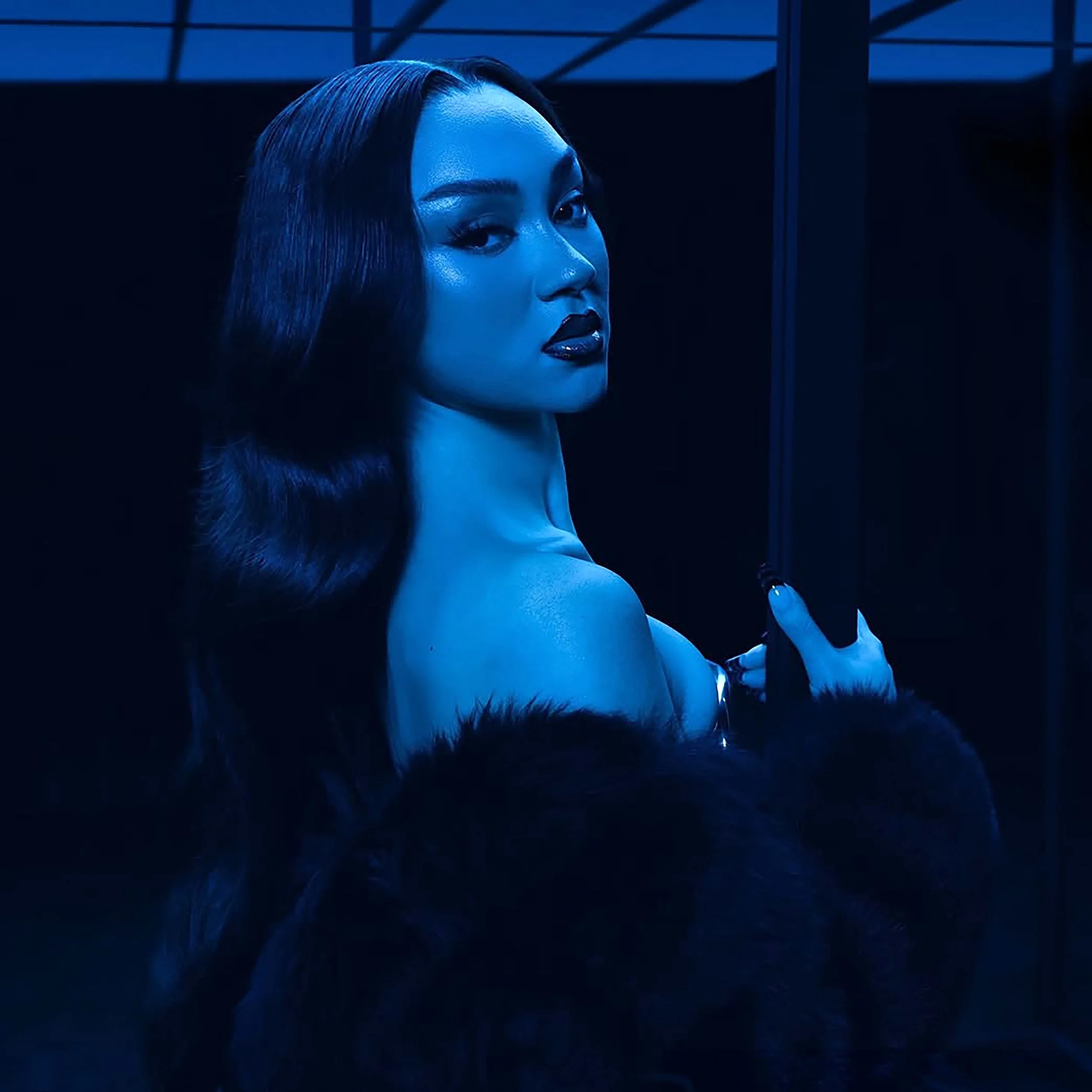
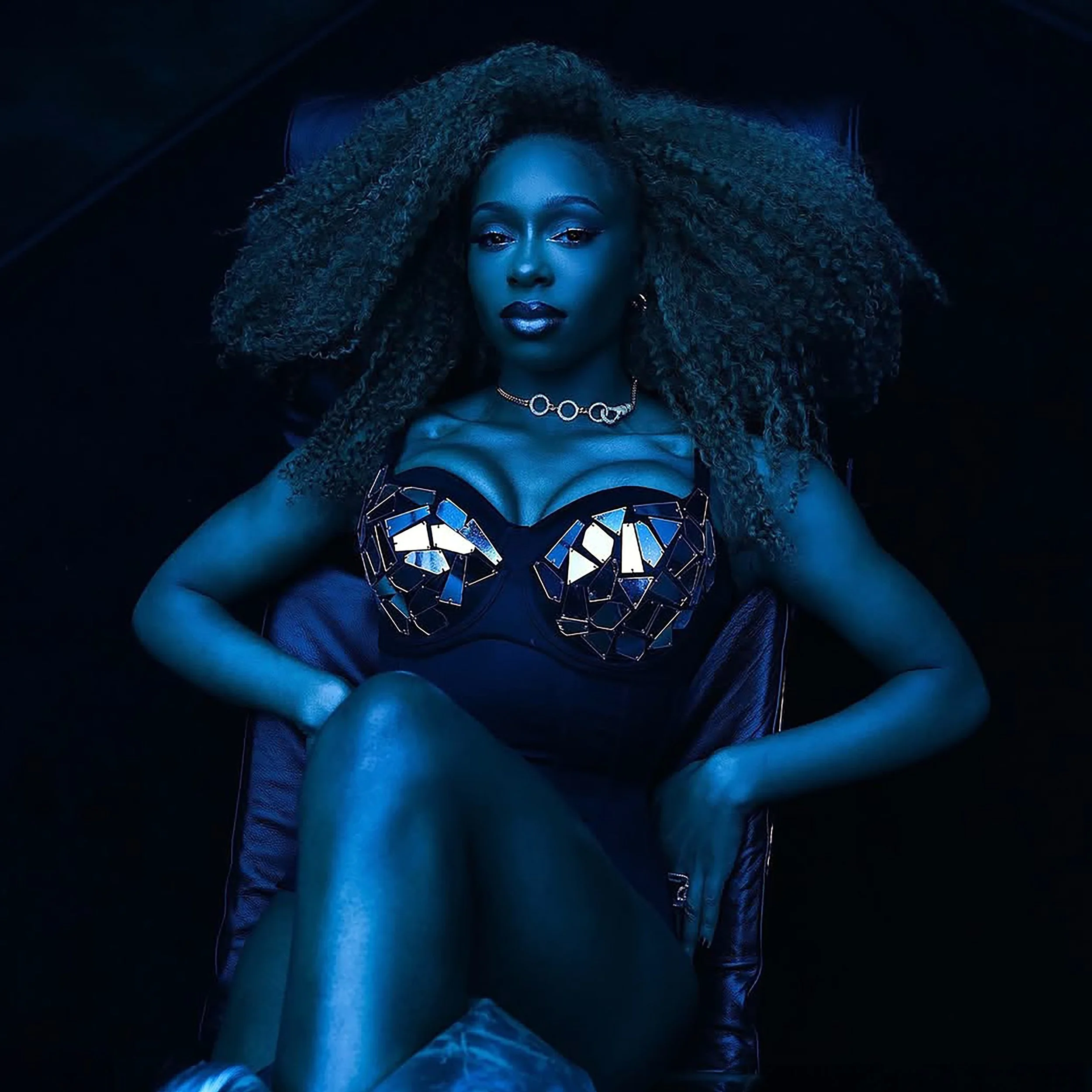

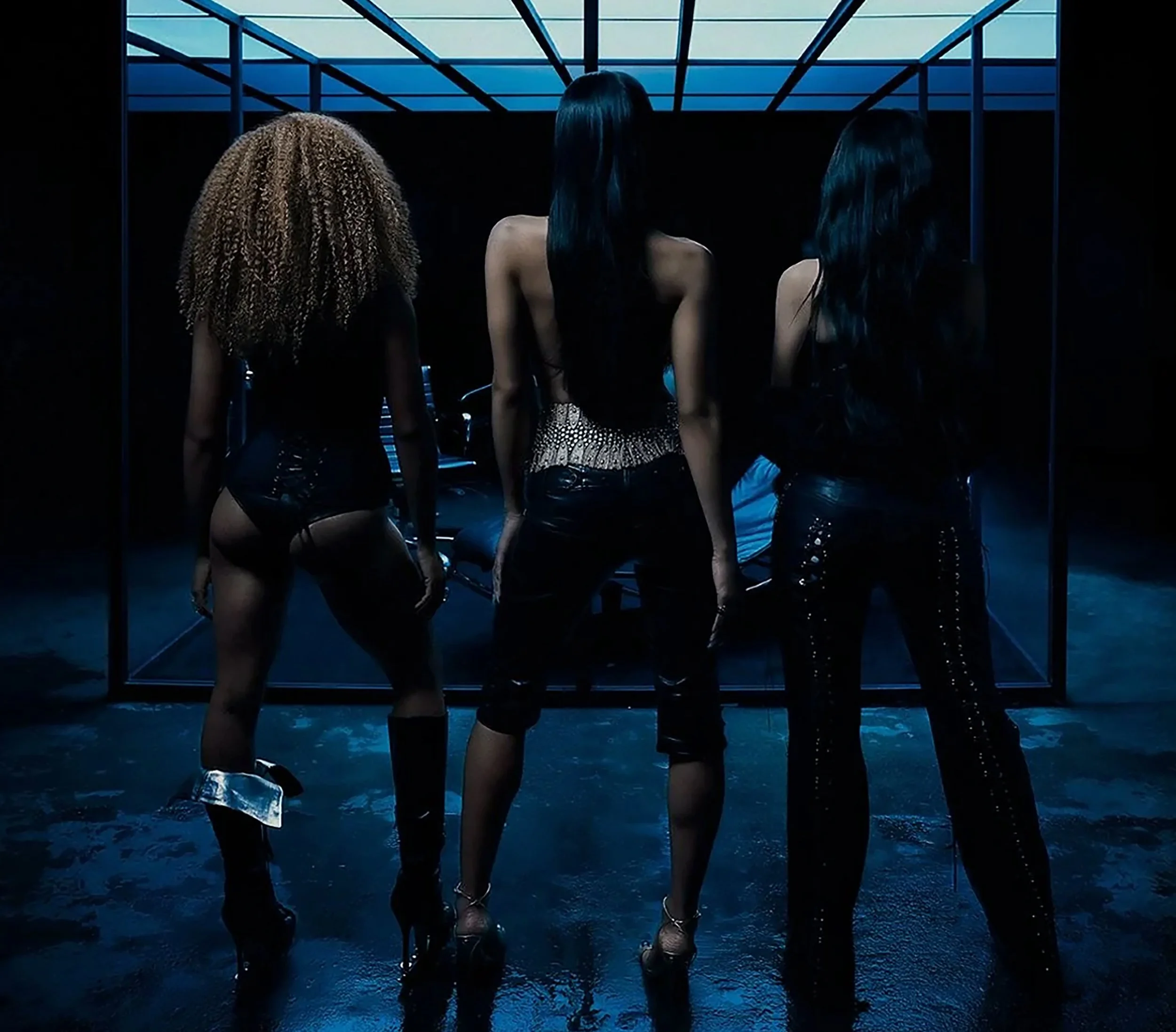
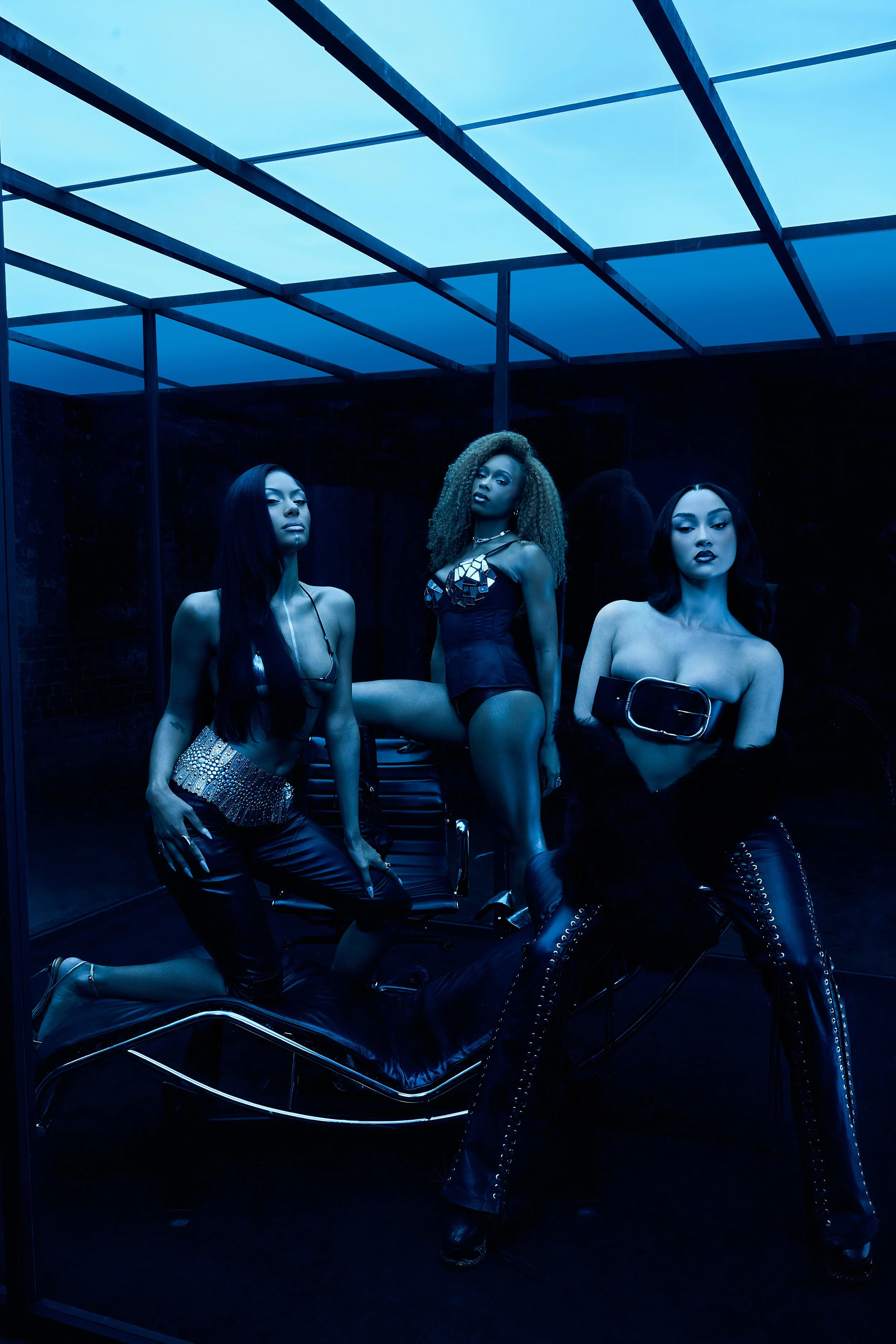
You were initially brought together by a record label, but over time FLO has grown into a genuine sisterhood. How has that bond shaped the album and the way you navigate life together?
Stella: "We're all very in tune with each other, so we can tell when something's happening or when someone needs a minute or a conversation. It would be really hard doing this alone—I was speaking to my mum the other day, and she said she'd be terrified if I was doing it by myself."
Although you've been making music together for seven years now, is there anything you've discovered about each other on this music-making journey that you never knew before?
Jorja: "Writing songs separately has really allowed us to appreciate and see each other's musical influences and the style of music that we each like to make, appreciating that there are songs that one person could write and the other person wouldn't."
And finally, what do you hope listeners take away from Therapy at the Club?
Stella: "I hope people are excited by it and a little bit taken aback by all the different vibes on the album—how we can talk about things candidly and deeply at the same time. I hope they find themselves in the songs and know they're not going through things alone."
Renée: "I want the songs to hit deeper than surface level—or people to connect them to their own experiences and really get in touch with their emotions."
Jorja: "I hope people feel like they're listening to real artists who are focused on growing and elevating. Whether they've been with us from the beginning or are new listeners, I hope they appreciate the hard work that goes into this."
Stream Therapy at the Club below: