

Armando Spence Makes His Play for the UK Rap Crown
Melding coarse bars with candid introspection, boxer-turned-rapper Armando Spence's new project, EL BANDERA ROJA, lands like an eight-track uppercut, signalling the dawn of a new era in UK rap…
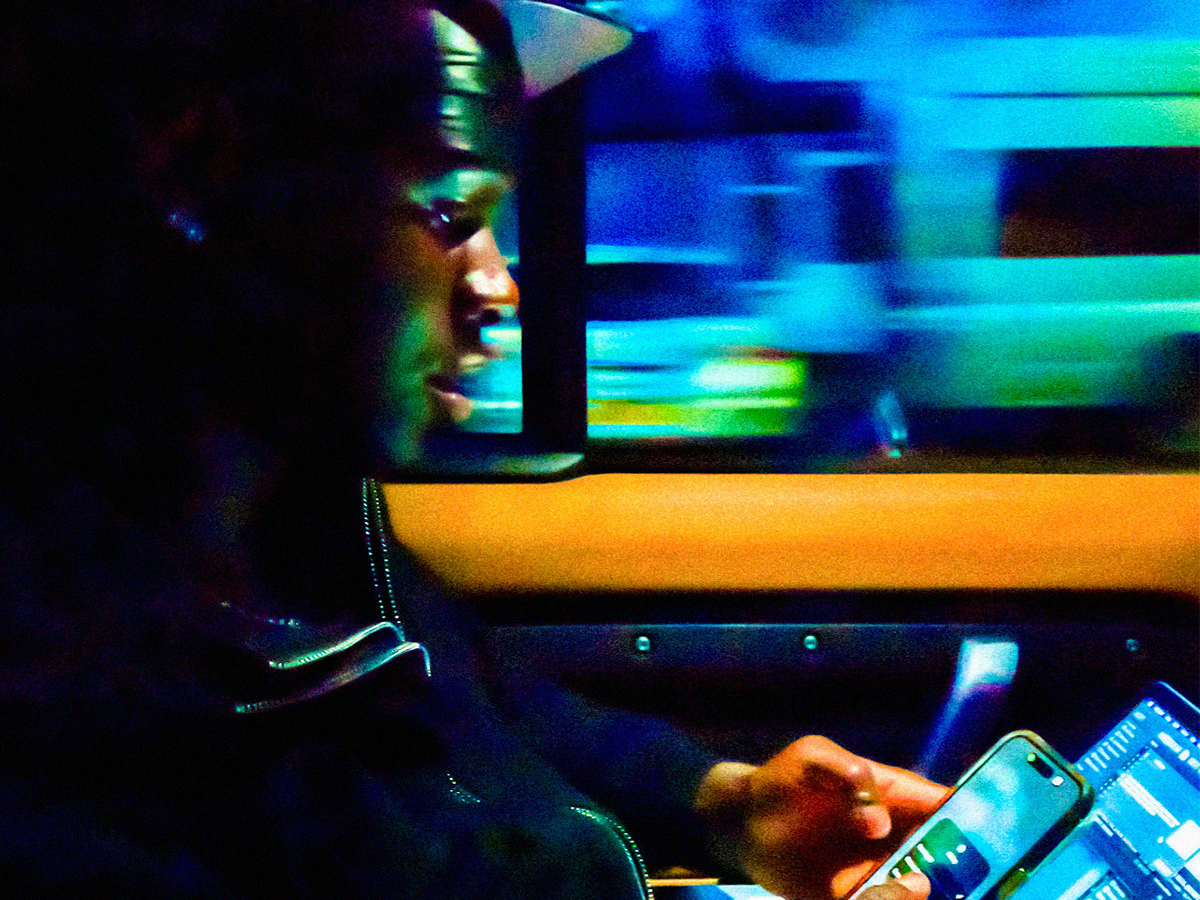
Armando Spence in 2025. Image via Press.
Armando Spence might not be a household name just yet, but judging by his own Marty Supreme levels of self-belief, he will be. The North London rapper (of Congolese and Angolan descent) took flight in 2024 with his breakout mixtape El Tranquilo. Following this success, he kept his foot on the gas, maintaining momentum with several viral Balamii freestyles alongside some of the UK's most exciting lyricists of the new generation.
His attention-grabbing lyrics then landed him a spot on underground platform UK Rap Daily Cypher, alongside the likes of N4T, Deedot, Proph and many others. Continuing to collaborate with fellow rising stars, his latest tape features the production of blossoming London-based hit-makers like TR Gobrazy and JEDSOUL.
Preparing to cement himself in North London's long list of legendary lyricists, Armando Spence has now dropped his second EP, EL BANDERA ROJA. He paints a vivid picture of the duality of his surroundings, expressing moments of camaraderie and ambition with the harsh realities of pressure and survival. Think Blade Brown in his prime over glacial post-modern production ("Northside 2 Southside").
The contrast between emotional depth and the brutality of hard work speaks to those who dream big whilst constantly being reminded of more humble beginnings. The Culture Crypt sits down with the North London spitter to discuss his influences and inspirations, the new generation of UK artists and his future endeavours.
The Culture Crypt: Your new EP, EL BANDERA ROJA's title translates to "the red flag" in Spanish. What's the story behind that?
Armando Spence: "A lot of people take the red flag thing as relationship talk, but the real origin for me comes from boxing. I grew up boxing, and one of my favourite fighters is David Benavidez; his nickname used to be El Bandera Roja, The Red Flag. He's changed it now, so I felt like the name was up for grabs.
To me, a red flag is a warning sign—a potential threat. That's how I see myself in rap. I'm high-risk, low-reward for anyone sleeping on me. I see myself as a problem for the people sitting at the top right now. But I also try to represent it in a positive way, not on some 'badness' thing, just on being a serious contender who's here to disrupt and take over."
From your perspective, how do you think this new tape is different from your last project, El Tranquilo?
"It's definitely darker than the first one. When I made El Tranquilo, I was just excited, pure excitement that I was finally putting music out. I was on the sidelines for so long, so when I finally dropped my first singles in 2023 and then El Tranquilo, it felt like I was just happy to be in the game.
But with EL BANDERA ROJA, after actually experiencing the early stages of the industry and trying to balance music with real life, I realised it's not all fun and games. That shifted my mindset. I'm hungrier now, more honest, more introspective and that naturally made the music darker and more serious than before.
There's also a bit of disappointment there too. With El Tranquilo, I lowkey thought, 'After this tape, I'm gonna be rich.' But reality hit, and I realised it's deeper than that, and that feeling definitely shaped this project."
Did that change in mindset also affect your creative process?
"One mad thing is that on El Tranquilo, I didn't write a single lyric [in advance]. That was always my style—just going into the studio and freestyling. I'd just hear a beat and start rapping. But with EL BANDERA ROJA, I actually sat down and wrote properly. The music felt deeper and more intentional. It wasn't just vibes anymore—it was real emotion and real stories coming through.
Writing gave me more structure and focus. I was thinking more about what I wanted to say, how I wanted to say it, and how each track fit into the bigger picture of the project. It helped me be more honest and more introspective, and I think that's why this tape feels more moving to people. I still love freestyling, that's always going to be part of me, but now I'm combining that with actually crafting songs and really taking my time with them."
“To me, a red flag is a warning sign—a potential threat. That’s how I see myself in rap. I’m high-risk, low-reward for anyone sleeping on me. I see myself as a problem for the people sitting at the top right now.”
Are there any artists, past or present, that you really admire or learn from?
"Honestly, and I'm not just saying this because they're on the project, but my two favourite rappers right now are Tay Jordan and 23AZ. Regardless of them being my bredrens, I'm genuinely a fan of them. I've got the privilege of calling them my boys, but I listen to their music every day in the car, on a run, in the gym, and what they say really moves me. We came up in very similar ways, so it hits different for me.
Outside of that, I've always been big on the more niche, luxurious but gritty, dark sound. I really mess with the Griselda wave and Roc Marciano. It feels high-end but still raw and street, and that's always influenced what I'm into and what I make."
You were part of that UK Rap Daily Cypher with the likes of bib sama. and Ceebo. For a lot of listeners, it felt like the UK version of an XXL cypher. As part of this new generation, what do you think you and your peers are doing differently that sets you apart?
"I think a big part of it is the amount of admiration artists have for each other right now. That cypher was the first time a lot of us were in the same place—and it wasn't just online, it was real life.
Even guys like N4T, one of the coolest, most genuine brothers I've met in music, he was saying, 'Yo Mando, I've been messing with you for time,' and I'm telling him, 'Bro, I've been messing with you for time too.' That was happening with bare people.
I also think our generation has way more open-mindedness when it comes to sound. It all crosses over. Before, it felt more separated—if you liked grime, you liked grime; if you liked road rap, you liked road rap; then drill came in, and everything was in its own box. Now there are loads of soundscapes, and everyone's overlapping, mixing, and moving between styles."
It also feels like there's more connection between artists and the bloggers, content creators and magazines. Why do you think that is?
"I think there's just a lot of purity right now. We're all actually just geeks and fans of this music stuff.
We're fans of the music and the culture before anything else. And we're not afraid to show that anymore. Music isn't just a hustle, it's deeper than that. So when I get opportunities like this, to talk about my work, I'm genuinely gassed. I'm like, 'Yo, I must be doing something right if people want to sit down and chat to me about my music.' That's dope to me, for real."
If someone had never heard your music before, what's one word you'd use to describe it and what would be the ideal entry point?
"One word? I'd say I'm real. And song-wise, honestly, for me, it's 'Big Paper'. That song is my song. That track is like my 'I made it' soundtrack. When I become the person I know God wants me to be, that's the song I'm playing in every big moment. When I buy my dream car—that Overfinch Range Rover—the first song I'm playing when I step out of the showroom is 'Big Paper'. That's the song I play to remind myself how far I've come and where I'm at now.
To me, that song really embodies who Armando Spence is. If I had to describe my music in two words, it's what we always say: gutter and glamorous. From the gutter, but still glamorous. That's the balance. That's really what my sound is about."
Which parts of your story and your environment have shaped your voice the most?
"It's everything: the good, the bad, the ugly. Even the block I grew up on was super diverse. We had Congolese, Nigerians, Angolans, Somalis, Albanians, Pakistanis—every community was there. Every part of that inspires me. It was really a melting pot, and growing up taught me how different cultures live, move, and think.
And London in general is just like that. You can come from nothing, but five minutes down the road there are multi-million-pound houses. That's probably the biggest thing London gave me—the belief. You're on the block, but you can see the life you're trying to reach right in front of you. That shapes your hunger, your sound, your whole mindset."
What does the next chapter of your career look like?
"We're not stopping at all. I'm saying this with full confidence: there aren't going to be many rappers in the UK mashing the kind of work that I'm mashing. This year? We're moving devastating. Red flags all over the city. It's serious work, for real.
There's no limit to how far this can go. That's all I really see for the future: success, however it comes."
Stream EL BANDERA ROJA below: