

Inside Dominica's Mix-Soup Genre: Bouyon to the World
Bouyon—a music genre born in Dominica and now rippling across the Caribbean and global diaspora—wields a floor-filling power. Writer Noah East traces its roots, exploring the history, politics and spirit of bouyon in conversation with one of its artistic pillars, Dominican musician Shelly.
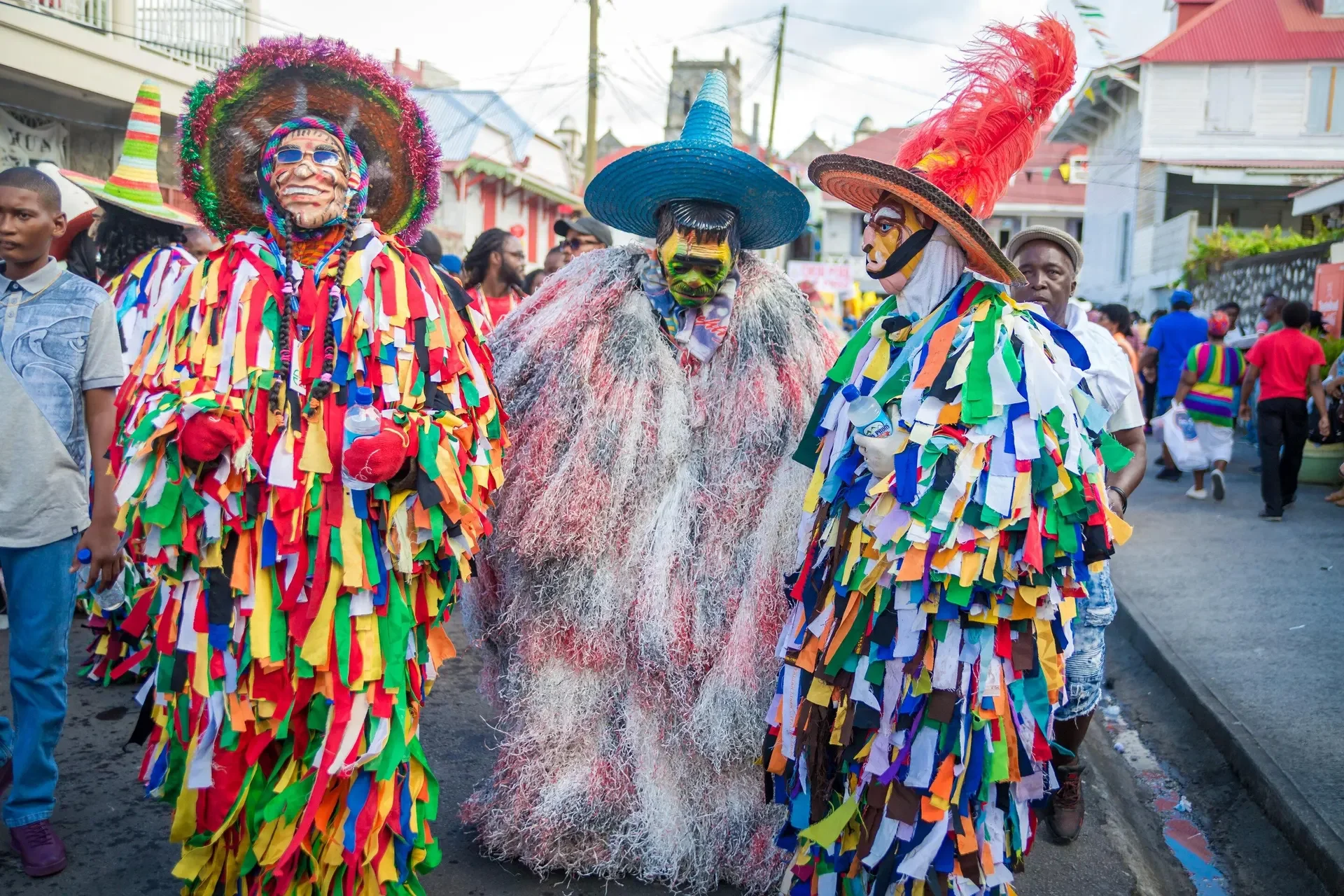
Costumed participants at Mas Dominik (Dominica Carnival) in 2023. Image property of Discover Dominica Authority.
Often, I think of musical genres as different rooms we inhabit at certain times in our lives—the bedroom, kitchen, study and so on. Bouyon is quite simply the sound of outside. The energetic rhythm of the goat skin drums mixed with the Creole-infused jazz instrumentation is the necessary tonic for a sound that pushes parties from J'ouvert to J'ouvert.
A few years ago, when I was back in my home country of Dominica, the birthplace of bouyon, I first heard the sound in its proper setting. Like a religious missionary, as soon as I touched back down in London, I had to spread the word.
Seeing the growth in the genre since then has been beautiful—its natural enmeshing within the soundscape of modern diaspora dance sets, alongside Afrobeats, amapiano, soca and zouk warms my heart.
From a metrics and European impact perspective, recently the biggest growth in bouyon has come out of Guadeloupe with artists like 1T1 and the natural superstar Mimii KDS. Tracks like "In di Corner" and "Bouwéy" have gone back-to-back as theme tunes to summer. But it's interesting to see how bouyon's trajectory has also traced economic lines.
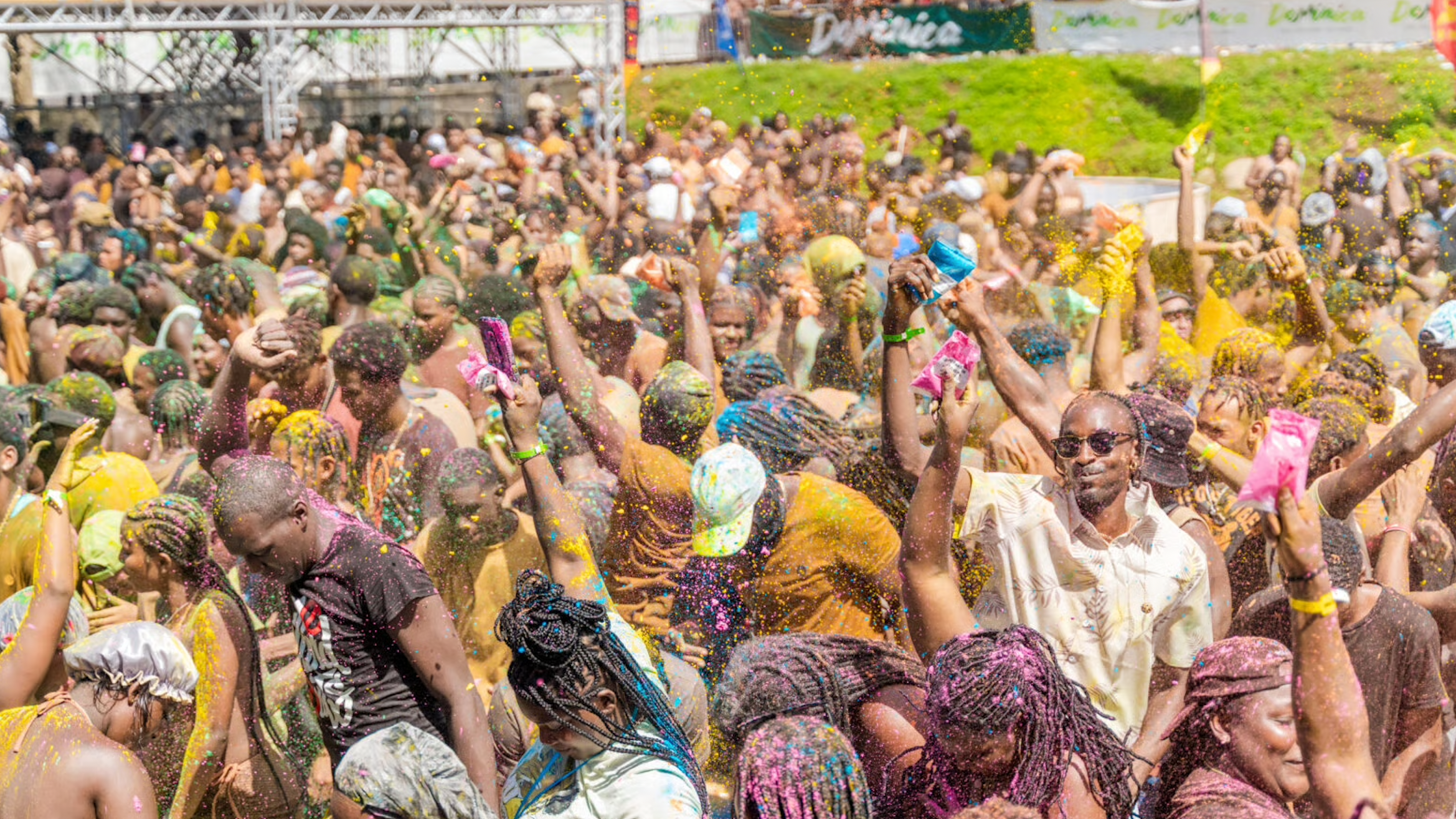
Crowds enjoying Dominica’s annual Breakfast Fete party. Image property of Dominica Breakfast Fete.
Dominica is the most underdeveloped island in the Caribbean and is also independent. Because of the cash-for-passports scandal (where the government set up a system through which passports were bought by international criminals—when discovered, it undermined the travel access of regular Dominicans), many citizens struggle to travel and spread the music scene to foreign shores. Moreover, the economic isolation and weakness hamper the Dominican scene.
Guadeloupe, however, is still a French territory and benefits from all the financial, social, and travel benefits associated with that non-independence. As such, it is no surprise that Guadeloupe has provided the avenue for the genre to accelerate its rise, but I think it is also important to note the non-artistic catalysts for this path.
As bouyon grows and grows, it feels appropriate to trace some roots, speak to some pillars, and track its trajectory and possibilities. To say I am proud of my small island's recent musical contributions is an understatement; to say I am surprised would be a lie.
Bouyon captures the humour, inventiveness, sincerity, happiness, and vibrance of Dominica, and when I watch it spread more widely, I see it helping unlock these attributes in the hearts of the listeners.
To embrace bouyon, we should think about the land to which it provides a theme. The volcanic jungle island of Dominica has its belly nourished by the fertile land and its ears nourished by the mix-up music scene befitting its heritage. "Bouyon"—loosely translating as "mix-soup"—is the unique preserve of Dominica's next generation of musical maestros.
The electrification of calypso and soca with the words of the common man, bouyon provides the soundtrack to entire lives, dressed in down-to-earth lyrics and upbeat basslines. The humility of the lyrics can be seen in tracks like "Drunkish" in which Dominican singer-songwriter Shelly tells an all-too-familiar story—of wanting to clock off on a Friday and dance the night away without the prying eyes of colleagues: "Whole day taking people stress boy, once I leave that place I just want to reset boy! And if we work together, hold your end, you are just my co-worker you are not my friend!"
Similarly, that straight-talking Dominican lyricism can be heard in the viral-ready rhythms from bouyon artist Ridge in tracks such as "BDYMM", which wastes no time in outlining its quotable, pleading chorus: "Bitch, do you miss me? I'm sitting on my toilet drinking whiskey."
“The volcanic jungle island of Dominica has its belly nourished by the fertile land and its ears nourished by [its] mix-up music scene. Bouyon—loosely translating as “mix-soup”—is the unique preserve of Dominica’s next generation of musical maestros.”
For me, in an environment where lyrics are so often used to separate the listener from the artist—socially, economically, or otherwise—bouyon is a necessary respite where we are encouraged to relate and sing in communion with that artist. This cordiality afforded me the opportunity to speak to Dominica's own Sheldon "Shelly" Alfred and get his perspective on the growth of bouyon.
Shelly is one of the most popular singer-songwriters in Dominican bouyon. Frequently collaborating with the incredible Signal Band, he has built himself a platform as the go-to-guy for upbeat hooks and quotable verses.
He has headlined the World Creole Music Festival in Dominica, won Dominican Artist of the Year 2025, and racked up millions of views on his songs over the years. He even laid claim to the Bouyon song of the summer last year with "Bye to de Old Me." I was lucky enough to chat with Shelly last year as he was beginning his carnival tour of the Caribbean.
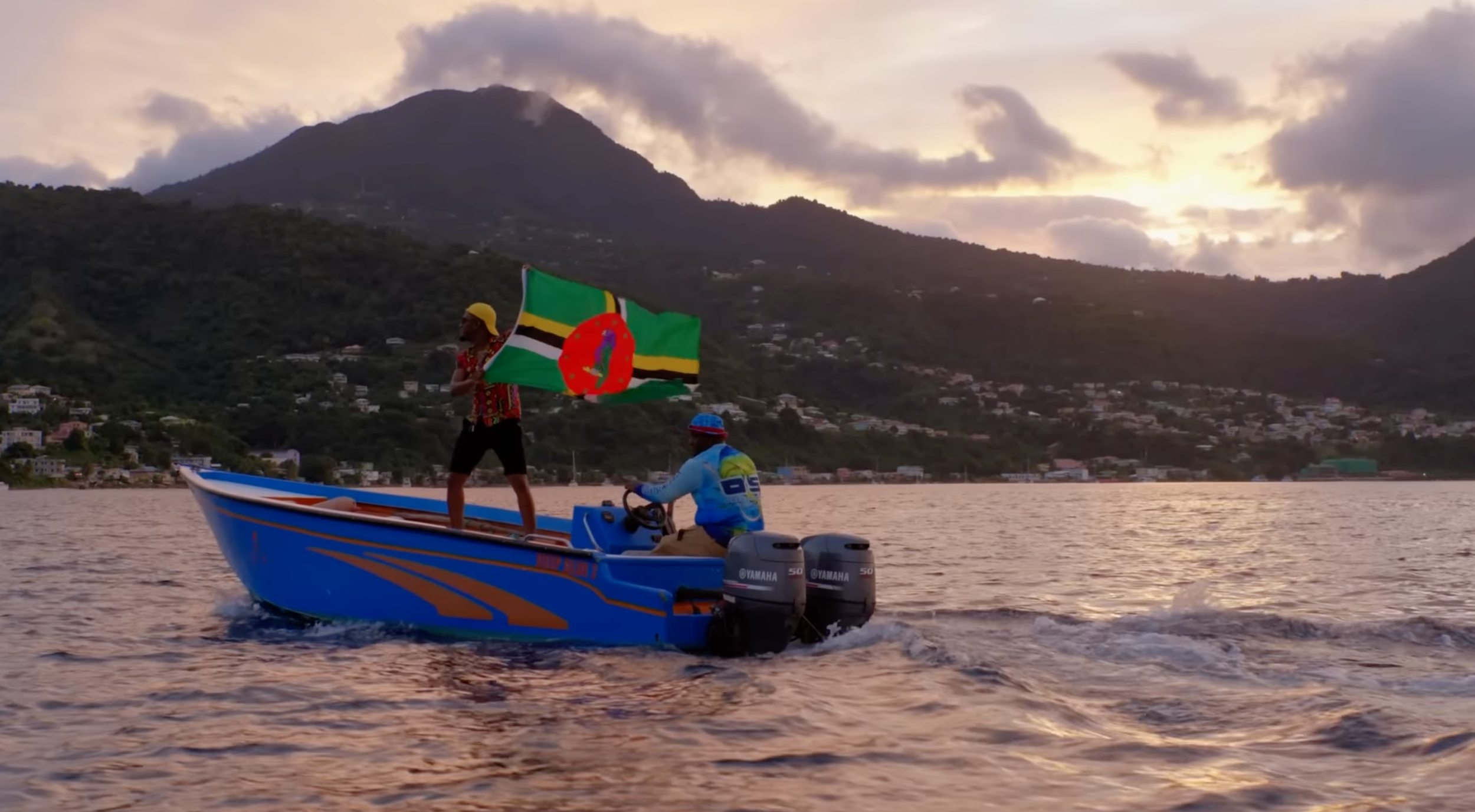
Shelly in his hometown Dominica for "I'll Be There For You" music video in 2024.
The Culture Crypt: How would you describe the island country of Dominica?
Shelly: "Dominica is an undiscovered paradise in the Caribbean, even beyond music. As an island, we are the 'nature island'—all kinds of beautiful nature on the island. Us being sandwiched between two French islands in the Caribbean is a unique case, and that speaks to the influence it has on our Creole culture as well, and our music is very special."
Why is music so important in Dominica?
"African ancestry—I think of the influence of music on Africa but also the influence of Africa on music. You think of rhythms, you think of the African drums. I think that has made this a very rhythmic people, very dancey, you know? We have a way of communicating through music. If we even look at calypso—calypso music in slavery was a rhythm and an understanding beyond the slave master."
In your words, what is bouyon music?
"Bouyon music is a modernisation of the traditional rhythms and instruments of Dominica. It stems from the electronic version of those traditional instruments and sounds such asJing Ping, you know, and the music that accompanied the descendants of the indigenous dances of Dominica. The lyrics always represented a way of life of the people, and that is where bouyon music is now."
Where does bouyon come from?
"I would say that it comes from the ancestors of the rhythm. But if we look at when it was born—in Dominica, with WCK [Windward Caribbean Kulture] Band—it is 30-something years old right now."
Can you speak on the roots of the sound?
"It is very critical to the genre, you know, understanding these roots. We have to recognise the traditional mas, which is a musical element from the goat skin drums and that influence again from Africa.
Then in the streets, when it is playing on the truck with the people following as a troupe, that is a part of who we are as a people. When we speak about the context of carnival, you see that the electronic bands will be called on the road after the traditional bands—we are still able to maintain that element of tradition.
As I said, we are uniquely positioned between two Caribbean French islands and that French influence has allowed us now to branch out. Bouyon has become a thing in the French territories; it was always known, but I think right now it is a phenomenon. That Creole crossover is important to the question."
Given the size of the island and the cultural influence of the US, is it hard to maintain Dominican culture?
"The Caribbean is a place that distinctly identifies the various islands, with each island having its own heartbeat. We see the influence of the US—I think it has reached the shores of the Caribbean, but in Dominica it isn't easy to dominate and diminish the identity of what we have done. We actually take influence from hip-hop and rap. Bouyon itself has a semi-formal definition as a melting pot of sounds, so it is easy to embrace rather than trying to compete."
As the Dominican music scene continues to grow, what is the message that bouyon will carry?
"Aha, it is true, we are seeing the growth a lot. Because we are the mix of Creole with French and English influence, we can grow in many places. Everyone is getting on board because it has the nasty riddims, but then the lyrics deal with real life, real issues."
Stream Signal Band, Shelly and Trilla-G's "Dwivé" below: