

Umi Weaves Worlds Through 'People Stories'
UMI's music is vast and deep like the ocean—and her success can no longer be confined to the shores of genre box-checking and linearity. Following the release of her new album, we delve into the soul of this Grammy-nominated, spiritual songstress in an unforgettable heart-to-heart.
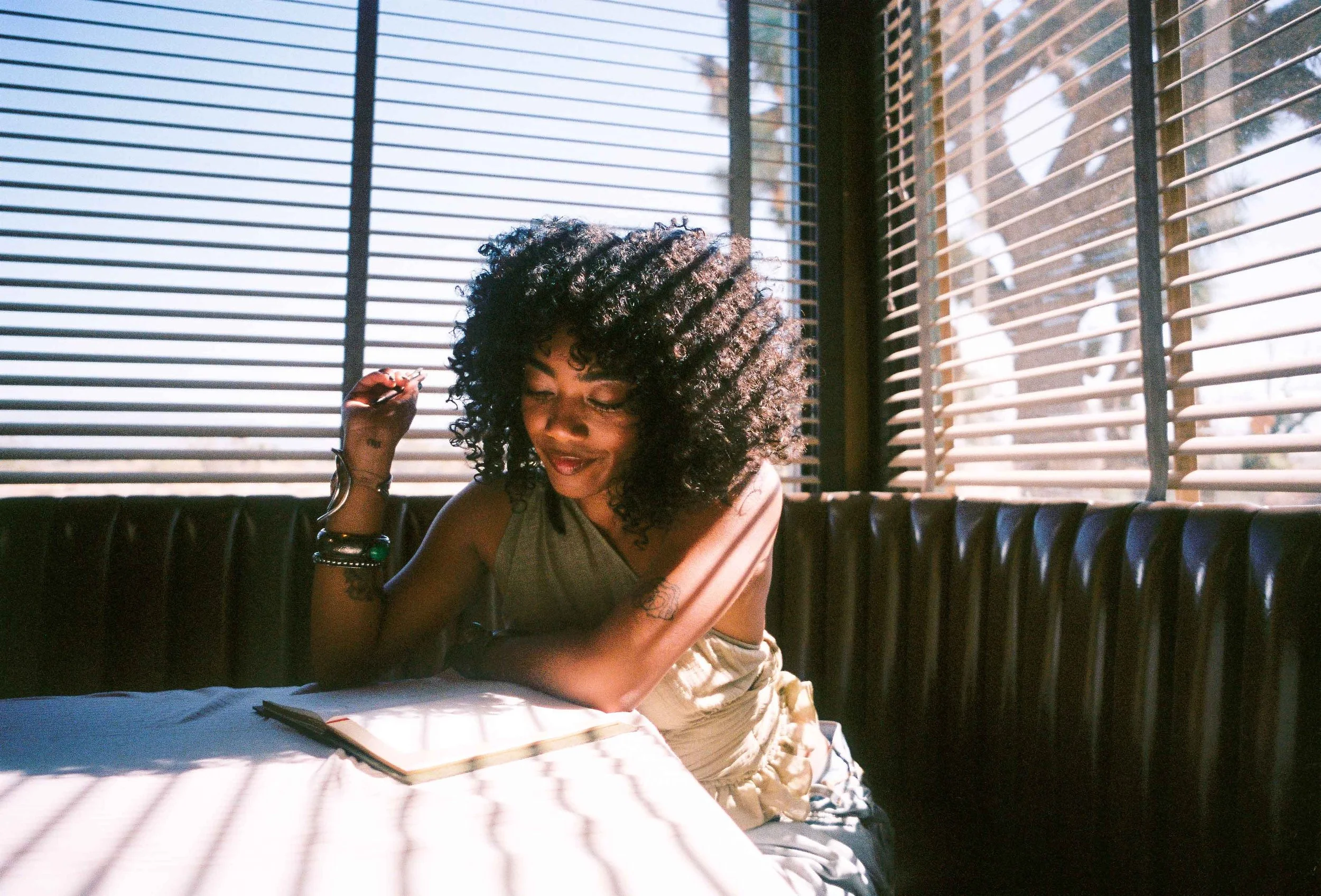
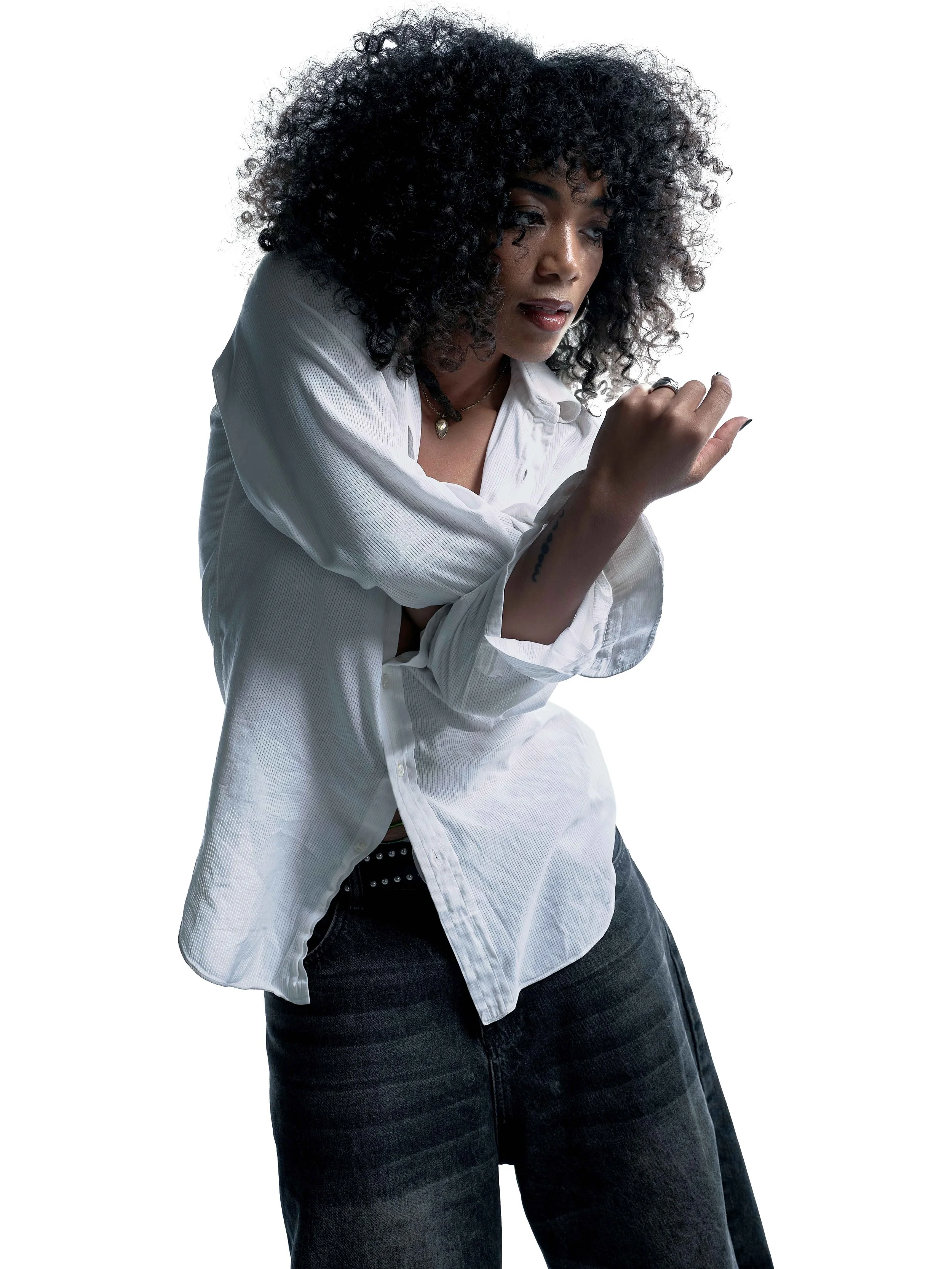
UMI in 2025. Image property of Sergio Villasano Jr.
The most soul-stirring music is a multisensory affair: it may move you to tears or bring you to your feet; it may compel you to see the world differently, inspire visceral feelings in your body, or sew a thread that connects you to others through song. The most soul-stirring music is crafted by the most heartfelt artists—artists who embrace the magic in the words that they write and the songs that they sing. Artists like Tierra Umi Wilson.
Better known by her middle name, UMI embodies the Japanese meaning of the word; her music feels as expansive, deep and boundless as the ocean ('umi') itself. She sees her work as a precious opportunity to unite people through storytelling, guided meditation, catharsis, and shared humanity.
Here, as she sits in a bedroom filled with natural morning light and a backdrop of green plants flourishing behind her, UMI's gentle and humble essence is felt through the screen of our video call.
Having recently returned from her Asia tour, where she traversed Japan, Korea and Indonesia, the 26-year-old songstress takes the time to sit down with The Culture Crypt for an earnest conversation that lingers long after it ends.
The Culture Crypt: If we were to ask you, "Who is UMI?", how would you respond?
UMI: "Haha, I love that! UMI is… UMI is a friend through sound. I consider myself to be like a mirror to people because my music is very introspective, but also very homely. I like to make music that feels like a cup of tea or a warm soup when you're not feeling well, music that fills your soul. It's very much who I am in real life turned into music—friendly and warm and comforting and honest."
And how would you describe this season of your life?
"This season of my life feels like I'm coming back home, it feels like finding safety in myself. This new album, People Stories, is the most honest version of myself. Not to say that what I released before wasn't honest, but how much can you know yourself at 21 or 18? You have to live life and forget and remember and have heartbreak and travel and do all these things to know yourself. So I'm at this place where I feel like I know myself and I'm finding myself from within."
What is inspiring you the most during this season?
"So many things. Right now, I've been really inspired by vintage magazines and documentaries about rock bands from the '80s and '90s. I've just been inspired by these nostalgic, filmic visuals recently. I've been wanting to make art that feels nostalgic and real. Yesterday, I was in the studio and we were talking about how you can make music sound like film—grainy, not so high definition. I'm inspired by imperfection."
And speaking of creating, how did your new album People Stories come to life?
"It's called People Stories because every song on the album is inspired by a story that a fan or a friend told me—I've turned their stories into songs. On tour, I really take time to talk to my fans before and after the show, interview them and collect stories.
For example, there's a song called 'Mango Sticky Rice' on the album, and it was based on a fan that I met after a show in Amsterdam. They introduced me to their boyfriend and told me, 'We met because we love your music, and our first date was at this Thai food restaurant—the mango sticky rice there is one of the reasons why we fell in love.' I went to the restaurant and I thought, 'I wanna make a song about you.' And that's when the whole concept clicked for me.
I didn't want to talk about myself: I wanted to talk about other people. But then, while writing these very specific stories about other people, I realised that I could find myself in every story… I want to be an artist who can help start honest conversations about these personal parts of our lives so that we realise, 'I'm not the only one who's depressed, I'm not the only one who's heartbroken, I'm not the only one who's fucked up—I'm not alone.' I think the world needs that."
“I like to make music that feels like a cup of tea or a warm soup—music that fills your soul. My goal is for people to feel spoken to and seen.”
In terms of the sound of the album: you're typically known as an alternative R&B artist, but how would you describe yourself sonically right now?
"My sound is more about a feeling. I was scared to [branch out], but with this album, I wanted to boldly say, 'You can never put me in a box.' I want to be known for more than one sound, and the stories I tell require more than just R&B—that one paintbrush cannot tell all of these stories. To me, the sound should be based on the story and the message. That's who I am as an artist: someone who bends the sound to create the most accurate feeling.
In terms of the paintbrushes that I played with [for this album], I was infusing folk, organic sounds, guitar sounds and honest songwriting. There are still a lot of R&B and pop influences, and then that alt, punky sound because many of the stories were so angsty and emotional and I like the feeling of punk, grungy music to tell that."
One of the moments that stood out to me was in the opening track, "Sometimes", where you reflect on seeking happiness in a world that isn't always happy. How have you navigated making warm and uplifting music amidst the world's noise?
"That is such a heartfelt question. Something I've learnt is that change in the world really does begin with one person at a time, as cheesy as that sounds. Although there are times when I want to be angry and project that message into the world, the most helpful thing I can do through my music is make people feel safe, make people feel alive.
I wanna inspire people from a place of love and joy, which is true to me. So that's why I keep making the music. Even if the world feels like it's burning, you can still smile, you can still dance with your friends. That has a bigger impact on the world than you can even imagine."
In what ways have you personally found healing and catharsis through making music?
"I think that music has been one of the most challenging areas of my life, in a good way. When I first started, I had the worst stage fright. But I really wanted to be an artist, so the first thing I had to overcome was my fear of judgment. Without music, I don't know if I would ever have taken the journey to heal that fear. I was so anxious, I was in the studio and I couldn't even create because I was just worrying and worrying. So that made me meditate, it made me learn to build a relationship with my thoughts.
My passion for music has been enough of a reason for me to let go of anxiety and fear of judgment. I don't think any other path would've brought me back to myself as much as music. So that's what music has done for me."
And your heritage also shines through your art. If I were to ask you where you're from, how would you answer that question?
"That's so fun because I could say I was born in Seattle, I could say that my mom is Japanese and my dad is African-American and his family's from the south… so I feel like I'm from all those places. But then I also feel like I'm from outer space, I feel like I had a past life on a different planet! How deep could I take it? How expansive can I go? But at the same time, I'm like, 'Does it really matter?' That question brings all that feeling at once!
But generally, when people ask me, I do say that I'm from Seattle because I think a lot of my music is reflective of the rainy, cosy, vast nature-scape of Seattle. It's so unique there and in a way, my music and who I am feels a bit like Seattle."
How did you learn to navigate being from two different places whilst growing up around people so different from you?
"I was so confused and I think that confusion manifested in my lack of confidence. As a kid, I had a hard time making friends and I didn't fit in. I remember eating lunch in the bathroom because I felt like no one wanted to talk to me. I used to grow my hair out really long and I would always cover my face, cover myself, cover my body. I felt ashamed to be seen.
Honestly, it wasn't until a year ago when I had this trip to Japan and I started hanging around other kids who were of mixed heritage—a lot of them were actually half-Black and half-Japanese—and everyone felt the same way as me and had the same stories. Something about that just really healed me – feeling seen and not feeling alone helped me let go of this judgment. I was like, 'Wow, I don't have to be any one thing. I don't have to look one way or dress one way or speak one way. I can be Black, I can be Japanese, I can be myself.' I feel comfortable in not having one identity. How other people see me doesn't change how I see myself."
And when it comes to sharing your personal story through your music, is this something you're intentional about or does it just come naturally?
"Heritage and identity is just such a big part of who I am that it has become a central theme in my art. Honestly, it's very natural. Mixing Japanese lyrics into my music, for example, that happens because sometimes I can't finish a song, and then I use Japanese, and that helps me write it. And generally, I have a lot of representation in my music and my visuals, I really aim to cast diversity in my videos, I'm intentional about that. I have such a diverse group of friends, so I'm just being who I am and making that into art."
You have an extraordinary fluidity and openness in how you express yourself. How did you become so comfortable?
"That's a great question. I've realised that if I don’t share, I don't know who will. I have a unique story and I think a lot of people can find little bits of themselves in different parts of my story. And I've learned that a lot of the pain in my childhood came from people not sharing—so I don't wanna continue that cycle.
The more I share, the more I realise that people go through the same thing. Sometimes people just need an opening to be like, 'Me too, I've been through that too.' So if I could just be radically honest, and that makes others feel comfortable to be honest too, then there's not that much to be scared of. It makes conversations way juicier and more fun, and you really get to the heart of other people."
“Even if you feel like you’re the black sheep, you can come to my show and realise that there are a lot of black sheep out here. We can all find comfort in being the black sheep.”
And with your spirituality in mind, what are you manifesting for yourself going forward?
"I am manifesting really massive visibility for my music and my art. I would really love for a lot of people—more than I can even imagine—to hear my music and feel my art because I really do think it has an important message and a healing quality for people. When I close my eyes, I see myself performing in front of oceans of people and millions of people listening to my music. That's my wish. And I'm manifesting being really happy. I just wanna be happy."
The overarching theme of this issue of The Culture Crypt is dreams. If you could share an affirmation with everyone reading this, what would it be?
"It would be something along the lines of… your dreams are dreaming you. The dreams you have are by no mistake. Your dreams are guiding you to more of yourself, so don't question your dreams. You have your unique dreams for a reason."
Stream People Stories below: