

Ramla Ali is Ready for Her Next Fight… Film
In the Shadows, Ramla Ali's journey from refugee to record-smashing boxer, premieres this year at the BFI London Film Festival. Ali joins The Culture Crypt to discuss seeing her life story on screen and why filmmaking might be her next fight.
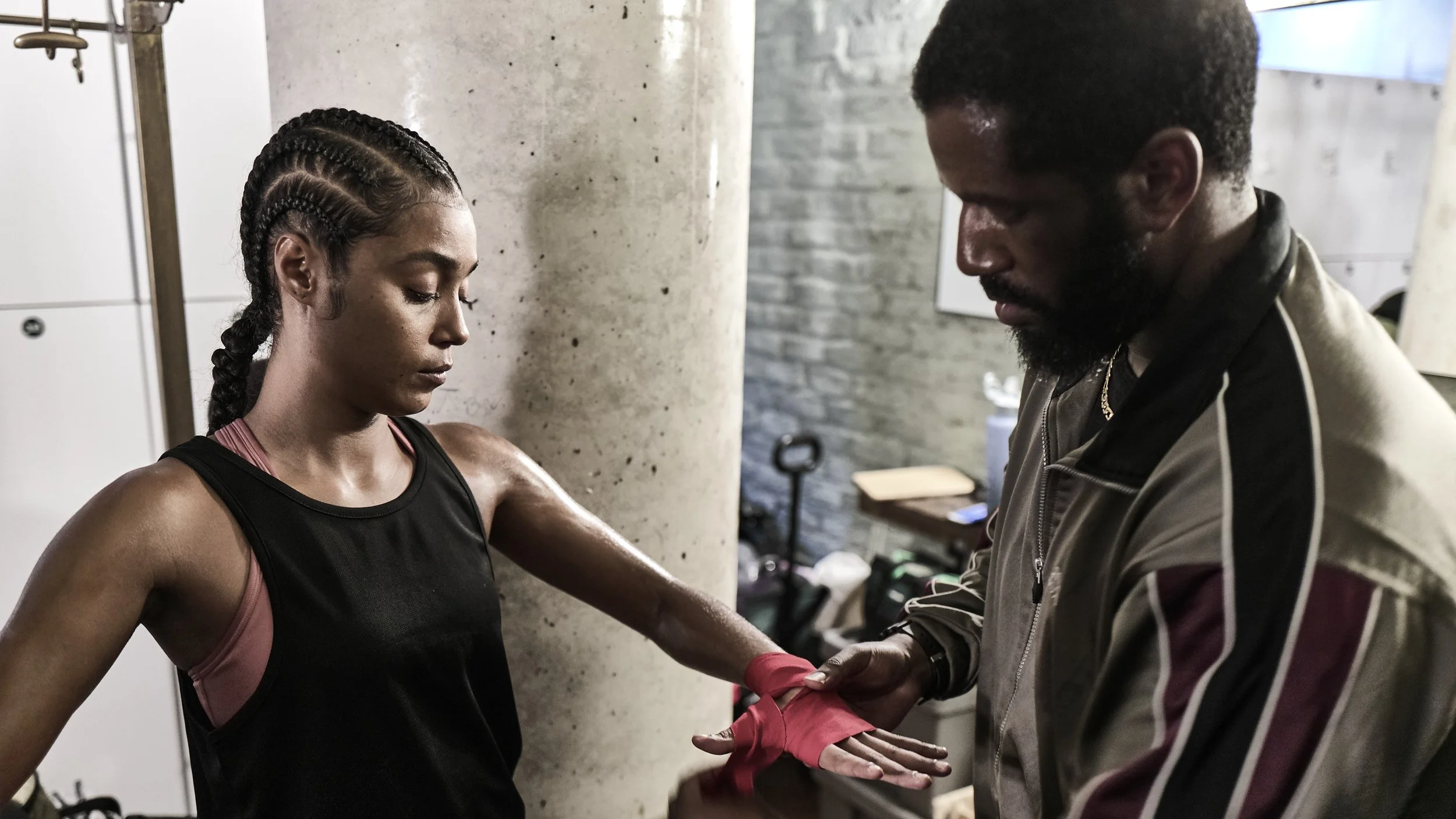
Jasmine Jobson as Ramla in 2026's In The Shadows. Image property of the British Film Institute.
Multi-hyphenation is hardly unusual anymore, but Ramla Ali has made an art of it. The 37-year-old Somali-British boxer, model, author and activist is, by now, pretty used to being the first: the first Muslim woman to win an English boxing title, the first boxer to represent Somalia at the 2021 Olympics and the first to win an international gold medal for the country in boxing. This year now sees her throw her hat in the ring of filmmaking.
In the Shadows, the feature film inspired by her life thus far, premieres in October at the 2026 BFI London Film Festival, with Ali executive producing, alongside her husband Richard A. Moore. It follows Ali from her childhood in Somalia to adolescence in East London and, eventually, her rise as a professional boxer. Jasmine Jobson (from Top Boy and Bird fame) plays Ali; Finn Cole (Peaky Blinders, Animal Kingdom) plays Moore.
Ali was still a baby when her 12-year-old brother was killed by a mortar during Somalia's civil war. Her family fled Mogadishu, embarking on a perilously crowded boat journey for nine days to Kenya before eventually arriving in London. The family settled in Whitechapel, where as a teenager, she was bullied at school due to her weight. Boxing became an escape, though it was one she initially had to pursue in secret, fearing her Muslim family would disapprove.
So how do you turn a story marked by war, displacement, faith, violence, love and secrecy into a film without sanding away its rough edges? Ali was determined to have a say.
At LFF this year, fresh from a frenzied press junket, she tells me that her executive producer credit barely begins to describe her engagement; Ali practically assumed the unofficial roles of assistant script supervisor, fight choreographer, consultant and language coach: "I was involved in every aspect of the film, making sure the script was how I wanted it. I remember getting a draft and not being happy, saying, 'Please take this out. Please put this back in, or please can we have this?' I was making sure Jasmine was saying the Somali words correctly, getting my actions in the ring correct. I was everywhere."
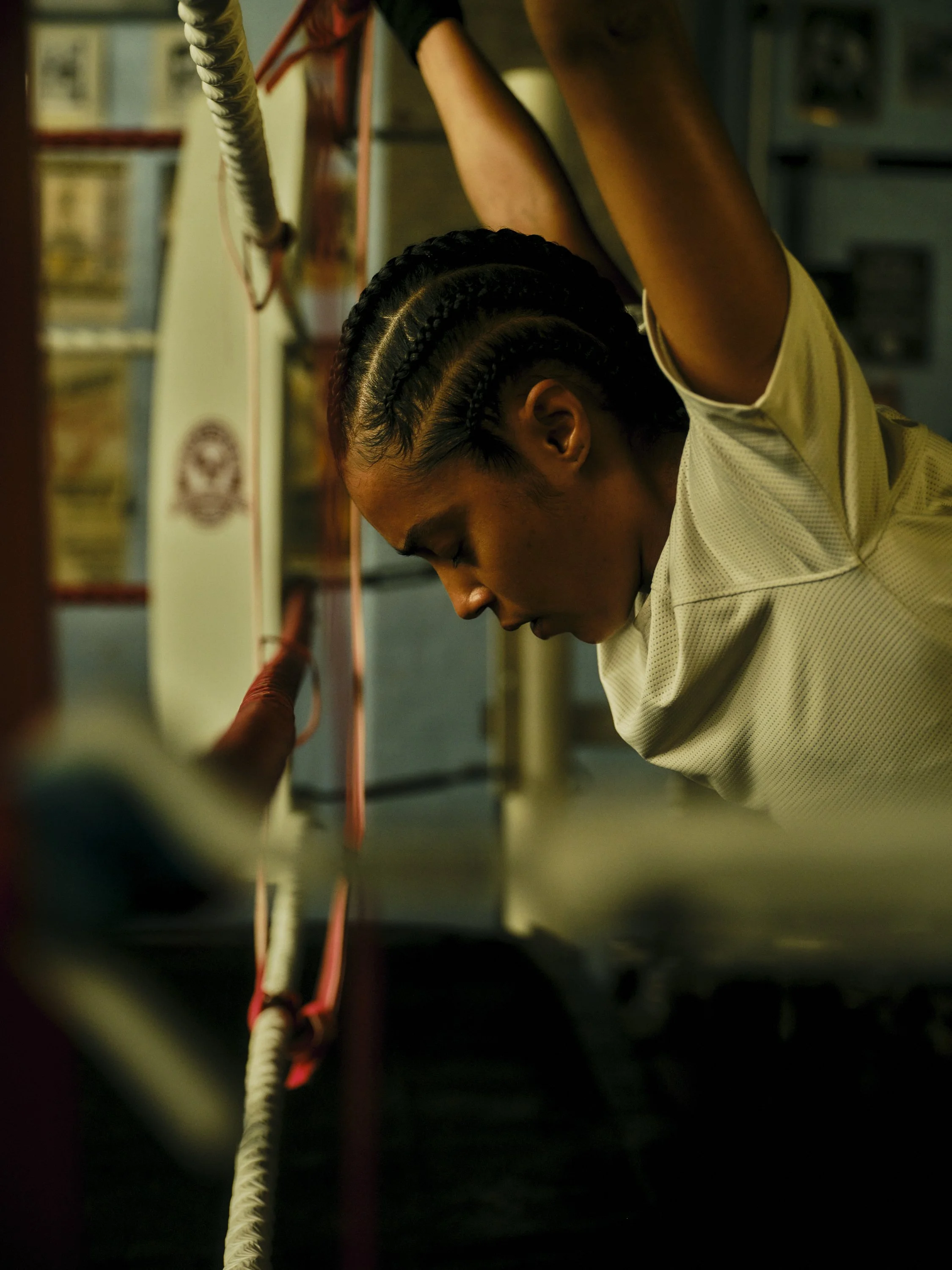
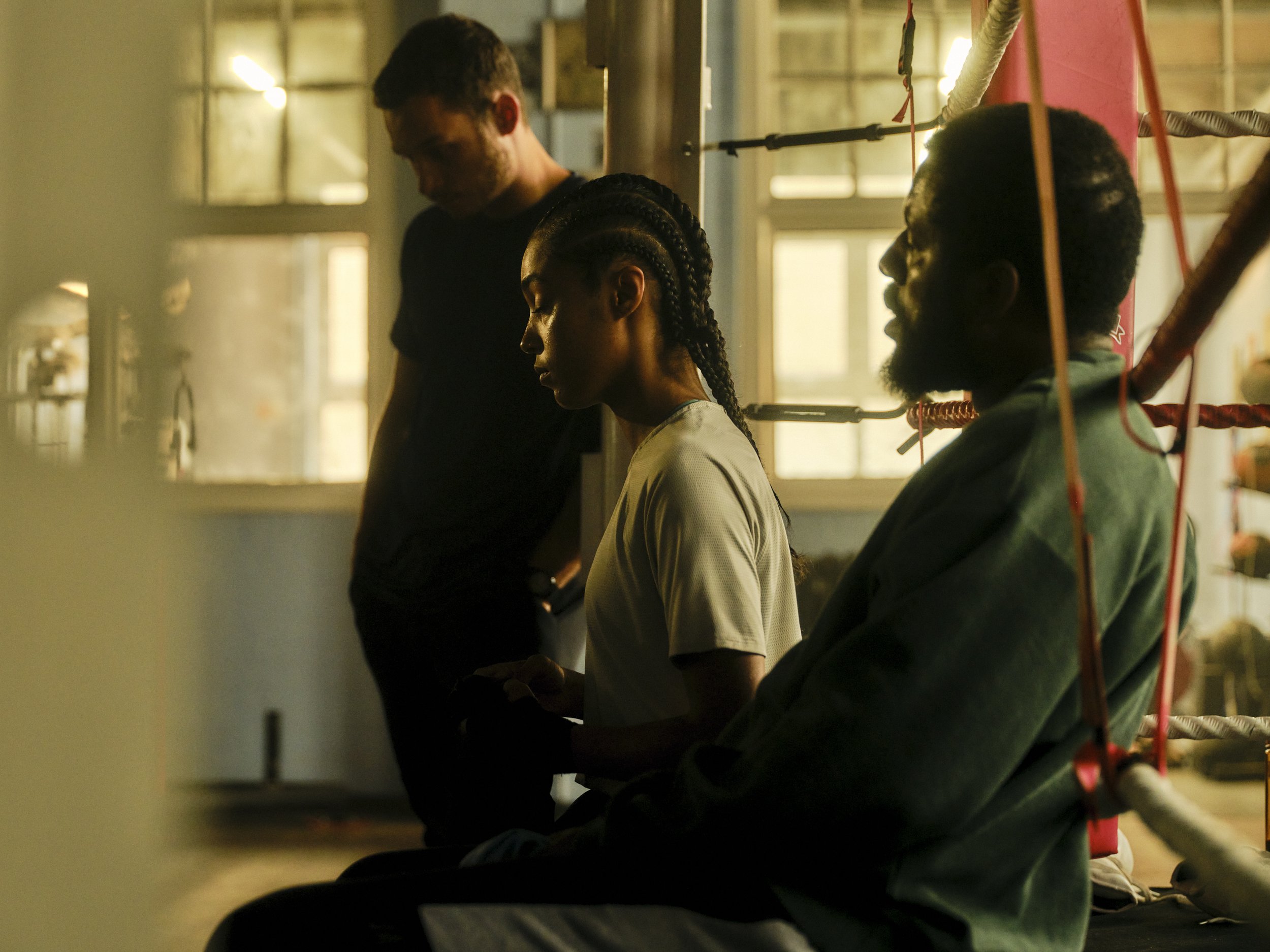
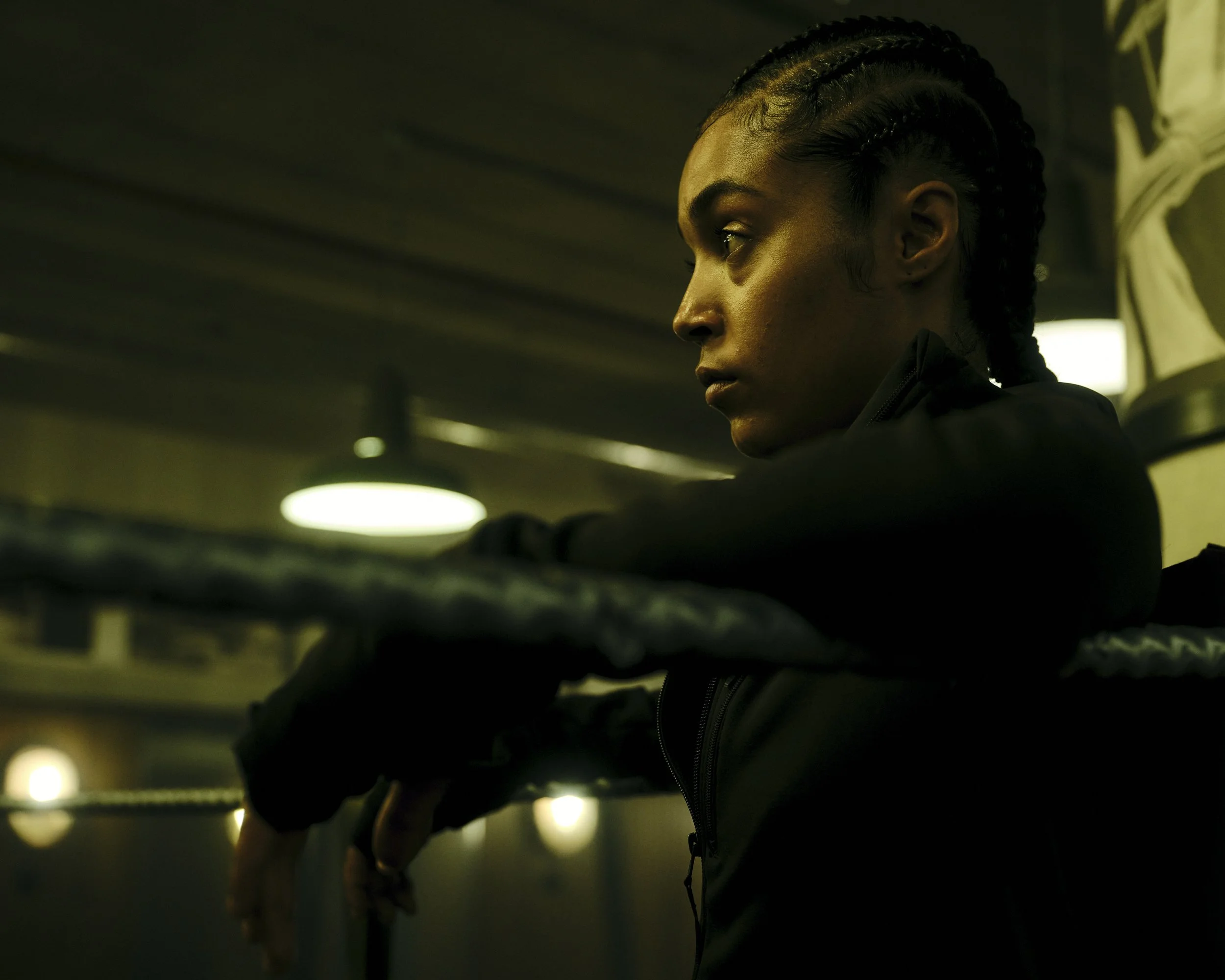
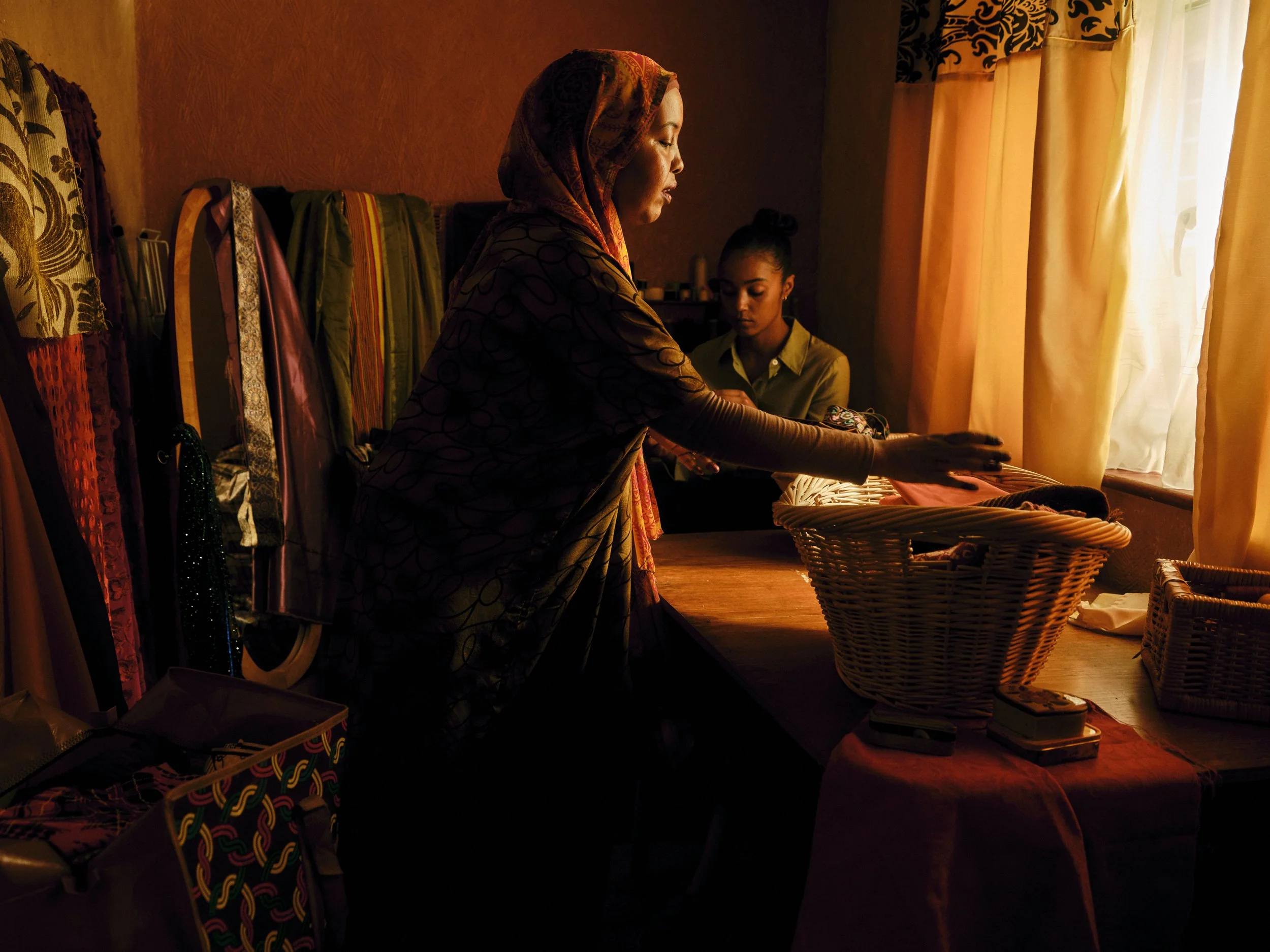
It's an experience as dizzying as it is depersonalising, watching your own life in this way. Uncanny versions of Ali cast as a child, teenager and adult appear in Richard Linklater-style succession. Still, Ali tips her hat to director Anthony Wonke and writer Ursula Rani Sarma, who quelled the fear that she wouldn't recognise herself or her family. "Often, you hear about people who have had biopics made about them and they're not happy with the end result, so they just refused to promote their film," she says with the amused air of someone who can't relate. "But I'm so happy with how this film came out. I'm so happy with the level of respect Anthony showed all the hard bits, the vulnerable bits. I can't wait for the world to see it."
The pivot from boxing to film is one that feels obvious to Ali—particularly with respect to acting. It's easy to forget actors like Mickey Rourke or Ray Winstone made their start in the sport. "Well," Ali leans in to explain, "the good thing about acting is you're not getting hit."
Weighing up the two disciplines, both the intensity of training against the rigour of shooting, she looks up as if to do the maths in her head: "The amount of time that you need in it is very similar. I'm training between 4-5 hours a day, and if you're on set, obviously, it's longer. You can be filming for 12-hour days, but then you've got to go home; you've got to learn your lines for the following day.
It's intense. It's like a 10-week camp of non-stop filming, non-stop learning lines, non-stop making sure that you're understanding the essence of the character and bringing that character to life." As transferable as it is to training, the load is lightened by the fact that she's not doing it alone.
Moore, her husband, manager and former boxing coach, had been working in film since he was 15. Together they launched 786 Productions in 2024, the name a numerical shorthand for the Muslim invocation "In the name of God, the Most Gracious, the Most Merciful". "I really enjoy working with him, and I'm not just saying that because I'm on camera," she explains. "I want to always see him succeed and do everything that he wants to do in this life. He thinks the same for me, and I think that's what works so well."
Their first proof of concept was How to Hide It, a short film co-written and directed by Ali and Moore. Ali also plays Zahra, a young Muslim woman whose engagement is called off and in a moment of weakness, buys a forbidden lottery ticket, which triggers a spiritual crisis.
The gamble extends beyond the plot, as actor Idris Elba and his wife, Sabrina Dhowre Elba, came on board as executive producers: "We got so many brownie points when we told everyone that Idris and Sabrina are exec-producing," Ali recalls. "If an actor of the calibre of Idris is watching your short, loving it and willing to put their name on it, then you know it's gonna be a good one."
“Often, you hear about people who have had biopics made about them and they’re not happy with the end result. […] I’m so happy with how this film came out.”
Now with the concept proved, the backing secured and the biopic slated for distribution with Film4, Ali is scoping what the 786 portfolio is set to look like. "Black America does Black film so well. I'd love to tell more Black or ethnic-led stories within the UK." How to Hide It even sneaks in many a reference to Spike Lee's Do The Right Thing in its stylised shots and even a T-shirt that Zahra wears. "One thing I love about Spike Lee, all of his films tell the story of what's happening now," she says. "I always say that Islam is a perfect religion, but Muslims are not. I just wanted to show that."
That distinction in private matters for someone whose own life has been lived increasingly in public. Alongside boxing, Ali has built a profile as a model and campaigner, and is shown to be comfortable on a cover for British Vogue under Meghan Markle's editorship, named one of the Forces for Change in 2019 and among TIME's Women of the Year in 2023. That very same visibility for her advocacy has garnered unwelcome attention, most importantly, at home.
Coming back to her home country evokes a great sense of pride and accomplishment as Ali says, "I kid you not, I'm the equivalent of J-Lo there." However, she faced a serious security threat when a man accused of plotting to assassinate her was sentenced in 2025 after being linked to the extremist militant group Al-Shabaab.
Still, Ali says the threat has not altered her relationship with the country. "Just because it's their message or it's how they can control you or how they can control a country, I'm not going to be afraid to go back," she says defiantly. "I'll probably go back this time wearing something like a ninja mask where no one can spot me, but them trying to capture me and kill me doesn't necessarily stop me wanting to always be proud to be Somali."
Book tickets to In the Shadows at the BFI here.