

'My Father's Shadow' Director Akinola Davies Jr. Discusses Diaspora, Politics and Family
Following its UK debut, BFI Award-winning director Akinola Davies Jr. sits down with us to reflect on his film, My Father's Shadow. He touches on family turbulence, homecoming and political inheritance in the context of this deeply personal piece of art shaped by Nigeria's past and present.
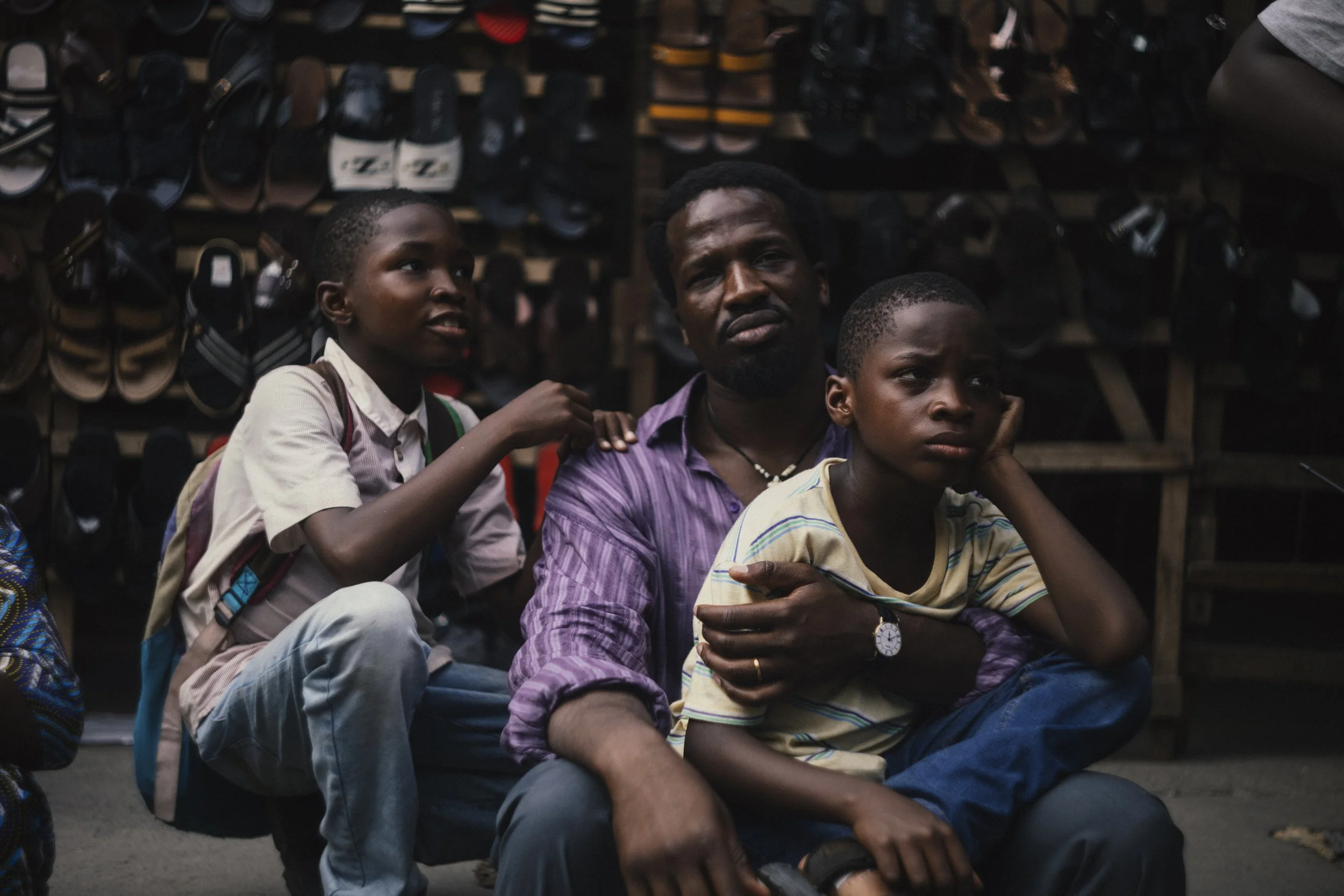
A still from My Father's Shadow. Image property of the British Film Institute and BBC Film.
I remember the first time I crossed the Third Mainland Bridge from Lagos into Ibadan. It was my first visit to Nigeria in almost two decades. My memories of what I have come to know as "back home" were sparse and coloured with the childlike perspective of a three-year-old. As an adult, I was in awe of being in a place that was so familiar yet just out of my reach for most of my life.
I was reminded of this as I watched, on-screen, a similar type of wonder unfold for two young boys. They shared in the slightly mesmerising experience of a place that you had only heard of finally becoming real. They were naturally inquisitive—asking questions and listening patiently as their father explained where they were, like my parents had when we took a similar journey.
Despite growing up in the UK, I identified with these fictional eight and 12-year-old boys from a village in Ibadan. This is where the universality of Akinola Davies Jr.'s award-winning film, My Father's Shadow, lies. There are moments of deep familiarity laced throughout this tale of politics and fractured families, which creates a connection to the audience that transcends location, time and memory.
The film's rollout was monumental: it was the first Nigerian film to enter Cannes last spring, earning a Special Mention in the Caméra d'Or category. It also carries the weight of 12 nominations at the BFI Awards, with Davies ultimately winning Best Director.
The narrative itself is distinctly Nigerian in essence, set at the breaking point of the country's political upheaval in 1993. At this time, President Ibrahim Badamasi Babangida annulled the election that declared Moshood Kashimawo Olawale Abiola his successor in favour of continuing his military dictatorship, resulting in mass riots and upheaval across the country. Over three decades later, this is a moment that continues to cast a shadow over Nigeria's global community.
However, in My Father's Shadow, this portrayal of such a foundational moment in Nigerian history is far from alienating for Nigerians across the diaspora. "First and foremost, it exists for Nigerians," Davies reiterates, "but I would say it exists in an equal measure for the diaspora. I don't live in Nigeria, so I'm part of the diaspora. I'm very connected to Nigeria—I shoot there a lot, but actually this film is for the younger version of myself and my current self, who was born here [in the UK], grew up there, but just spent most of my life here. It's a bit of homecoming in a way."
Davies' diasporic experience has allowed him to approach the film's setting in a form that speaks to an international audience. The film portrays Lagos in a way that is entirely familiar to those who know it, but is also inviting to those who don't—showcasing parts of the city that have made it what it is.
“This film is for the younger version of myself and my current self… It’s a bit of a homecoming.”
However, politics is not exempt from the romance of Davies' composition. In particular, Davies mentions the depiction of the now demolished community in Makoko, an area where Lagos' poorest used to reside. "The film also now serves historic value because that community has been completely decimated. But at a point they were there. And I think that's maybe what the entry to Lagos is saying—we're here and Lagos is here and Lagos exists, warts and all."
This also exists in the recurring reference to the fictional Bonny Camp massacre that bears a stark resemblance to the Lekki Toll Gate massacre in 2020. Davies' commitment to highlighting these moments in Nigerian politics is admirable, particularly because of the film's global platform.
Despite this, the heart of the narrative lies in the relationships portrayed by Gangs of London and Slow Horses star, Sopé Dìrísù and brothers, Godwin and Chibuike Marvellous Egbo. Davies fictionalises the childhood memories of himself, his older brother and co-writer Wale Davies of Show Dem Camp through the young protagonists, Akin and Remi. Absence has created an insurmountable chasm between the boys and their father, Folarin—much like the loss of Wale and Davies' own father in his infancy has shaped his life.
"We didn't know our father. We've always had to live in his shadow. And we've always had to live in the shadow of the men in our family and maybe we think we can try to be better." This sentiment is a poignant presence that haunts the narrative. There are moments where Folarin and his sons reach towards each other, asking questions and learning the intricacies of their personalities—from Akin's childlike hatred of onions to Remi coming to terms with Folarin's absence as a form of love.

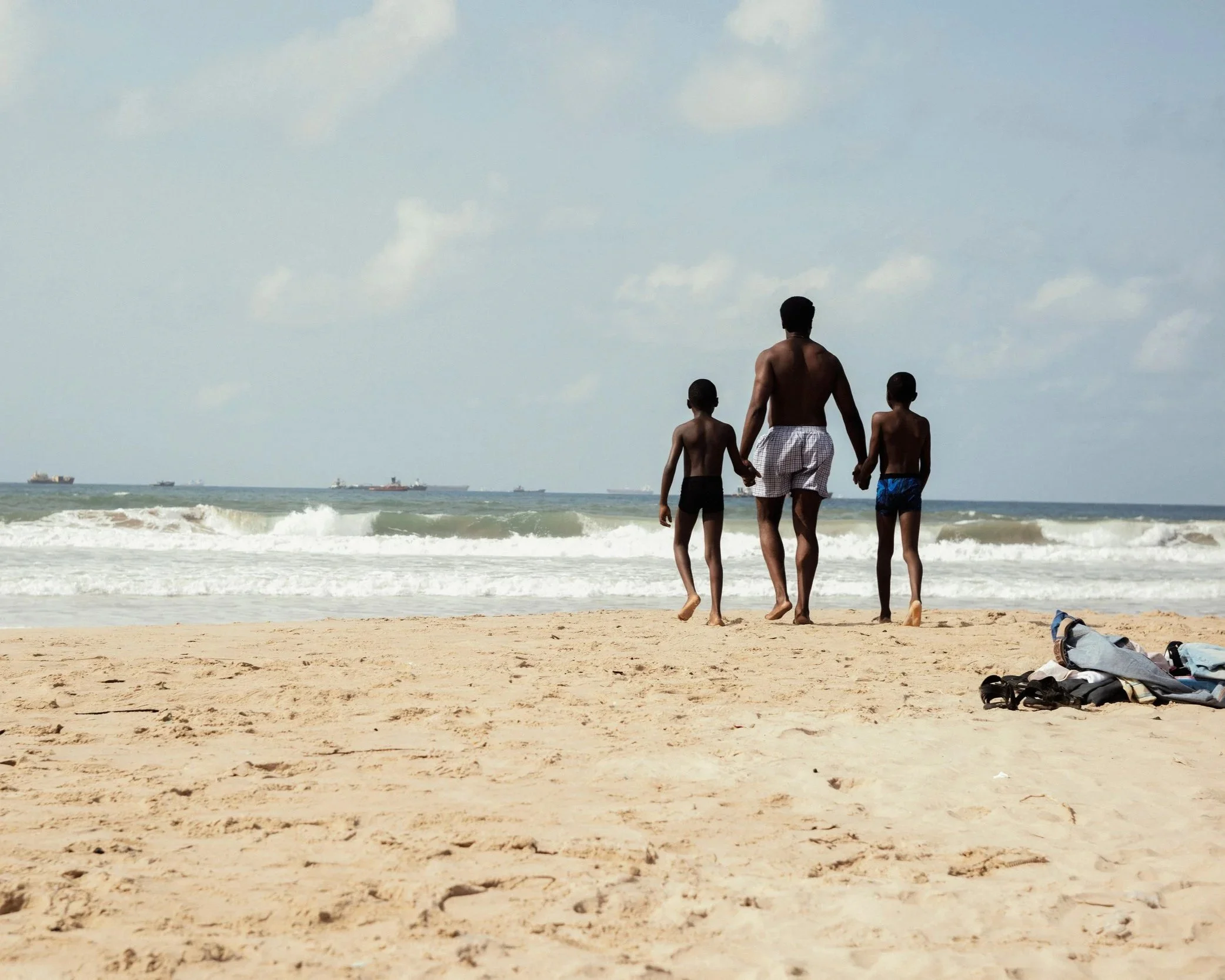
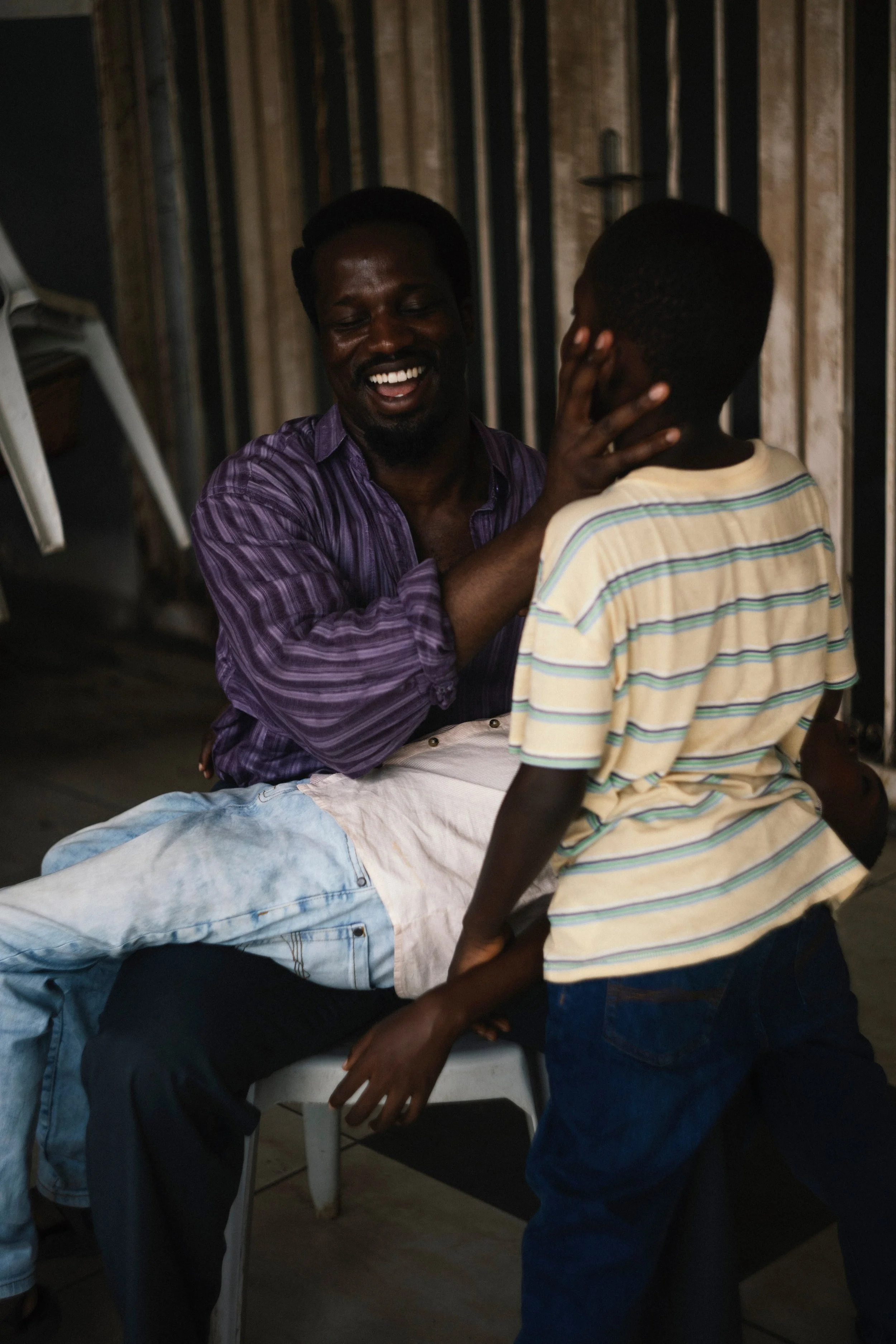
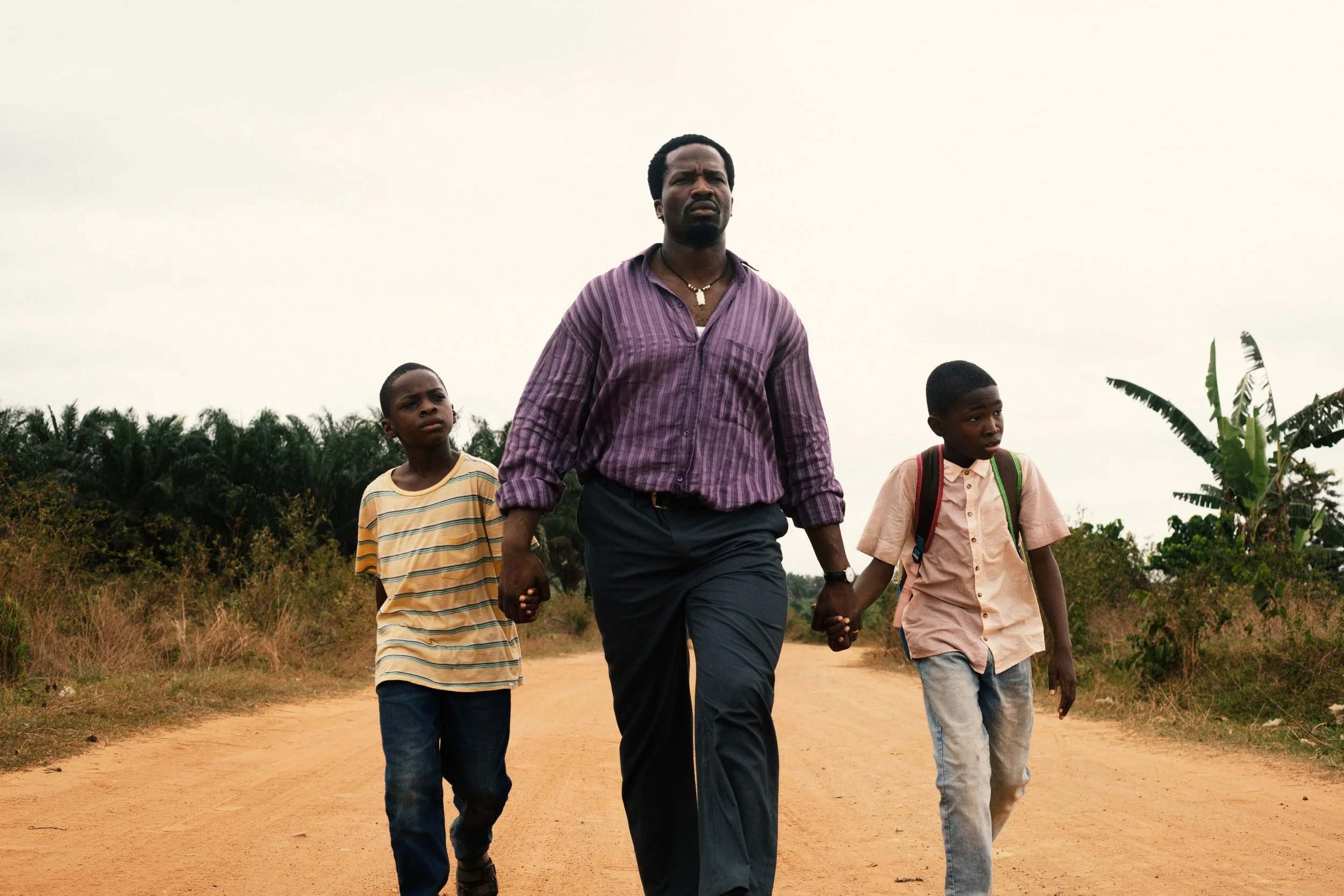
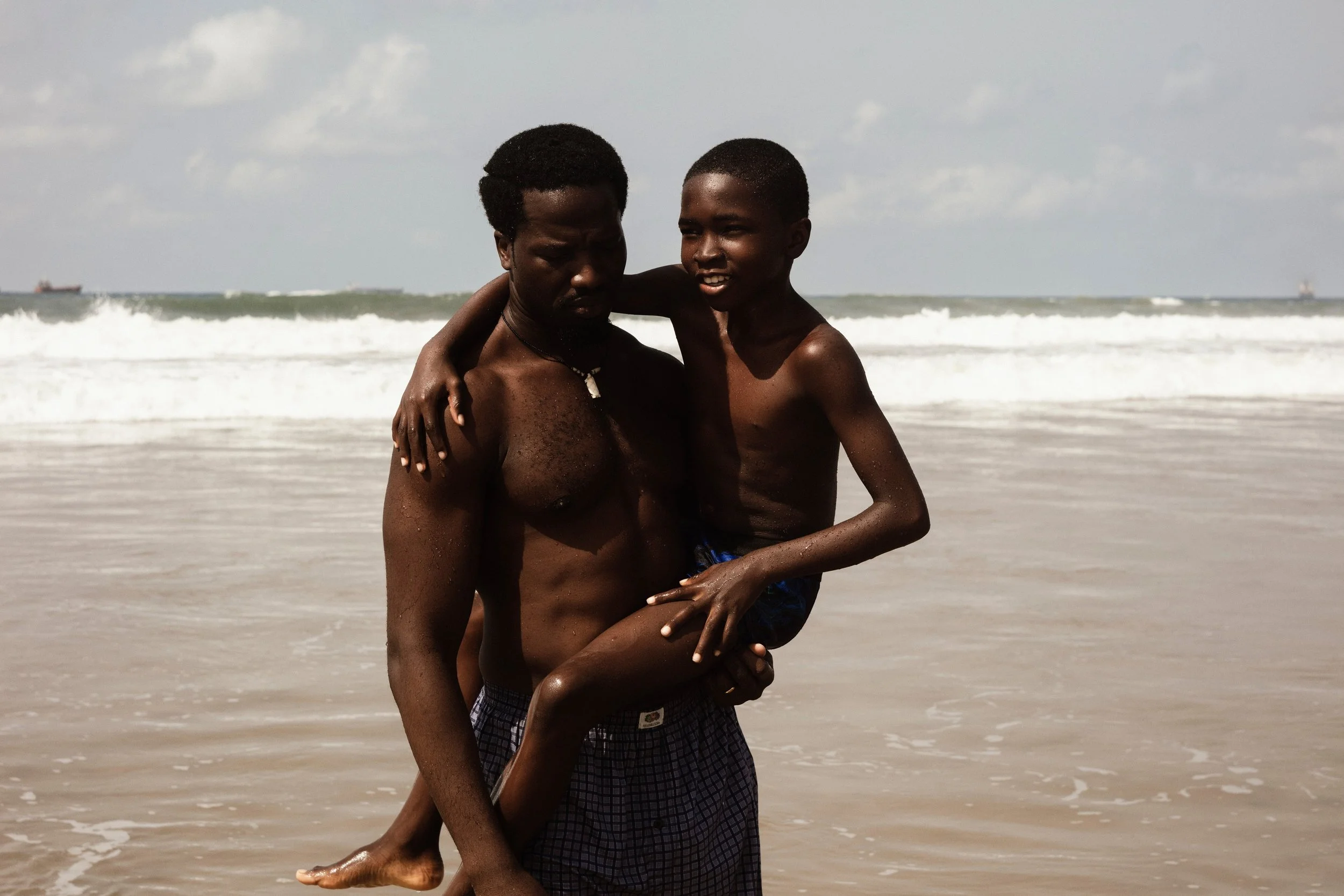
Davies' directorial style is one that favours the repetition of motifs from birds circling overhead, military officers passing by and the physical haunting of the boy's mother. Throughout the film, the boy's mother is an immaterial conduit for conversation and tension between Akin, Remi and Folarin, appearing as an apparition watching over her boys through their journey. This also occurs in the most intricate parts of the film's construction.
The score is a mixture of sound that is rich with tension and melancholy. In one particular scene, a security guard sings to Folarin, urging him to be appreciative of his wife. Interestingly, Davies elaborates, this was not a scripted moment: "For me, it was very important to have a Yoruba song in there because all those songs are about telling stories of loss. It's a complete tapestry of something that's more emotive." The older man, played by Ayo Lijadu, broke out into the song as it evoked memories of the loss of his sister, Kehinde—one half of the iconic Nigerian musical duo, the Lijadu Sisters.
Family, memory and fractured relationships on a micro and macro scale are the foundations of Akinola Davies Jr.'s feature film debut. Although tied together by aspects of culture that are foundational to his heritage, Davies' story is conscious of the potential of his audience. It is informative without preaching and emotive without being excessive.
My Father's Shadow is a film that positions itself in honesty and earnestness, true to the childlike perspective that it adopts. It is a film that will continue to cast shadows as it settles in my memories.
My Father's Shadow is in cinemas now.