

Meet Latanya Alberto: The Dutch Soulstress Coming Into Her Own
As the dust settles on her acclaimed debut LP, the Dutch singer-songwriter reflects on the whirlwind journey that led to its creation.
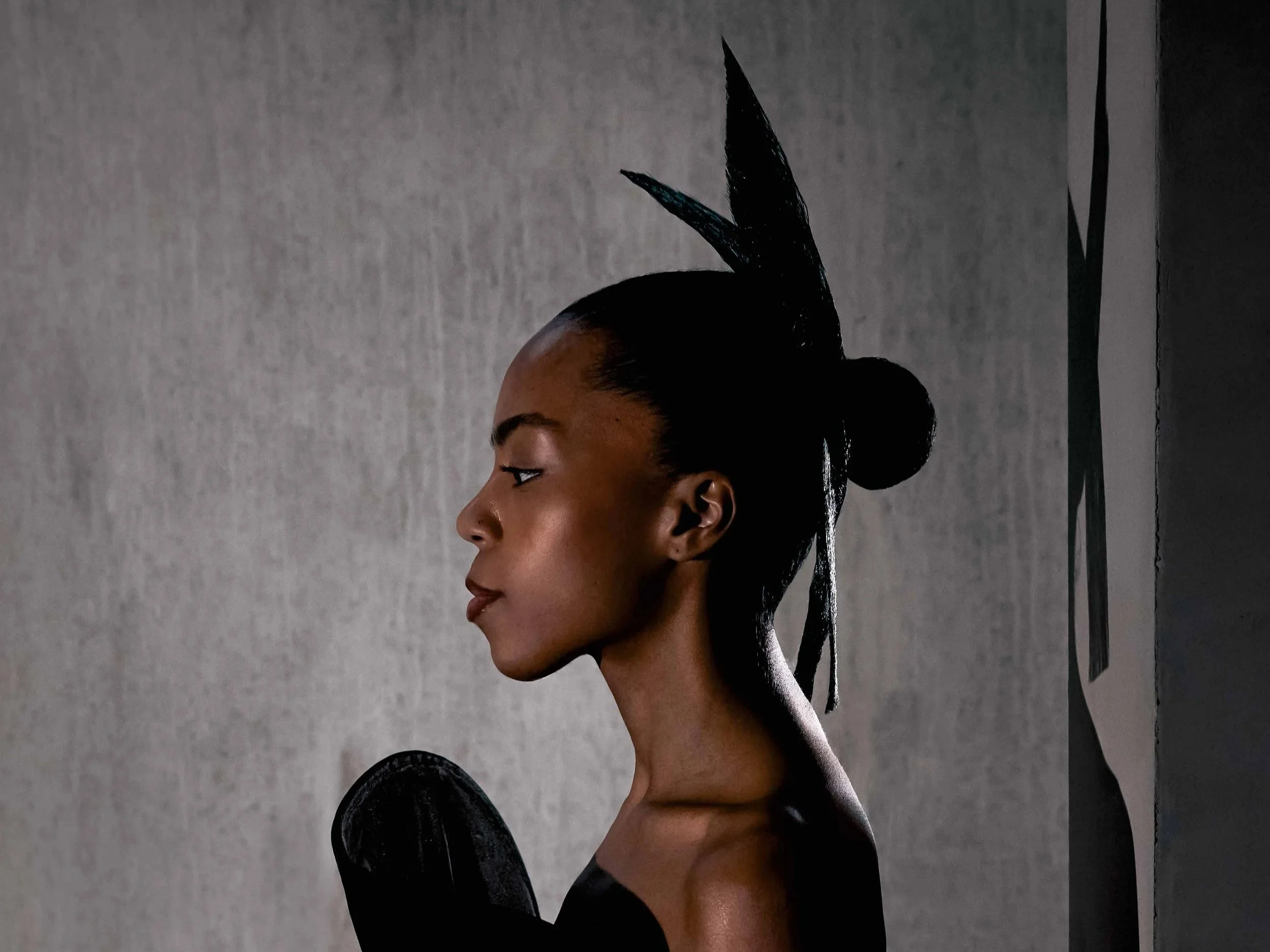
Latanya Alberto in 2026. Image property of Elisa Michelle.
Officially, Latanya Alberto is an emerging artist. But we'd make the argument she's already a musical monolith to be reckoned with. Seriously, the Dutch singer-songwriter's catalogue is impressive. So far, it boasts a newly minted, critically acclaimed album, as well as a handful of quality EPs.
Rooted in soul and drawing from the sounds of the Black and West African diaspora, Alberto writes from a point of tender introspection, using her voice as a vessel to reflect on love, life and healing. "It's really important to me to tell specific stories that might be hard to discuss—specific social matters or complex dynamics," she clarifies.
Born and raised in Amsterdam to Surinamese and Curaçaoan parents, the singer grew up as the only budding musician in her family. "I grew up listening to a lot of old school R&B, a lot of jazz but also a lot of salsa, soca and kompa," says the singer. "I'm from Suriname and from the Caribbean, so… Kawina was something that I heard a lot at family parties or my parents would play it around the house."
Still, let's rewind to the singer's creative genesis. In May 2019, Alberto introduced herself to the world with her first EP, Ruminate, consisting of four tracks, including the woozy and electro-R&B singles "Care Less" and "Verbal Retreat".
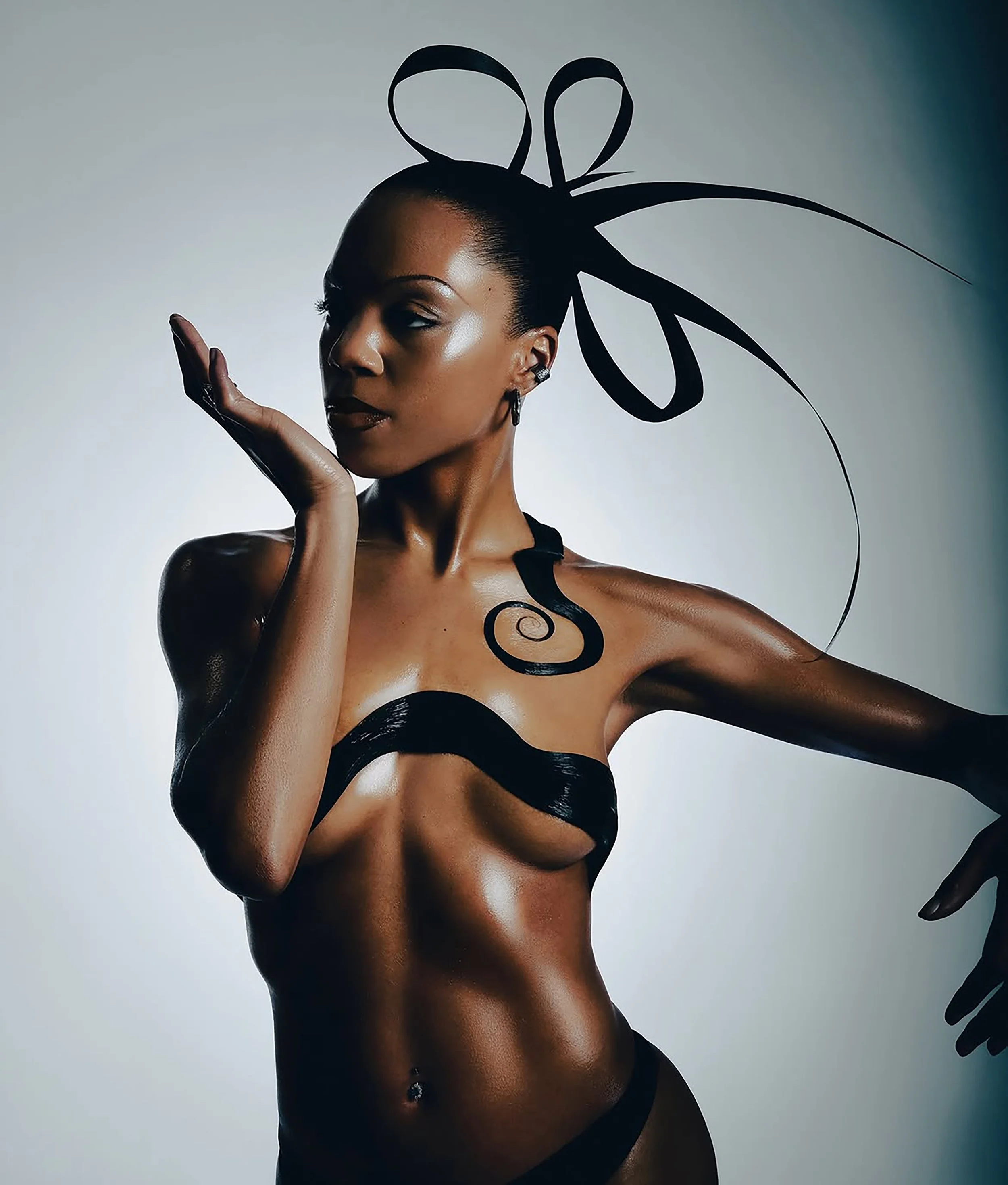
![Latanya_by_Elisa_Michelle_Look_2_01[1].jpeg](https://images.squarespace-cdn.com/content/v1/5ec90098a30a5f7e772600f5/1789134947892-G7O5X2A32SFPAWXB0Z6M/Latanya_by_Elisa_Michelle_Look_2_01%5B1%5D.jpeg)
As expected, Alberto kept pushing her sound forward. Between 2020 and 2022, she released three more projects, including the neo-soul-led twins The Royal Escape and Home—sharpening her palette with each passing drop.
Her growing reputation soon led to performances with the Metropole Orchestra and at North Sea Jazz Festival in 2023, while an aubergine-tinted COLORS session for her breakout track "Red Flags" introduced Alberto to an even wider audience. With each release and performance, Alberto continued to carve out her own musical identity—but when do you know it's time to take everything you've learned and turn it into your debut album?
Well, the answer arrived in the summer of 2026 with the release of Seen. Executive-produced by frequent collaborator Rafael Sinay and A&R'd by David Sonubi, co-founder of Recess, Better Listening and No Signal, the 13-track record turns Alberto's attention towards womanhood, intimacy and the experiences that have shaped her.
With the mayhem of her album release in the rear-view mirror, The Culture Crypt sat down with Latanya Alberto to discuss her musical journey and the making of Seen.
The Culture Crypt: I just wanted to congratulate you on the release of your new album, Seen. It's been out for a little while now, how are you feeling?
Latanya Alberto: "I've been feeling very satisfied and happy. It really feels like giving birth to a child, to a project that I've been working on for so long. So it's really fun to see how other people connect their own experiences with the music now… to see it come alive outside of my own world."
When did you realise that music was something that you wanted to do, and who were some of your influences through that process?
"I've been singing all my life, from a very young age. I already knew that I wanted to do something with my voice. It was while I was singing along to The Diary of Alicia Keys that my mum found out I could really sing. That's a core album for me. I also sang in a gospel choir, and I was always performing covers too."
“I realised that I was writing a lot about women’s safety and the experience of being a woman in society, in our patriarchy. I wanted to tell a story... to be more about how we can improve the situation by shedding more light on the vulnerability and the strength that we all carry.”
You released four EPs over the span of three years, including The Royal Escape, before working on Seen. How was the recording process for those EPs, especially in comparison to the making of your debut album?
"When you look at the EPs, it's really evidence of the journey that I made. The very first EP, Ruminate, was when I didn't really know a lot of stuff—in terms of the industry, how everything worked and with the sessions—so I was just doing what I knew. I think when you look at the EPs and when you look at where I'm at now, the teams got bigger, the instrumentals got more live. I always knew that I wanted to do live music, but especially in the beginning, it was just a bit easier to do more electronic production that was influenced by live music.
With my album, we really went into the writing camps and the rooms with all the musicians there together. We just played around with the music to see whatever came out. And I think the difference is that I let myself be guided more by the musicians in terms of the songwriting and expertise that they would have. So it was much more of a collaborative process. I think it played a part in why I was excited for this album to happen in the first place."
What was the inspiration and concept behind Seen?
"When I started making the album, I didn't really think of a specific topic first, but I really let myself be influenced by whatever was going on in my life and in the world. I just started making the songs, and after a couple of songs, I realised that I was writing a lot about women's safety and the experience of being a woman in society, in our patriarchy. I wanted to tell a story about what that is like, but I wanted the story to be more about how we can improve the situation by shedding more light on the vulnerability and the strength that we all carry."
“It was while I was singing along to ‘The Diary of Alicia Keys’ that my mum found out I could really sing.”
How long did you work on the album?
"For two and a half years. At first, we did some writing camps in London where we just made music freely and saw what came out. The concept for the album, the songs and the structure came together pretty quickly. But in terms of finishing the songs and setting everything up, that's what took the longest. I also worked with musicians from [both] the UK and the Netherlands, so sometimes it was hard to coordinate with everyone. But in the end, we pulled through."
Speaking of that process, "Window to the Soul" is one of my favourite songs on Seen, and I know it went through quite a journey from that initial extended recording to the final version. How did the song take shape?
"My song 'Window to the Soul' came about very organically. We just started playing, and then we got to the chord essence, and the feeling was already there. I started with the melody and then the hook. I wanted to challenge myself to be simpler in the lyrics, but still very profound, so you really feel every lyric to the core.
In the first writing camp, we were just playing around and did a 10-minute recording of the song. We knew that recording was something special. Then, in another writing camp, everyone from the UK went to the Netherlands, and we did more work on the song. We had to cut and eliminate certain things because there were so many options to play around with.
The most important thing was to keep the force of the message and realise that we didn't really need many words to carry that emotion. I'm really happy with the simplicity because the feeling and intention we had in that first writing camp is still there."
That's really cool. On Seen, you worked with musicians including KOKOROKO's Sheila Maurice-Grey and your frequent collaborator Rafael Sinay. How's your musical relationship with Rafael grown over the years?
"Rafael is a musician and producer who really likes to delve into things and research everything. Because of his heritage, there are a lot of influences that he carries with him. He also has his own band, Smandem, whose music is jazz fused with a lot of different influences.
In the beginning, I had my background, and he had his, and then we found common ground. Before every session, we would get into a conversation, and in that way we learned a lot more about what we wanted to make, where it would come from and allowed each other to experiment with things. It's very layered and complex, but also very organic."
And finally, now that Seen is out in the world, what does your next chapter look like?
"More live shows. I really consider myself a live musician. I've been in the studio for so long while writing this album, so I'm really excited to get on stage. I think the music really lends itself to the live stage and the live instrumentation. And we have some shows planned—the first shows are mainly in the Netherlands and in Belgium. And then we're working on getting it to the UK and abroad."
Stream Seen below: