

No One Knows Konyikeh Like the Violin
The classically-trained Essex artist reflects on emotional honesty, creative independence and the deeply personal process borne from her latest EP, Cinere.
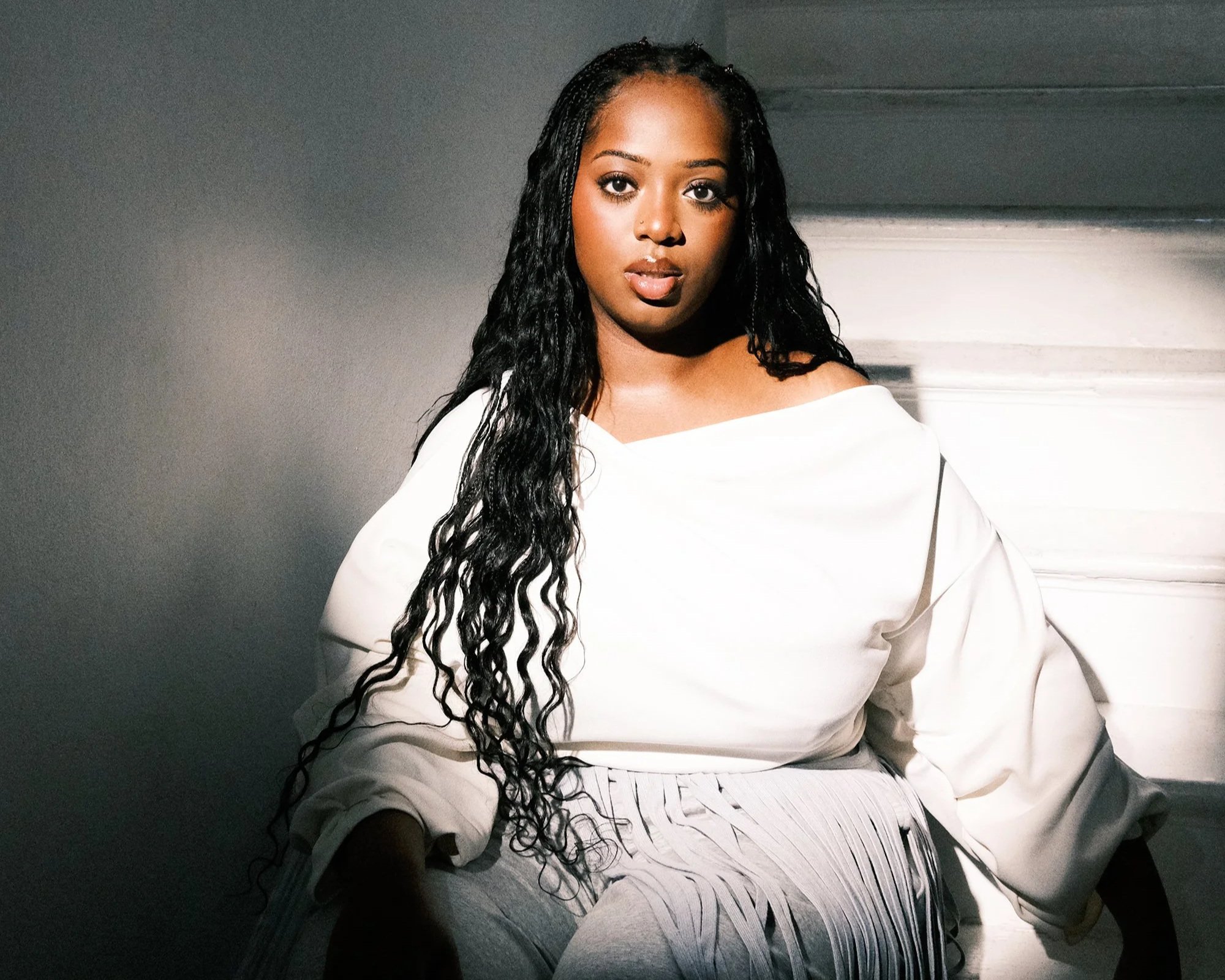
Konyikeh in 2026. Image property of Maria Pearl.
Reared at the Guildhall School of Music and Drama, Konyikeh's foundation is rooted in classical discipline, but her artistry stretches far beyond it. As an Essex-bred singer, songwriter and violinist, she moves fluidly between worlds—drawing on orchestral training while shaping a sound grounded in soul, R&B and alternative textures.
Ahead of the release of her latest EP, Cinere, we sat down with Konyikeh to discuss its creation. Across seven tracks, the project deftly moves between softness and intensity, blending classical influences with contemporary production to create a sound that feels both grounded and atmospheric.
At its core, Cinere—deriving from the Latin phrase 'ex cinere', meaning 'from the ashes'—is deeply introspective. There is a sense of searching that runs throughout the record, whether that is navigating emotional vulnerability, questioning identity or sitting with feelings that do not always have clear answers. It is this tension between control and release that gives the project its emotional weight.
Having grown up surrounded by live music through choirs and orchestras, Konyikeh's return to the violin plays a subtle but defining role in shaping the EP's sonic identity. While many artists lean heavily into digital production, her process is informed by a strong understanding of instrumentation, allowing her to collaborate with producers in a way that feels both intentional and precise.
Beyond the sound, Cinere also marks a shift in mindset. Throughout our conversation, she speaks candidly about letting go of external validation and learning to trust her instincts—a process that not only shaped the music but also redefined her relationship with herself as an artist.
In a casual follow-up chat, Konyikeh opened up further about her creative process, revealing the emotional weight behind the project. The result is a body of work that feels both deeply personal and resonant—even when it touches on experiences she herself is still navigating.
The Culture Crypt: Your songs "Blackthorne" and "Jealous" feel quite contrasting—one feels like searching, the other more observational. Was that intentional?
Konyikeh: "I wouldn't say it was entirely intentional, but those songs actually came from the same period. I wrote them back-to-back in the same studio with the same producer. 'Jealous' was interesting for me because it's not an emotion I experience often. It's less about being jealous of a situation and more about being jealous that someone can feel that deeply for another person. So even though they feel different, they both come from a similar place of searching."
Do you feel like this project is more about understanding yourself or accepting parts of yourself you didn't fully understand before?
"I think it's both. Making this project forced me to develop a much stronger sense of self. I wanted to create something that fully represented me, and through that process I discovered things about myself I hadn't fully recognised before. I realised I'm more resilient than I thought, but also more sensitive in certain ways. It was definitely a learning experience."

You mentioned "Blackthorne" came out of you instinctively. Do your most honest songs come when you're not overthinking?
"Yeah, definitely. I use music as a way to express unfiltered thoughts. With 'Blackthorne', there was no planning, notes or structure. It just came out in the moment, and I think that's why it became one of the most vulnerable songs on the project."
What version of yourself are we hearing on this project, and what did you have to let go of to create this EP?
"For this EP, I had to let go of any need for external validation. Growing up, I was used to validation coming from things like grades and achievements, so I carried that mindset for a long time. With this project, I had to shift that and trust my own instincts. If I didn't like something, it wasn't going out, regardless of what anyone else thought."
Does validation come from how you feel or from other people, and does that impact how you make music?
"It comes from me now. I think the way I create can seem quite selfish, but it's important that I trust myself. Even if a lot of people like something, if I don't, it's not happening. I've learnt to advocate for myself in the studio instead of just going along with things, and that's made a big difference in how I work."
Your music feels emotionally open, but also very controlled. How do you balance emotional vulnerability with sonic control?
"In my personal life, I'm not very outwardly emotional, so I use the studio as a space to release everything. It becomes a kind of emotional outlet. Because people don't always see that side of me, it feels easier to express it through music. Once it's out there, it's out there, and people can choose to connect with it."
You've brought classical elements into a contemporary sound. How has returning to the violin shaped this project?
"It's a big part of it because that's what I grew up with. I was always around choirs and orchestras, so live instrumentation feels natural to me. I might not be as technical with digital production, but I understand live instruments deeply. Working with producers who value that made a huge difference, because it allowed us to build the sound in a really intentional way."
Do you see Cinere as telling a continuous emotional story, or are the tracks more like individual moments of reflection?
"When I was writing, each track was its own individual moment, reflecting how I felt at that time. But when I started putting the tracklist together, I think subconsciously I shaped it into a continuous story. There's almost an A-side and B-side with the first half feeling more dramatic and production-heavy, while the second half is softer and more stripped back. The interlude sits in the middle as a reset for the listener."
There's a strong emotional honesty across the EP. Was there a moment during its creation that felt particularly difficult or revealing?
"A lot of it was difficult, if I'm honest. After recording the first version of 'Buyer's Remorse', it took me a couple of days to recover emotionally because it brought so many suppressed feelings to the surface. It was healing, but also intense. I had to relive those emotions to capture them properly. 'Blackthorne' was also quite difficult. Even though the production sounds light, the subject matter is very raw."
“I was always around choirs and orchestras, so live instrumentation feels natural to me.”
"Jealous" feels like one of the more emotionally intense moments on the project. What was the creative process behind that track?
"It's interesting because I don't personally experience it as that intense, but I understand why it comes across that way. It's about romantic love, which is a very intense feeling. At this stage in my life, I haven't experienced that in the same way as some of my friends, so I found myself questioning that. The song came from reflecting on whether I'm capable of feeling that deeply."
How has your relationship with music evolved from your earlier work to now?
"I've learnt to trust myself more as an artist. I'm not afraid to explore sounds that might feel unfamiliar to what people expect from me. Being more involved in the production process has helped me find my voice, and I've also learnt the importance of enjoying the process, even when the subject matter is heavy."
What does this project represent for you at this stage in your life and career?
"This project feels like the most accurate representation of me as an artist right now. I'm proud of my previous work, but Cinere feels like the beginning of the sonic world I've always wanted to build. I hope it connects with people who appreciate the details in both the production and the lyrics."
How do you want listeners to connect with the more vulnerable parts of this project?
"I hope it brings people a sense of comfort. I wouldn't necessarily wish for people to relate to some of the experiences, but if they do, I hope the music gives them space to process those feelings and find some peace."
Stream Cinere below: