

Da Flyy Hooligan is Serving Up Gourmet Rap
On an afternoon stroll along London's historic Denmark Street, Harlesden rapper Da Flyy Hooligan shares his own piece in its mythology while reflecting on his part in the "drumless rap" movement.
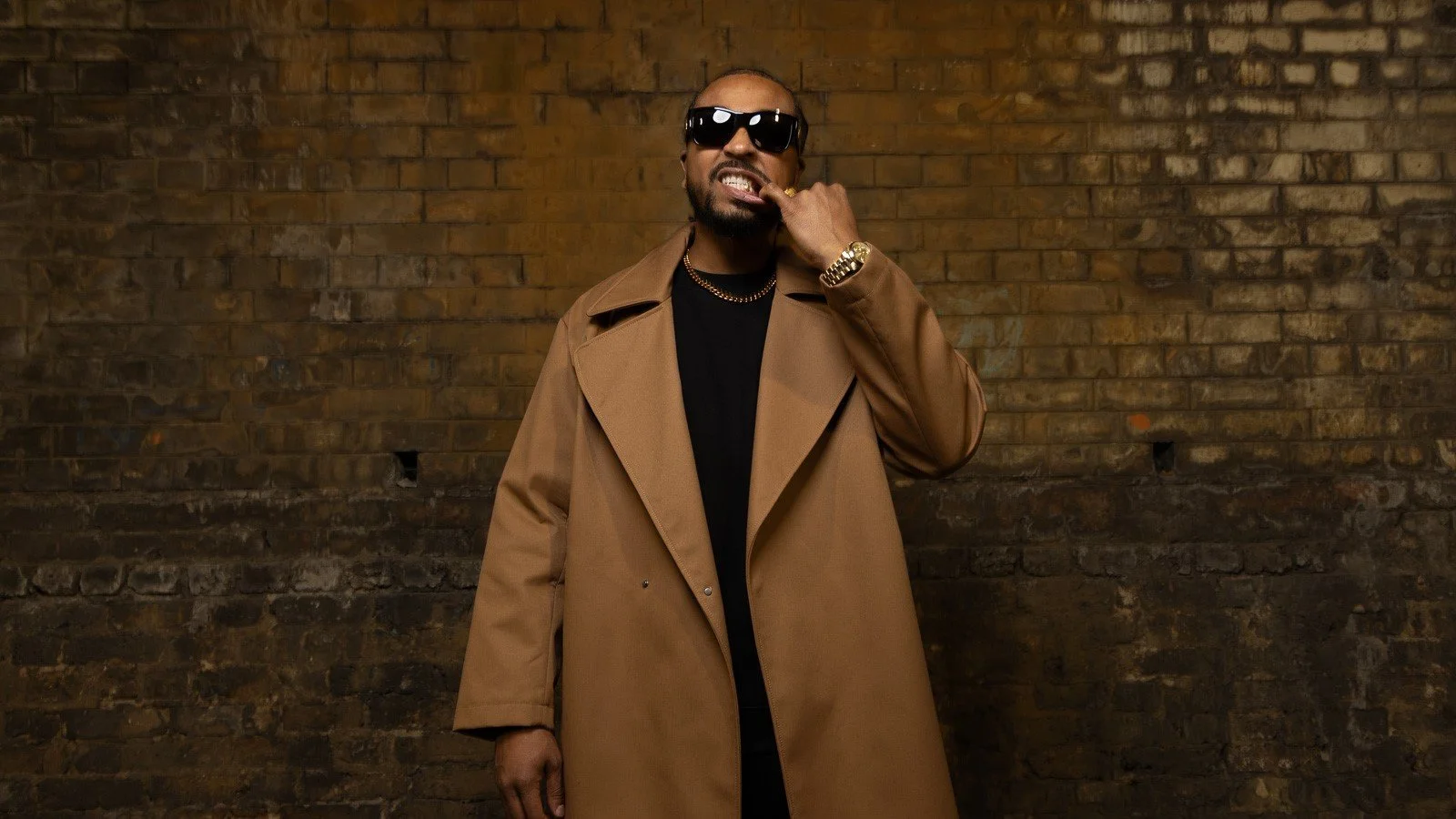
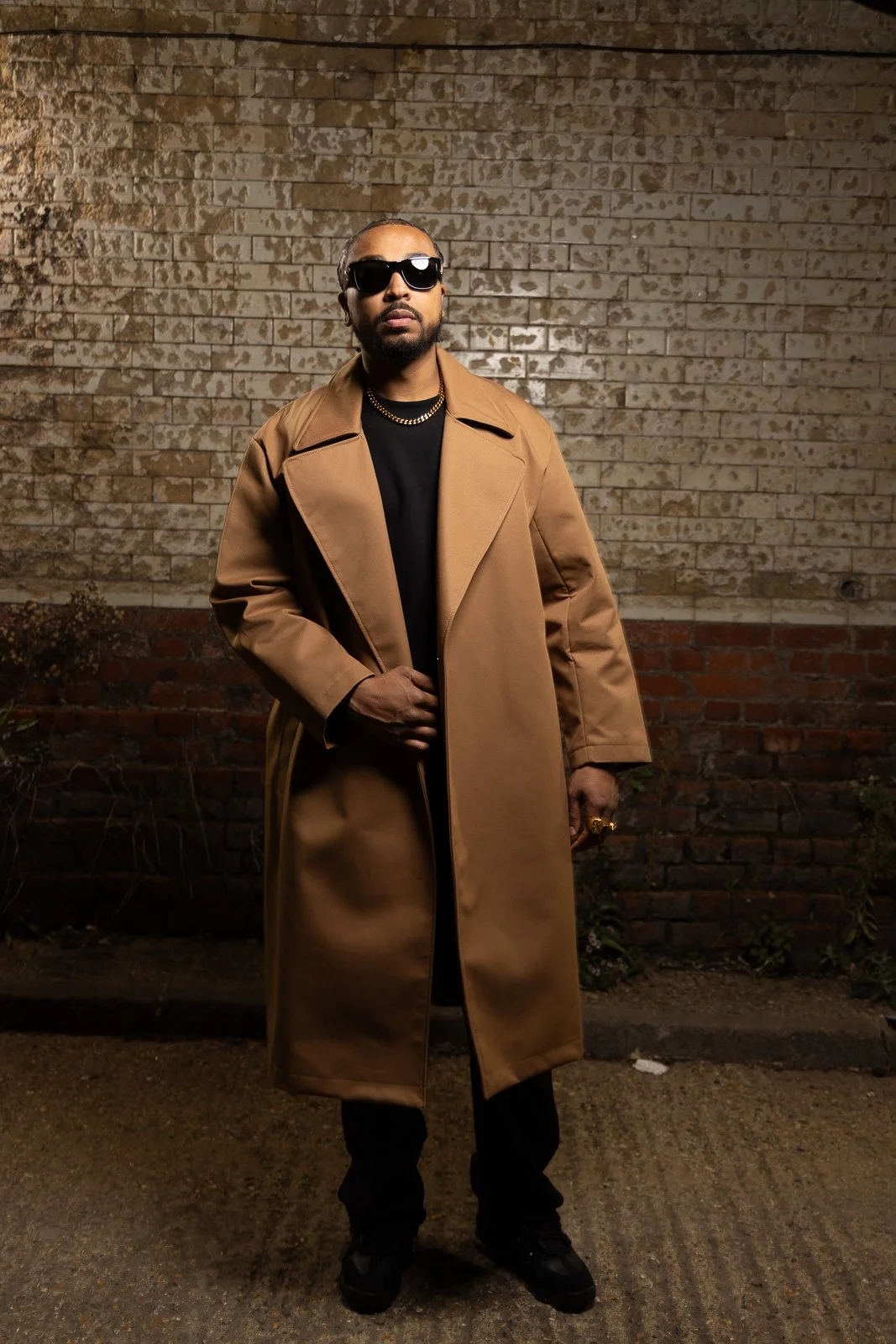
Da Flyy Hooligan in 2026. Image property of Marc Adam and Paul Hampartsoumian.
North West London rapper, producer and self-styled "gourmet rap" architect, Da Flyy Hooligan, colloquially known as 'Hooli', speaks with the detail of a collector, the patience of a craftsman and the confidence of a man who's always been ahead of the curve.
Moving through Denmark Street, he flaunts his archivist muscle. "This is the road where Jimi Hendrix used to flex," pointing towards a row of instrument shops whose faded façades have seen nearly every genre of British sound pass through them. "The Beatles, Marvin Gaye, Mick Jagger—everyone came here," Hooli was adding context to a cultural map that most people would just stroll past without noticing—linking Soho's guitar-string ghosts to his own drumless compositions, each a lesson in history and control.
Hooli sees samples as conversation—guitars, strings, choirs, voices echoing through time: "That's why a lot of my stuff is drumless, the emcee is the instrument." On his new album, Supreme Cut Untouched Magnificence II, he lives by that code: it's an unbridled showcase of raw talent, unshackled by convention and expectation.
Hooligan knew early that his instincts wouldn't align with the UK mainstream: "My taste has always been different". As a kid, while his peers obsessed over The LOX or So Solid Crew, he was listening to Burt Bacharach, taking in the lush melancholy of "Walk On By" and "I Say a Little Prayer". It's a detail that reframes Hooligan's musical DNA as one of a digger and cultural scholar. "If someone asked my top five writers of all time, Bacharach would be in there."
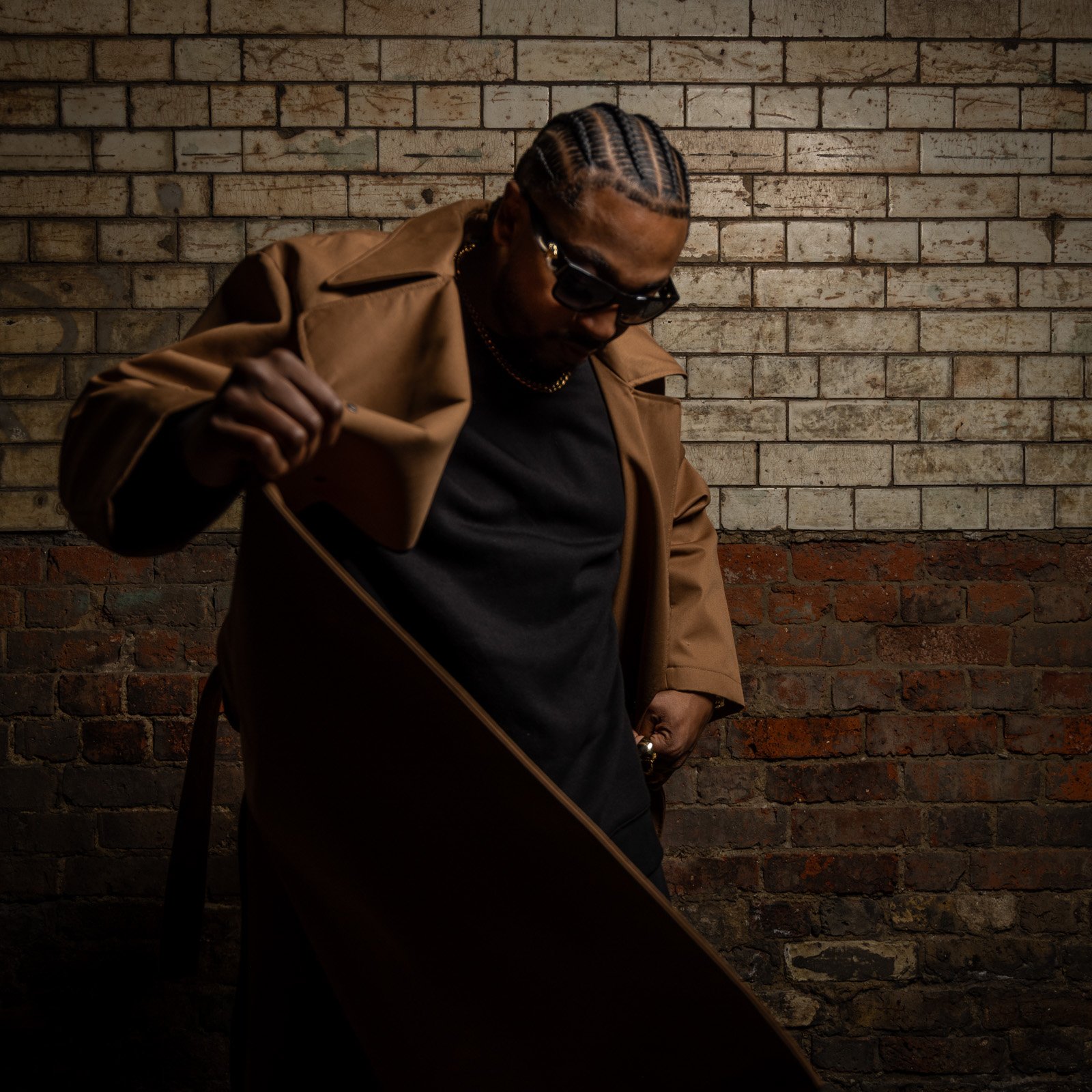
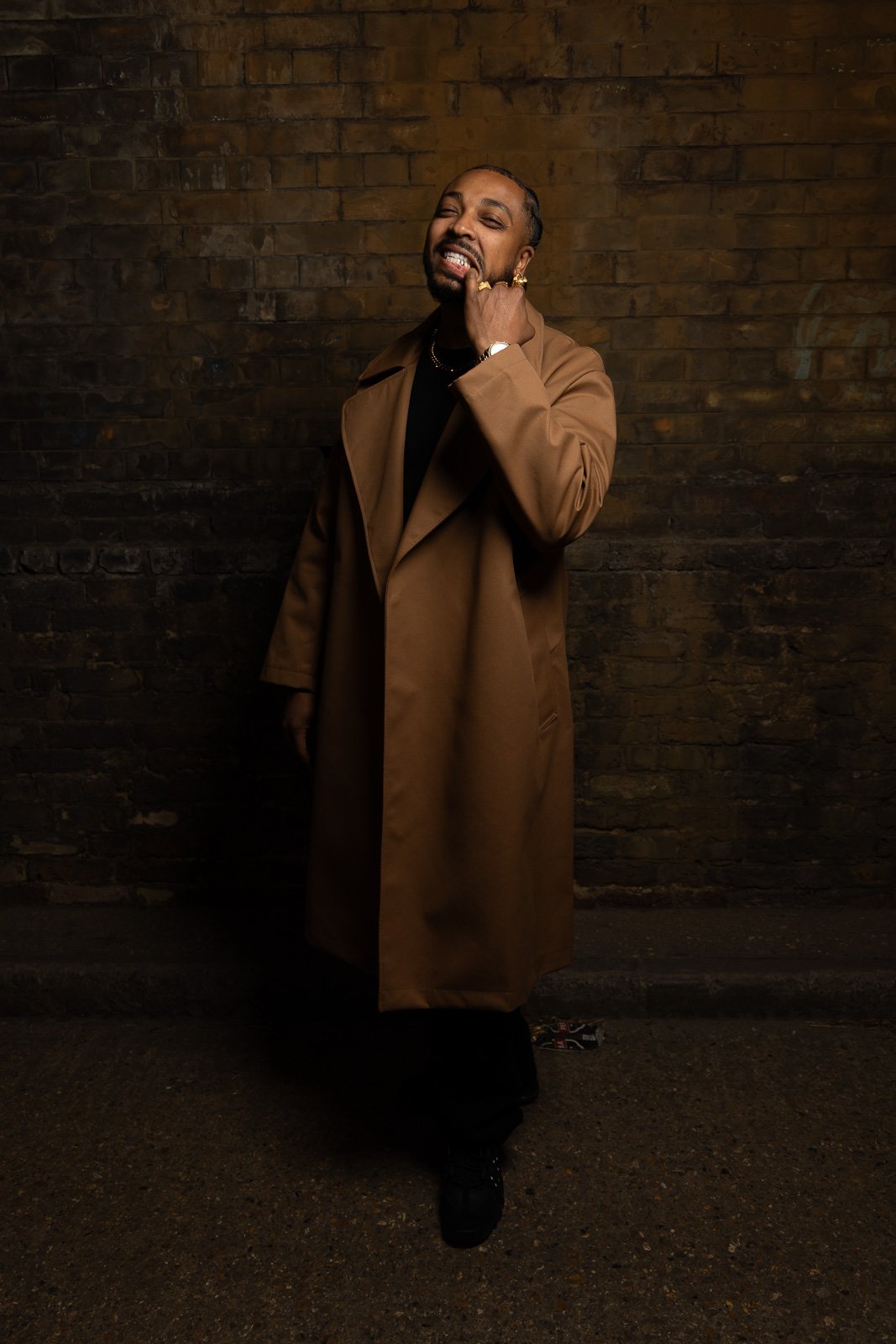
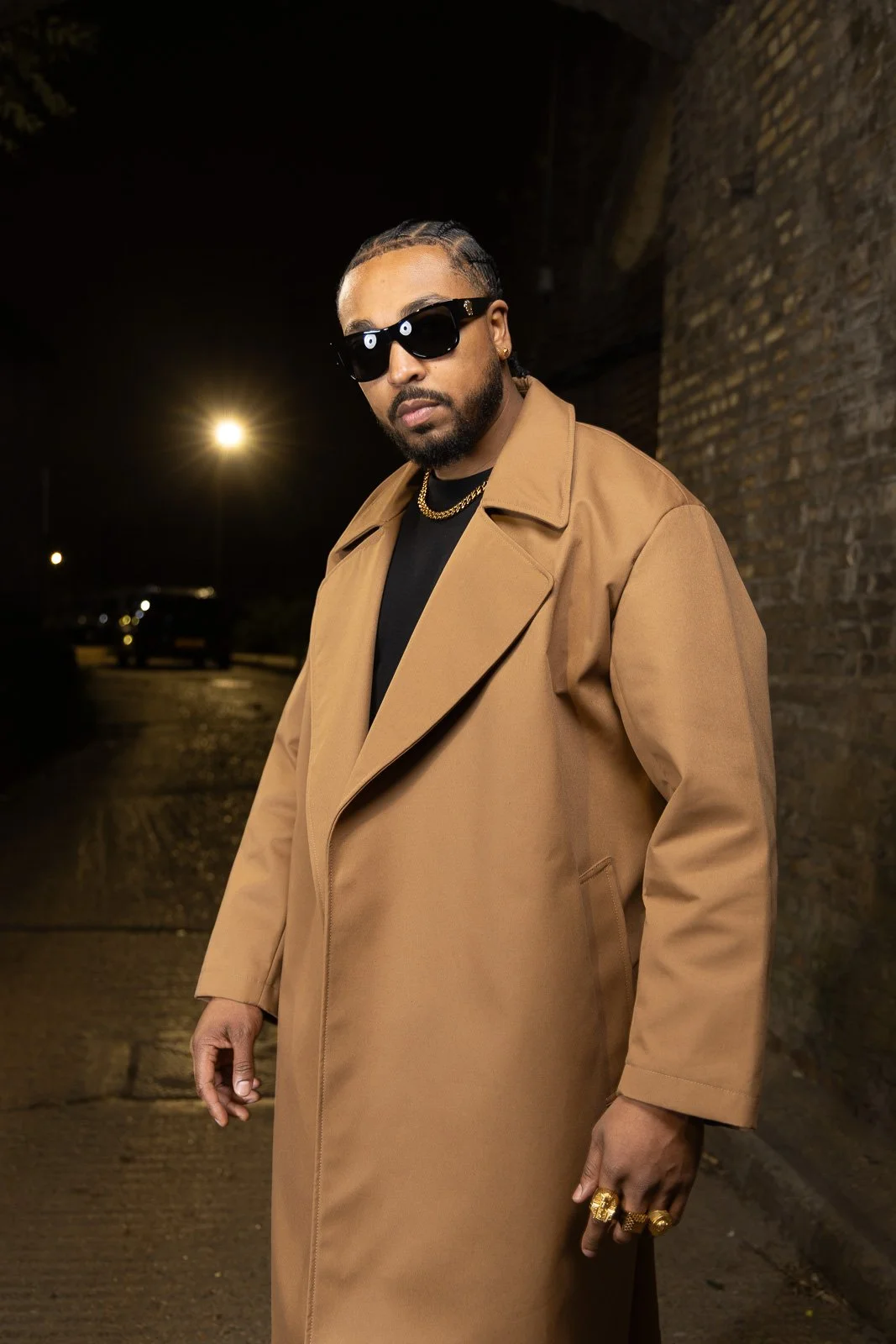
His tastes explain his sonic distance from most British rap. He prizes selection and minimalism over density—beats stripped back until only voice and texture remain. The delivery is calm but never empty, animated by a belief that hip-hop's truest legacy lies in its curator mindset. "Hip-hop is multicultural: it's an extension of the creators who look like us. The media likes to push this idea that we don't know what we're doing. But trust me, we do."
Hooli's curation has always come with intent. From the elaborate packaging of his early mixtapes to the conceptual artwork of Supreme Cut Untouched Magnificence II, every Hooligan project carries an intentional aesthetic. "Even before we stepped in here, there's a curation behind everything I do. Respect the foundation—that's the message."
His foundation runs deeper than meets the eye. Long before the world latched onto the resurgence of "underground luxury" hip-hop spearheaded by Westside Gunn, Conway the Machine, Benny the Butcher, Roc Marciano, Hooligan was already expressing that lifestyle on this side of the pond by making them his peers.
Back in 2012, he appeared in the video for "Change", a collaboration between beatmaker and Daupe! Media founder The Purist and fellow spitter Roc Marciano, who quietly forecasted the sound now dominating boutique hip-hop. "That predates everything that's popping off now, me and Purist are fully embedded in this renaissance."
His connections stretch through the lineage: his debut single as Da Flyy Hooligan featured Westside Gunn. It was Sean Price, the late Brooklyn legend, who introduced them. "I met Conway through that circle, too". Recalling rooms filled with unbought vinyl copies of Hitler Wears Hermes 2—records that would later sell for thousands. "We knew what was about to happen. We predicted it all."
Less concerned with the annals of fame, Hooli's story is rather comfortably nestled in his rap found family and core audience. "I've always been a part of this embryo. When people find me, they'll realise they've found a missing piece of the puzzle." He sounds profoundly like someone whose work will testify in due time.
For all his stoic confidence, Hooligan isn't afraid of vulnerability. Soul-speckled and pensive album highlight "Expensive Wishes" marks Hooli's most personal moment yet: a tragic song about his dying mother. "That was a conversation with my mum. It was hard to decide to share that with the world, sharing the most painful moment of my life with people who might just skip it. But that's therapy. When I'm introspective, it's dangerous—that's when you hear the real me."
Though his music connects with his American peers, Hooli is unmistakably from North West London. The accent, the humour, the directness, it's all there. Yet being different often meant isolation. "People here might say I'm trying to be American, while Americans say I'm too British, but I'm neither. I was born in Nigeria, have a Ghanaian mum and was raised here. I'm African first. I never felt like I had to sound a certain way. In Africa, we get the American influence before the British, so that's how I was wired."
“People here might say I’m trying to be American, while Americans say I’m too British, but I’m neither. I was born in Nigeria, have a Ghanaian mum and was raised here. I’m African first.”
That perspective grants him patience. "When the UK catches up, it catches up. That's not arrogance, it just is what it is." Since 2003, he's been crafting sparse, left-field, drum-light music decades before it became the new avant-garde underground. "I've always loved slow beats, the ones that Redman and Method Man often rap over. When those two rap on a slow beat, you can't show me anyone better."
The web of names around Hooli—Roc Marciano, Westside Gunn, Rome Streetz, Estee Nack—can make it easy to mistake him for a satellite orbiting bigger stars. But that reading misses the point. Hooli sees them as people parallel to him, as opposed to correlative influences. "We're the same, I just happen to have a British accent. In fact, even Grammy-winning producer Young Guru recognised his potential by wanting to mix Supreme Cut Untouched Magnificence II, further highlighting Hooli's place in this impressive circle.
9th Wonder, the iconic producer behind collaborations with Mary J. Blige, Erykah Badu and Mac Miller, once discussed management possibilities with him. Keisha Plum, a well-known poet in the world of Griselda Records, named him 'Hooli' and even the connection with rapper Rome Streetz stretches all the way to school in North West London. These moments trace a consistent pattern of respect among purists.
That purity is the true metric of Da Flyy Hooligan's success. "I want the story told right. I'm protective of it because I've sacrificed a lot to show the next artist that they can be themselves and still connect globally. There's already a community waiting for you."
Stream Supreme Cut Untouched Magnificence II below: