

Inside the Casual Readers Book Club: The London Community Centring Black and Brown Voices
India Chambers, the founder of the Casual Readers Book Club, gives us the inside scoop on her collective and discusses how she fosters a community centred around physical books in an increasingly digital world.
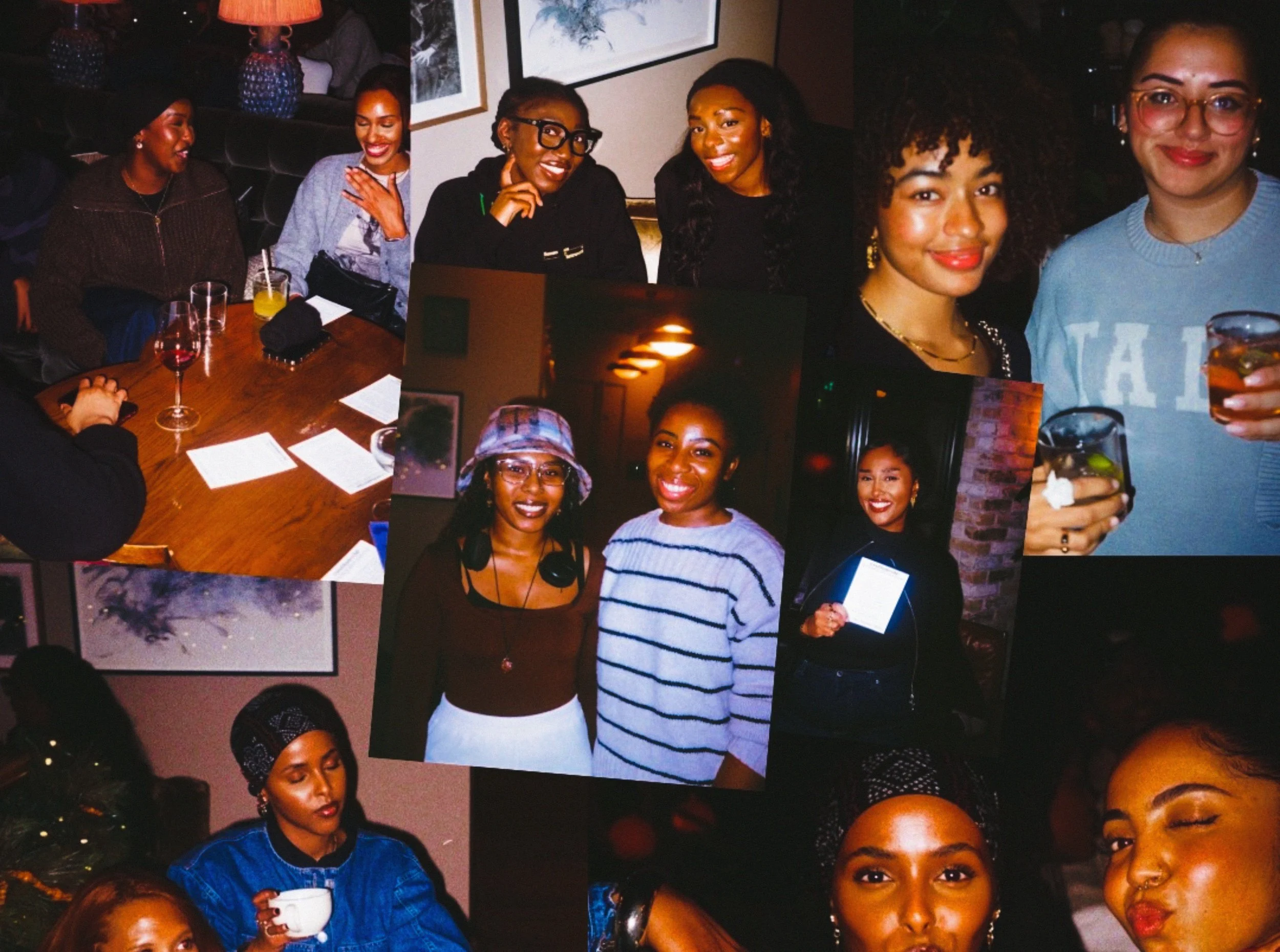
Community members. Image property of the Casual Readers Book Club.
In a world increasingly dominated by digital consumption feeding short attention spans, the Casual Readers Book Club provides a space where people can slow down and reconnect—with literature, with each other and with themselves.
Founded by editor India Chambers, Casual Readers is a community-driven book club that centres Black and Brown authors and creates an intentional and welcoming space for thoughtful engagement with literature. Though its name might suggest a laid-back relationship with reading, the truth is quite the opposite: there is nothing casual about the way this book club reads.
What began as an intimate gathering of friends has since grown into a movement that hosts regular in-person discussions, author events, cinema screenings and even theatre trips. By bringing people together over stories that matter and using those stories as starting points for bigger conversations, the Casual Readers Club serves as a rare incubator for writers, thinkers and creatives.
With many of its attendees being aspiring writers themselves, Casual Readers also platforms the debut authors and underrepresented voices that will carry the literary torch for the next generation. The Culture Crypt sat down with founder India Chambers to dive into the story of this vibrant book club.
The Culture Crypt: How did you get into reading?
India: "Reading has always been my thing. My parents always had books in the house and I was always around people who were reading. One of the books that I always think of when I talk about what got me into reading is the Kitty and Friends series by Bel Mooney. They were essentially the Tracy Beaker's before there was a Tracy Beaker in my life—they came out in the 1990s and my Mum got me a copy.
They were about a stubborn little girl who always wanted her own way, and I remember thinking, 'She's really cool.' Now I actually work for the team that published the Tracy Beaker series, which is super fun. Those are my roots in reading. I've always loved storytelling and the way it brings people together. After my English degree, I did a masters in Black British Literature and have been involved in words ever since."
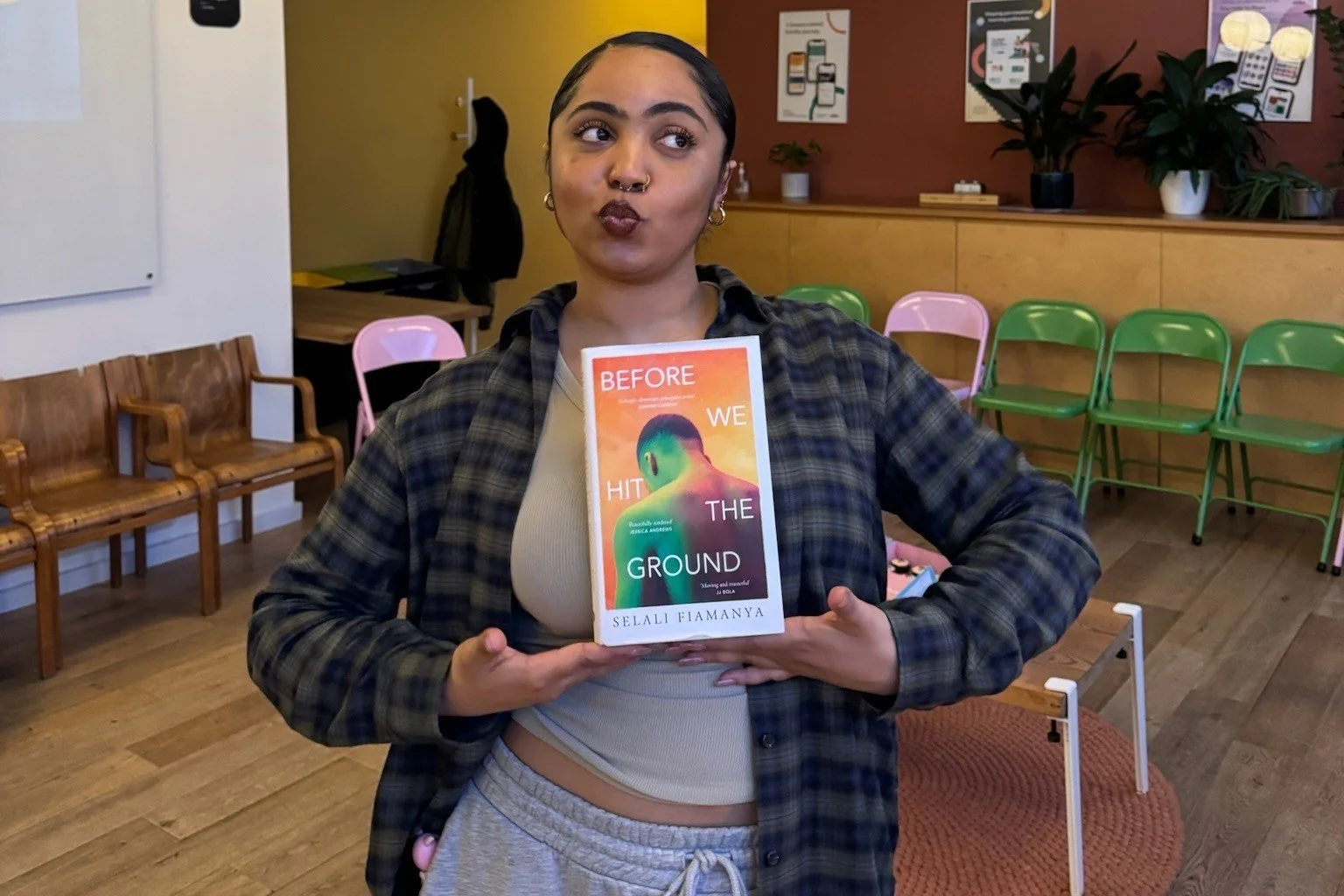
Casual Readers Book Club founder India Chambers. Image via Instagram.
What inspired you to start the Casual Readers Club Book Club?
"I was very confident in secondary school and was always really happy to answer questions in English class. My secondary school was really mixed, but at uni, it was suddenly just white people and that was a bit of a culture shock. I didn't feel comfortable putting my hand up in class and I thought, 'I really enjoy talking about books but I want to do it with people that I vibe with.' So I forced my boyfriend and a couple of my friends to make a book club with me.
We'd meet up every couple of Saturdays a month, but the majority of the time, it was just me who had read the book. I started sharing it on my Instagram and people told me that I should host a proper book club. So for two years, I started doing a free book club. I'd find spaces and provide drinks and snacks and it's just kind of grown from there."
What does it mean to you to have built a reading community in today's fast-paced, digital world?
"I think everyone actually reads so much. We all consume so many words—reading Tweets is a form of reading. With film and television, you're reading subtitles; when reading people's Instagram stories, you're able to quickly glance over information and learn so much about different people through little snapshots or different captions.
I've started to see reading as something we all do every day—there are just so many different ways of reading. But there is something really special about reading a physical book, I can't deny that: you have to be a bit more intentional, carve out time in your day, and it's also a time to look away from screens."
“Book Club is a great space for people to remember what is so fun about reading—being able to compare your reading experiences with others. Everyone has a different relationship with reading, and that’s fine; we need all those voices in the room.”
Can you share a memorable discussion from Casual Readers that has stayed with you?
"It was last year, in February. I realised not as many men were coming to the book club as I'd hoped. I set up Casual Readers to read Black and Brown authors and those are still the voices we champion, but I've never articulated that we're a Black book club or a women's book club.
We had a discussion to try and get more men to join the book club and it was basically, 'Why aren't the mandem reading fiction?'. That discussion was interesting because it allowed men to let us know why they felt barriers in coming to a book club or engaging in the kind of books we read.
Off the back of that, having book club sessions that centre male voices has been interesting. Like having Moses McKenzie join us was great. There's a different engagement when the author is in the room, and many people who come to the book club are aspiring writers, so to hear directly from someone doing what you dream of doing has been really interesting. I'm more interested in the discussions that veer off the course of the book and lead us to talk about bigger themes and questions. Each discussion gets better."
What advice would you give to someone trying to build a creative community space but struggling to grow it?
"I would say that you need to be clear about why you're doing it. Initially, I was really trying to get my friends to read alongside me: it didn't always work, but I continued to show up. Even when people from outside my immediate circle came, it was free because I love words and wanted to be around people sharing words in this way. I worry that people think about setting up these spaces incorrectly.
I see people launching things thinking they need to be perfect, but you have to start things for the right reasons and have a real clear intention about what you're doing—try and fail and do it for little to no money at first. I think networking amongst your peers and starting with your community is the best way to do anything. Don't do it for TikTok, do it for yourself. It's cool when you do things for yourself and they grow into something."
From your perspective, how do members of the Casual Readers Book Club balance escapism with active engagement?
"For me, reading is both a form of escapism and a way to stay deeply engaged. There's also an argument to be made that book club feels like anti-escapism. You have to read, be really engaged and think about the general and political context of the book. We read Blessings by Chukwuebuka Ibeh at the beginning of the year, which is about Nigerian anti-gay legislation in the 2000s. You have to be intentional and your brain has to be switched on."
“I love seeing Black people talk and I love that they have gravitated towards the Casual Readers Book Club. Being traditionally underrepresented, coming here and being completely in communion with your people is really special.”
Can you talk about the experience of being a person of colour leading a reading community for POC readers?
"It's fulfilling, but it's not an active thing. It's natural for me because I've always been around our people, so it doesn't feel out of the ordinary. White people come to the Book Club, but they're in the minority. Creating a space where Black people and specifically Black women, can come and be their fullest selves... it's important to have that intentional space."
Drop us three recommendations for an ex-bookworm who wants to return to reading?
"I recommend reading a book that evokes a strong visceral reaction, such as feelings of disgust or horror. I'm a Fan by Sheena Patel presents the thoughts of a troubled woman. All Fours by Miranda July follows a middle-aged woman who begins to question her life during a solo road trip of self-discovery.
Also, Stoner by John Williams explores the mundanity of life. We had a great discussion about this book and although it differs from some of our usual selections, we were able to dive deep into the theme of mundanity and examine why humans feel the need to create a legacy. Also, I'd really recommend both of Moses McKenzie’s books [An Olive Grove in Ends and Fast by the Horns]."
Talk us through the role of storytelling and the importance of creating and sustaining community spaces for it in 2025. Why do you think these spaces matter?
"People approach it in different ways. A lot of people come to make friends; they may love reading, but don't do it in communion. I've made a lot of close friends at the Book Club. There's a great mix of people: we've had midwives, lawyers, podcasters, people in medicine, all come to discuss what we're reading.
There's also an argument to be made that book club feels like anti-escapism. You have to read, be really engaged and think about the general and political context of the book. We read Blessings by Chukwuebuka Ibeh at the beginning of the year, which is about Nigerian anti-gay legislation in the 2000s. You have to be intentional and your brain has to be switched on for that. There's something so powerful in the community—it invites you to slow down, be intentional and fully engage with stories that challenge and expand your perspective."
What's your vision for the future of the Casual Readers Book Club?
"I've been involved in so many amazing things lately. We've had some fantastic cinema screenings, and I absolutely love our trips to the theatre—they really enhance the whole experience. I've been thinking about organising reading retreats and branching out into new areas.
We've already done Book Club in cities like New York and Amsterdam and I'd really love to plan one in Paris and Barcelona as well. Connecting with debut authors is something I'm really passionate about—I want to champion their work and make the arts more accessible to everyone. It's all about sharing literature and stories and it feels so special. There's something incredibly powerful about being part of a community like this."
Stay up-to-date with the Casual Readers Book Club on Instagram here.